Tibetan Terrier vs Lhasa Apso: Build and Daily Life
Compare Tibetan Terrier and Lhasa Apso size, body proportions, activity and coat commitments before choosing a companion.
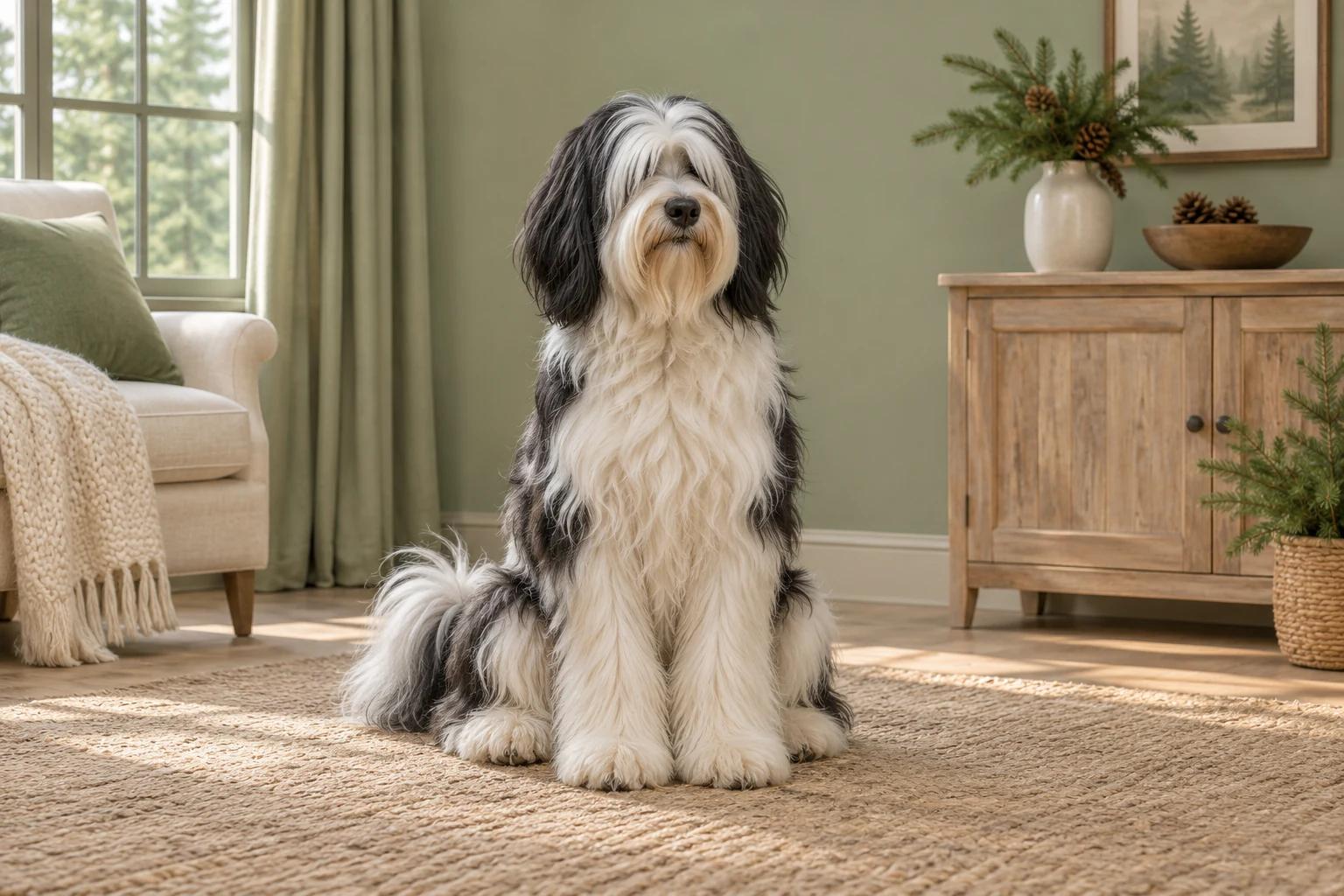
Tibetan Terrier vs Lhasa Apso is not simply a choice between two versions of the same long-haired dog. Their outlines and adult dimensions differ, while both need daily activity. The current Tibetan Terrier profile and Lhasa Apso profile give useful starting points, but neither a flowing coat nor a similar place of origin makes the breeds interchangeable. Look at the dog underneath the hair and at the activity behind the appealing portrait.
Tibetan Terrier vs Lhasa Apso: the square-bodied Tibetan
The Tibetan Terrier standard describes a square, strongly built dog, with the distance from ground to elbow matching that from elbow to withers. Its back stays level in motion, with a slight arch over the loin. The chest reaches the elbows without becoming excessively broad. AKC Tibetan Terrier standard.
This gives an observer more to look for than a mass of coat. Watch the outline while the dog moves naturally, rather than judging apparent body length from the ends of its furnishings. Hair can obscure the landmarks that establish proportion.
The standard also distinguishes a soft, woolly undercoat from an outer layer that can be straight or wavy. The outer hair is fine, but should not be silky or woolly, and should not trail on the ground. A puppy's softer, shorter coat is not the finished adult presentation.
That developmental difference matters when comparing photographs. A young Tibetan Terrier beside a fully furnished adult Lhasa is not a like-for-like coat comparison. Age and presentation can exaggerate the visual distinction or temporarily hide it.
The Lhasa's longer outline
The Lhasa Apso standard describes a rectangular body: length exceeds height. Its topline is level, its chest reaches the elbows, and its ribs extend well back. The tail is carried over the back and may fall to one side. AKC Lhasa Apso standard.
The head supplies another useful distinction. The Lhasa's muzzle accounts for about a third of total head length. Its skull is narrow rather than domed or apple-shaped, and the eyes are dark and almond-shaped. These are anatomical details, not instructions to interpret every expression through the hair covering the face.
The standard calls for smooth, balanced movement at the dog's own pace, without rolling or a high-stepping action. Allow a Lhasa to walk comfortably when observing it; a hurried presentation can make it harder to appreciate the intended movement.
For a prospective owner, the lesson is to look beyond matching hairstyles. A similar trim does not erase the Lhasa's body proportions, and a full show presentation should not be mistaken for the body's actual outer boundary.
Lhasa learning and outdoor interest
VCA describes the Lhasa as independent and sometimes stubborn, recommending reward-based teaching with food or games rather than force. It also notes that indoor activity does not replace the mental interest of walking and sniffing outdoors. VCA Lhasa Apso guide.
That is a useful corrective to choosing this breed solely because it is smaller. A Lhasa can have a compact physical footprint while still wanting meaningful activity. A room full of toys is not identical to an outing where the dog encounters and investigates changing smells.
VCA also identifies games and tricks as mental exercise. In an ordinary home, that gives learning a purpose beyond producing an impressive performance. The dog has something to work out with a familiar person, rather than merely being expected to remain decorative and quiet.
When considering a Lhasa, ask to see a familiar game or lesson. Notice what the dog enjoys, rather than treating a description such as independent as evidence that teaching is pointless. Motivation is part of the comparison, not an optional extra after the size decision.
Current adult dimensions are different
The current Tibetan Terrier profile lists adult females and males at 18–30 pounds, with a height reference of 14–17 inches. The Lhasa Apso profile lists both sexes at 12–18 pounds; its height is 10–11 inches for males, with females slightly smaller. These are adult references, not a forecast for any particular puppy.
The ranges meet at 18 pounds, but that does not make the breeds generally the same size. An adult at the lower end of one range may overlap the upper end of the other. Looking only at that shared boundary would miss the broader distinction in height and the rest of the weight ranges.
For a lhasa apso vs tibetan terrier comparison, use an actual adult when possible. A puppy's current weight cannot tell you exactly where it will finish. Nor does sex alone settle the choice: the displayed weight references overlap completely between females and males within each breed.
Activity, coat work and shared time
Both current profiles include physical activity and mental engagement in the ownership picture. Ask what the individual actually enjoys: a familiar route, a game with a person, or a short lesson. Consider whether those activities fit your day rather than choosing entirely by appearance. Size alone cannot tell you which adult will prefer a longer outing or spend more time engaged in a particular game.
Both profiles place grooming frequency in the middle of the scale. Loose hair does not measure the whole coat-care commitment. Long hair and loose hair are different questions: one concerns the coat being maintained, the other concerns what is released into the surroundings.
The difference between Tibetan Terrier and Lhasa Apso therefore includes size, daily activity and the kind of coat commitment you can sustain. Neither profile makes noise disappear from the equation: both describe some barking as part of everyday life. Choosing a Tibetan Terrier or Lhasa Apso for a noise-sensitive home needs attention to the individual, not a promise based on small stature.
The dog match quiz can organize those preferences. For a separate look at one anatomical feature, read the existing Tibetan Terrier feet article.
FAQ
Which breed has the larger current adult size reference?
The Tibetan Terrier: its current profile lists 18–30 pounds and 14–17 inches. The Lhasa reference is 12–18 pounds, with males 10–11 inches and females slightly smaller.
Does a little loose hair mean a Lhasa needs no grooming?
No. The current Lhasa profile still includes regular coat care. The amount of loose hair does not measure all the work involved in maintaining the coat that remains on the dog.
Can I assume either breed will be silent?
No. Both current profiles describe some barking. The individual dog's experience and everyday circumstances matter more than assuming that a relatively compact companion will make no noise.
Sources behind this article
Article source checked: November 16, 2026. Source checked 2026-11-16
Keep reading

Affenpinscher vs Brussels Griffon: Everyday Differences
Read article →