Thai Cat vs Tonkinese: Related Backgrounds, Different Descriptions
Compare Thai cat vs Tonkinese breed descriptions, short-coat care and daily company, then assess the actual animals and household responsibilities.
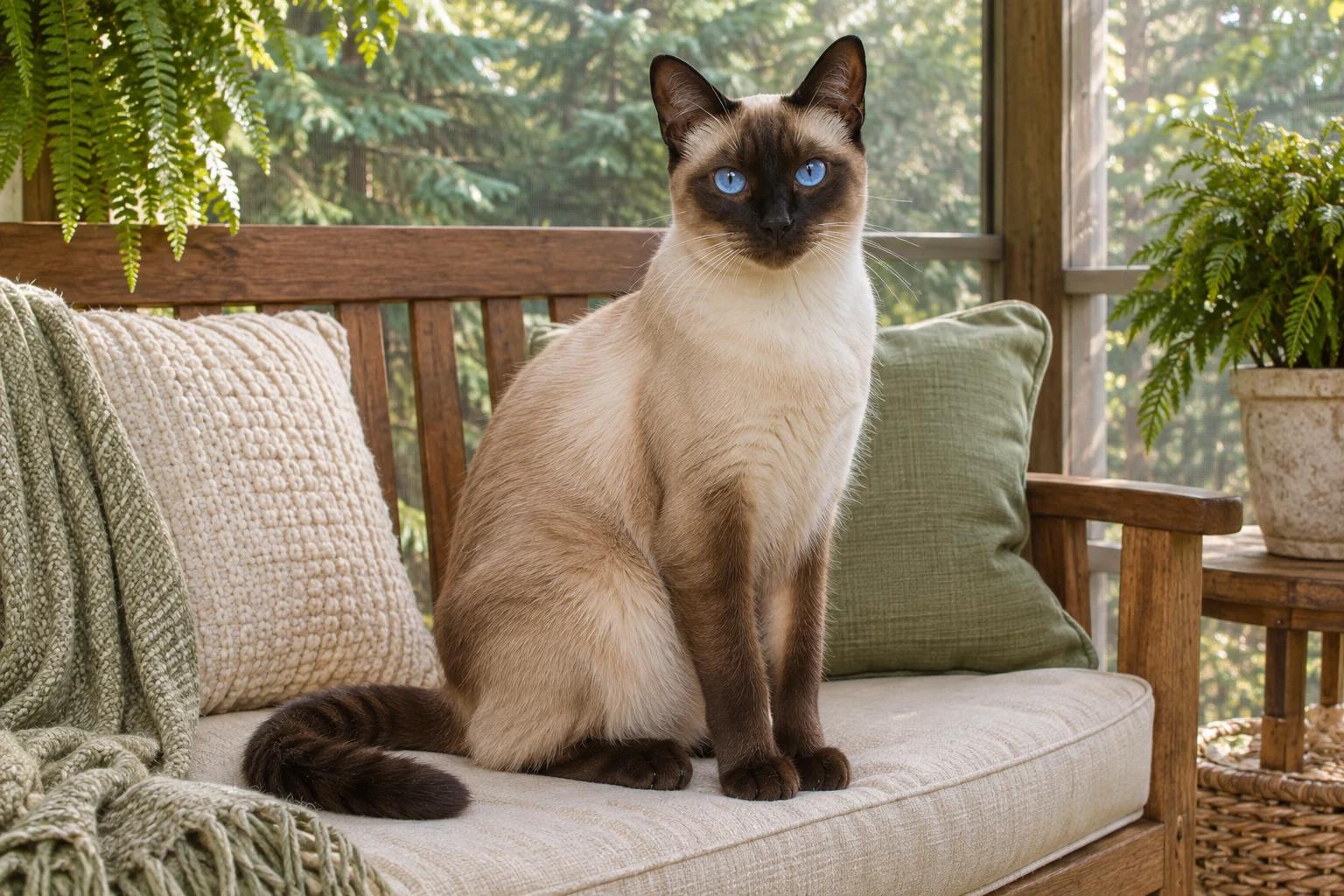
Thai cat vs tonkinese comparisons often begin with an appealing picture of a people-focused, shorthaired companion. The breeds have related Siamese context, but their names do not describe the same cat. TICA's Thai account emphasizes a moderate type associated with Thailand's Wichien-maat ancestry. CFA describes the Tonkinese through development involving Siamese and Burmese, with a muscular body intermediate between those parent types.
If you are considering a thai cat or tonkinese, use those distinctions to organize the meeting. A related background cannot decide which individual enjoys your household's noise, contact, play or ordinary absences.
Thai cat vs Tonkinese: begin with the actual distinction
TICA describes the Thai's laterally rounded upper head and projecting wedge-shaped muzzle, together with a very short coat. CFA describes the Tonkinese's modified wedge and rounded muzzle on a medium, muscular body. These are different accounts of type, not instructions for authenticating a cat from a photograph.
Read the Thai profile and Tonkinese profile with the individual records. Ask which breed and registry description apply when an advertisement uses several names loosely. Preserve uncertainty where the history is unknown.
The difference between thai cat and tonkinese includes pattern context too. CFA describes Tonkinese mink, solid and pointed categories, with eye descriptions related to those patterns. A familiar pointed appearance alone should not erase the distinction between the breeds.
Compare conversation during the same part of a day
Both accounts give reason to discuss vocal companionship. That is more useful than choosing one on an unsupported promise of silence. Ask each caregiver what happens during a working morning, when somebody returns home and when attention shifts elsewhere.
Request examples rather than a label such as talkative. A cat calling while a familiar person prepares an activity presents a different observation from an unfamiliar change during rest. Keep that context attached when deciding what your household can accommodate.
A quiet meeting cannot predict every evening, and an excited greeting cannot describe the whole day. Seek veterinary advice about a new or concerning change instead of attributing every sound to Siamese-related ancestry.
Give company a realistic place in the schedule
The Thai profile asks whether sustained companionship fits the household. The Tonkinese profile similarly includes sociable, affectionate tendencies. Explain actual work hours and backup arrangements rather than comparing what you could provide on an unusually free weekend.
Ask where the animal rests when a familiar person is busy. Proximity, petting and being carried are different preferences. During a meeting, let the cat choose how close to come and when the encounter ends.
Adults should guide children and guests before they approach. A social description is not permission to pass the animal between people. An encounter that includes observation without touch can still provide useful information about the individual.
Prepare for investigation without making a challenge
TICA emphasizes Thai curiosity and athletic activity. CFA's Tonkinese account also describes involvement in the household. Ask which games and structures each candidate already uses rather than ranking intelligence from a puzzle offered during a visit.
Secure inappropriate materials and follow installation instructions for climbing equipment. A learned cue should not be the only protection around an exterior door or attractive cupboard. An inquisitive reputation is a reason to prepare the room thoughtfully.
FelineVMA's indoor-cat guidance joins play with retreat and resources. Check routes as well as objects: can the animal leave a busy interaction, reach essentials and choose a resting place without another pet blocking every option?
Make short-coat care concrete
The current Thai profile offers gentle weekly attention as general short-coat care. The Tonkinese profile uses a weekly rubber-brush starting routine. Those site references should remain distinct from a claim that every registry publishes the same frequency.
Ask what the actual animal accepts and which tool is used. A short coat does not mean no maintenance, and liking petting does not establish comfort with every brush. Learn where professional help is available if handling or the coat changes.
This comparison does not recommend a bathing program or rank the breeds for allergies. An unexplained skin finding or changed response to care deserves individual advice rather than a product selected from an appearance comparison.
Keep introductions separate from affection
A history with one cat or dog is useful, but it cannot guarantee a relationship with your resident animal. Obtain guidance about the actual individuals and prepare separation, retreat and appropriate resources before contact.
The existing Thai resource-access article addresses a particular household problem. It should not be read as evidence that all social cats share every route comfortably. This comparison does not diagnose tension or replace its veterinary and access guidance.
Likewise, do not assume a second pet automatically answers companionship needs. Learn the relevant history and support arrangements rather than treating another animal as equipment added to complete a breed's lifestyle description.
Put the shortlist into ordinary responsibilities
For a tonkinese vs thai cat decision, write down the same information for both candidates: a familiar activity, a contact preference, ordinary calling, one care task and a question still requiring help. A comparable account is easier to assess than two promotional summaries.
Use the cat quiz to organize wider preferences, then bring the answers to the caregiver conversation. Ask which responsibility is most likely to surprise a new household. Include inconvenient information instead of filling uncertainty with the adjective you prefer.
The useful outcome is an individual whose needs you understand and can support. Related histories can explain your interest while leaving the actual relationship open to observation and responsible preparation.
Frequently asked questions
Are Thai and Tonkinese interchangeable names?
No. TICA describes a moderate Thai type associated with Wichien-maat ancestry; CFA describes distinct Tonkinese development involving Siamese and Burmese. Ask about the actual records.
Is one guaranteed to be quieter?
No individual noise ranking is established here. Discuss familiar daily behavior and the household's expectations honestly.
Does short hair mean little daily commitment?
No. Coat maintenance and companionship are separate responsibilities. Assess the individual's care, activity and support during absences.
Can a social reputation establish compatibility with another pet?
No. The actual animals and introduction arrangements need consideration, with suitable guidance, separation, resources and retreat.
Sources behind this article
Article source checked: November 20, 2026. Source checked 2026-11-20
Keep reading

Abyssinian vs Somali: Coat, Size and Everyday Company
Read article →