Swedish Lapphund vs Schipperke: Size and Daily Life
Compare Swedish Lapphund vs Schipperke through adult size, body shape, coat pattern, working background and everyday ownership.
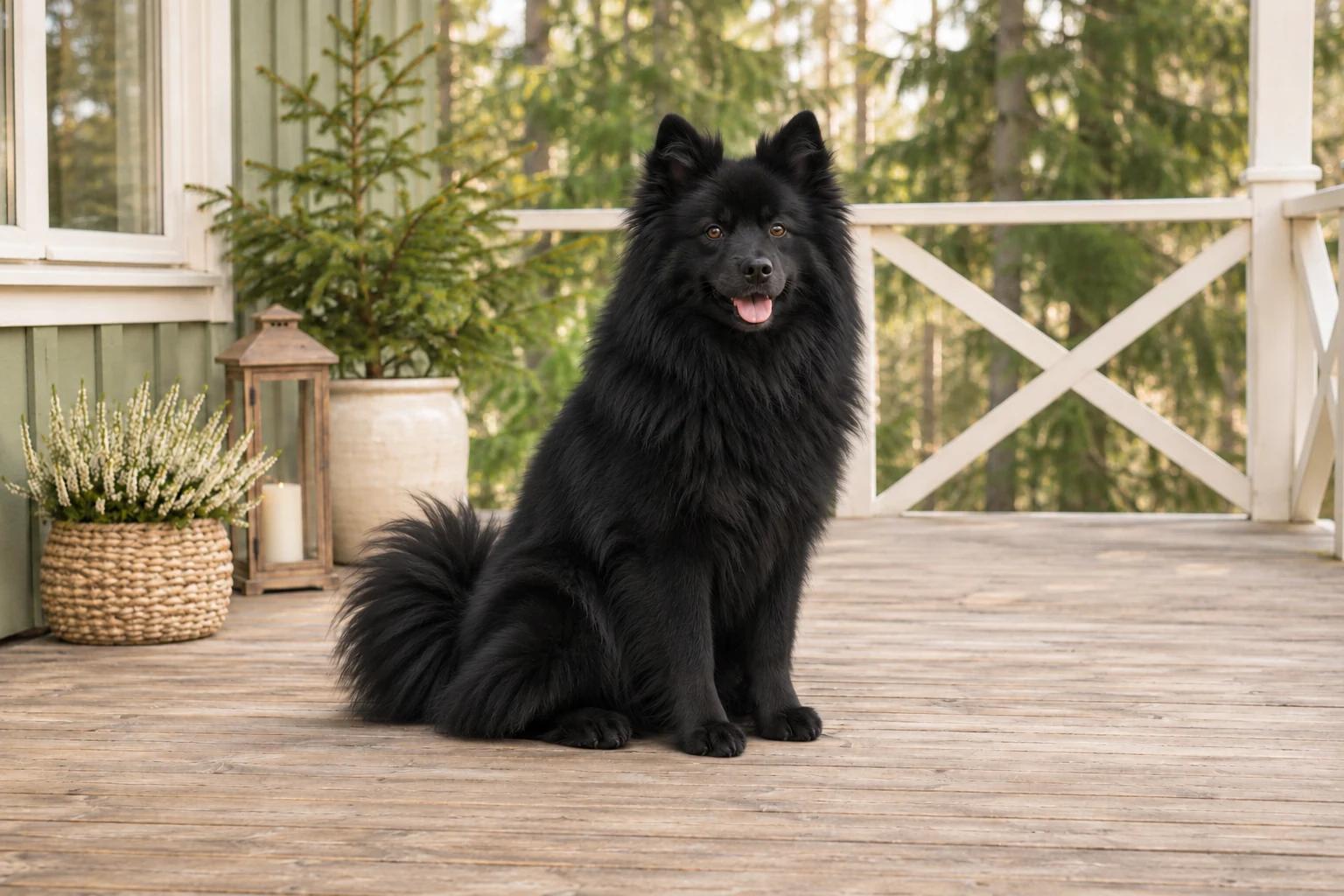
Swedish lapphund vs schipperke is not a comparison between interchangeable black-coated companions. The Swedish Lapphund profile lists adults at 31–44 pounds, with females at 31–35 and males at 35–44. The Schipperke profile gives both sexes a 9–15-pound adult reference. That is a substantial difference in physical scale before coat, behavior or household fit enters the discussion. Neither reference predicts an individual puppy's exact adult weight.
Swedish Lapphund vs Schipperke: compare their outlines
The FCI describes the Swedish Lapphund as rectangular, with the body slightly longer than its height at the withers. Its chest reaches the elbows, the back is strong and level, and the head is carried proudly. FCI: Swedish Lapphund standard.
The small, triangular ears are mobile and set apart. The tail is carried curled over the back in movement. Its plentiful double coat stands away from the body, with a dense undercoat and a ruff around the neck. Longer hair appears behind the legs and on the tail, adding to the outline without changing the underlying proportions.
Look at the whole dog rather than estimating its shape from the outer edge of the coat. The standard describes light, springy movement with drive, which provides another part of the physical picture. A still image cannot show that movement. These features describe the intended breed type, not a test that an owner can use to diagnose health or predict personality from a silhouette. The frame, coat and movement each contribute different information.
The Schipperke has a square frame and a patterned coat
The AKC standard describes the Schipperke as square and thickset. Its coat has distinct lengths: the neck ruff, shoulder cape, chest jabot and rear-thigh culottes create a recognizable pattern. The coat's contribution to the outline is therefore more specific than simply having plenty of hair. AKC: Schipperke standard.
The ruff makes the shoulders appear higher, while the body coat and the hair along the back lie differently. A softer, dense undercoat supports the harsher outer hair. Looking only at a fluffy neck can obscure the differences between this pattern and another breed's coat.
Its wedge-shaped head has small, erect ears and oval eyes. The chest is broad and deep, with a short muscular loin. These details explain why small does not mean lightly built. They also offer more useful points of comparison than treating every dark, pricked-ear dog as the same outline at a different size. The standard's description of an inquisitive expression is an appearance ideal, not evidence that a particular photographed dog is comfortable with the situation around it.
The Lapphund's background combines work and close companionship
The Norwegian Kennel Club places the Swedish Lapphund within the history of northern Scandinavia, where dogs fulfilled several roles for the people living there. Its account describes watchdog and hunting functions alongside a close relationship with their owners, followed by work helping keep reindeer together. NKK: Swedish Lapphund.
That context helps explain why companionship and useful work are not opposing ideas in this breed's story. A companion was not necessarily a dog with nothing to do, and a working dog was not necessarily distant from the people it accompanied. The account's emphasis on outdoor engagement also makes the surroundings relevant when considering the breed.
For a prospective owner, the useful question is whether an involved daily relationship appeals, not whether the home resembles a historic northern settlement. Heritage provides context, not instructions to recreate livestock work without experience. It also cannot establish what any particular dog has already learned. An adult raised in a modern household should be assessed through its own history and behavior rather than assigned skills solely because earlier generations performed useful work.
The smaller Schipperke still needs deliberate teaching
The Schipperke Club of America's guide describes curiosity, independence and a tendency to investigate openings or dash through doors. It emphasizes teaching a return when called and being patient with a dog that has its own interests. Schipperke Club of America: breed guide.
For an owner choosing the smaller dog, this is an important distinction: reduced body weight does not remove the need for everyday skills. A compact companion can still find an open doorway highly interesting. Think about the dog's actual experience of doorways and outdoor exploration rather than assuming that it will stay close because it is small.
The club also describes a dog that likes to accompany its people and take part in what they are doing. That interest can be appealing, but it should not be confused with automatic obedience. Patient teaching is part of the relationship. The choice is not between a larger dog that needs engagement and a smaller dog that arrives ready to manage itself. A Schipperke's independent streak and interest in its surroundings deserve consideration alongside its portable-looking dimensions and familiar appearance.
Compare the references without choosing by one score
For a schipperke vs swedish lapphund decision, the size gap is clear in the current adult references. The Swedish Lapphund's height interval is 16–20 inches; the Schipperke's is 11–13 inches for males and 10–12 for females. Weight and height both matter, rather than either being a complete description alone.
The profiles give both breeds shedding at 3/5 and grooming frequency at 2/5. Those shared references do not mean identical coats or zero maintenance.
Family affection is 5/5 for both, while their other-dog references are 3/5. Neither establishes compatibility with a particular resident dog. Use the breed quiz to consider the full commitment. The separate Swedish Lapphund activity-choice article addresses a different question from this comparison of everyday fit.
Frequently asked questions
Which has the larger adult weight reference?
The Swedish Lapphund: females are listed at 31–35 pounds and males at 35–44. The Schipperke reference is 9–15 pounds for both sexes. These are adult ranges, not exact puppy predictions.
Is Swedish Lapphund or Schipperke taller?
The Swedish Lapphund adult reference is 16–20 inches. The Schipperke reference is 11–13 inches for males and 10–12 for females. Compare adult measurements rather than judging height from a close-up photograph.
What is a useful difference between Swedish Lapphund and Schipperke?
Physical scale is a clear difference. The adult weight intervals do not overlap, while both profiles share a 3/5 shedding reference. Decide which dimensions of ownership matter instead of treating every category as different.
Sources behind this article
- FCI: Swedish Lapphund standard ↗
- AKC: Schipperke standard ↗
- NKK: Swedish Lapphund ↗
- Schipperke Club of America: breed guide ↗
Article source checked: November 16, 2026. Source checked 2026-11-16
Keep reading

Affenpinscher vs Brussels Griffon: Everyday Differences
Read article →