Swedish Lapphund Temperament in Everyday Life
Explore Swedish Lapphund temperament through family engagement, attention lessons, arrivals and considerate introductions to other dogs.
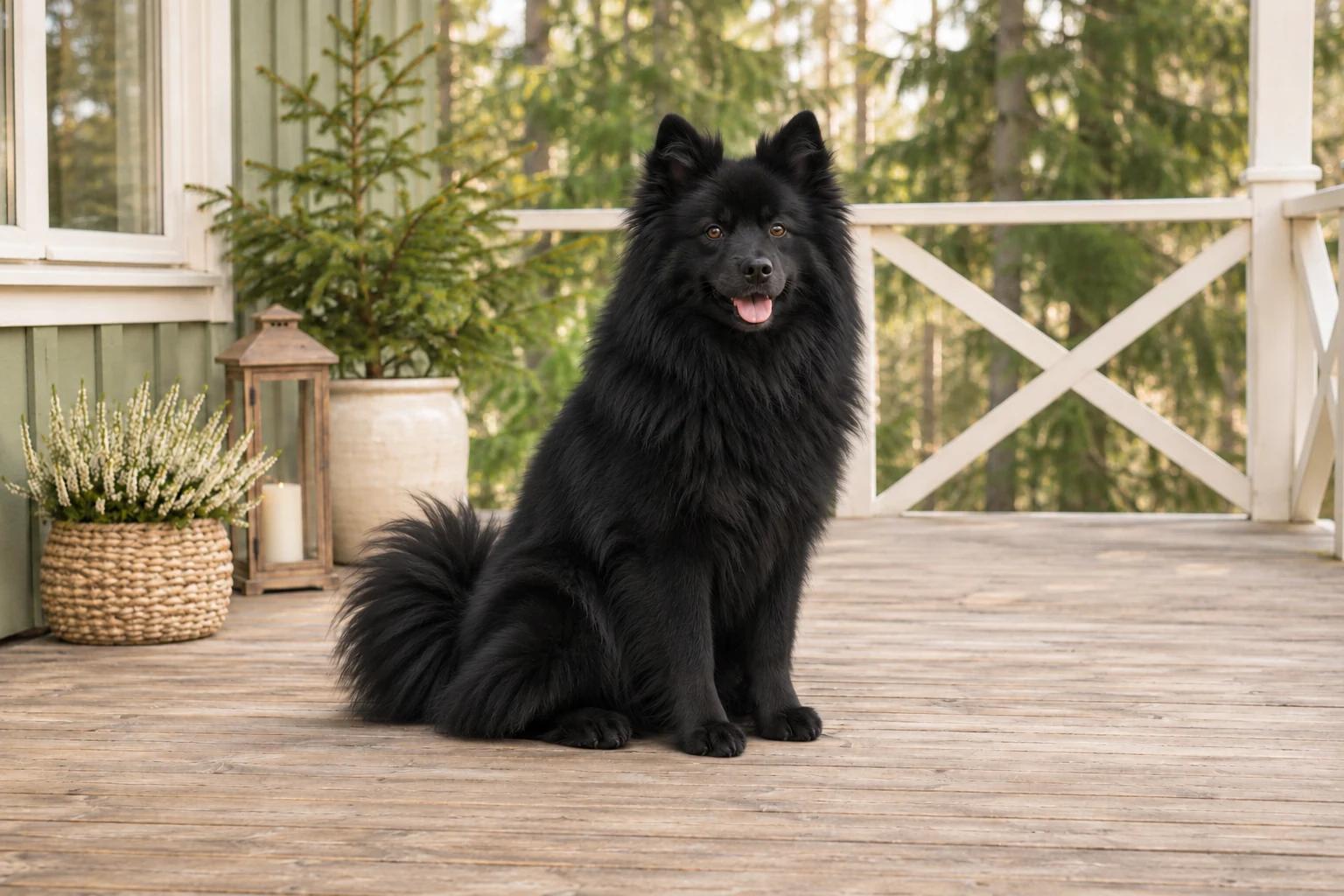
Swedish lapphund temperament is best considered through everyday interactions, not a single label such as friendly or clever. The Swedish Lapphund profile describes a strong interest in family company and a relatively vocal dog. It also distinguishes openness to new people from compatibility with other dogs. A companion that enjoys human interaction still needs individual assessment around unfamiliar dogs, and an affectionate relationship does not mean every exciting moment will be quiet.
Swedish Lapphund temperament combines engagement and responsiveness
The Swedish Kennel Club describes an active, social dog that enjoys working with its owner. Its account notes that the breed can respond quickly when something happens but can also relax again. Young dogs need stable, consistent upbringing rather than an assumption that intelligence will supply the missing lessons. Swedish Kennel Club: Svensk lapphund.
This gives useful context to Swedish lapphund personality. Being involved and being constantly busy are not the same thing. The relationship includes attending to the person, learning what happens next and having opportunities to stop. Quick responses can be welcome during a familiar lesson and less convenient when the event is an unexpected arrival.
The club also reports owners describing the breed as hardworking, smart and stubborn. Those words should prompt a closer look at the situation, not a contest over who is more determined. Ask what the individual dog understands and what is competing for its attention. Consistency means making the lesson understandable across repetitions; it does not mean insisting that a young dog already behaves like an experienced adult. The breed description offers a starting point, not a guaranteed personality for every puppy.
Teach attention before asking for it around distractions
Battersea's attention exercise starts in a quiet place. Hold a treat to the side and reward the dog for voluntarily looking toward your face rather than staring at the food. Add a cue once that response becomes predictable, then gradually build duration and reduce the hand prompt. Battersea: teaching watch me.
For a Lapphund interested in what is happening nearby, this creates a specific, teachable response instead of the vague demand to pay attention. Initially, a brief glance is enough. Asking for a long stare immediately changes the task before the dog has learned the basic action.
Move to a new setting only when the easier version is working, and make the task easier again when surroundings change. A response learned in a quiet room is not proof that the same dog can hold attention beside an exciting doorway. Do not force eye contact, particularly if the dog is uncomfortable. The value is voluntary engagement: the dog discovers an action it can offer and receive a reward for, rather than being physically positioned until it appears attentive.
Practice the sound of arrivals separately from real visitors
Dogs Trust recommends breaking visitor training into manageable parts. For door sounds, begin with a quiet knock on a nearby surface and reward calm responses. Gradually increase the sound, then practice closer approximations of the real event, such as a recorded bell or a helper at the door. Dogs Trust: visitor training.
This is especially relevant when considering Swedish lapphund behavior around household arrivals. A real visit combines noise, movement and a person entering; practicing all of it at once can make the lesson unnecessarily difficult. A quiet rehearsal gives the dog a simpler version before the full event appears.
If the dog rushes or barks, make the next attempt easier rather than repeating the same intensity until everyone is frustrated. A louder sound is not automatically a better training opportunity. Arrange genuine visits so the dog is not required to perform an unfinished lesson while the guest waits in the doorway. This approach aims to change the response through gradual practice, not to prove that a vocal breed can be made silent on demand. Progress depends on the individual dog's comfort with each stage.
Keep dog greetings brief and optional
Battersea advises checking with the other owner before an on-lead greeting, approaching in an arc rather than directly head-on, and keeping the initial interaction short. Call the dog away after a brief greeting and reward returning with you. Battersea: introducing dogs on walks.
For a Lapphund whose human sociability is one of its attractions, this is a useful separate skill. Enjoying people is not permission to approach every dog. A dog on the opposite end of another lead may need space, and its owner may decline the meeting. Passing without contact can be a successful walk.
Let the interaction end before it becomes prolonged or uncomfortable, rather than treating more time nose-to-nose as automatically better social experience. The aim is a manageable encounter with room to leave, not friendship at the first attempt. If your dog repeatedly appears fearful or reacts aggressively, seek qualified professional help rather than arranging more close greetings as a test. Individual comfort takes priority over showing that a breed described as sociable can meet every dog in the neighborhood without difficulty.
Put Swedish Lapphund characteristics in the right categories
The current profile separates family affection, openness to new people and interaction with other dogs. That distinction matters more than compressing them into “friendly.” Family familiarity is one context; a stranger entering the house is another; a dog encountered on a walk is a third. No single rating measures the outcome of all three.
The adult reference also matters when imagining the companion behind these descriptions: females are listed at 31–35 pounds and males at 35–44, with an overall height interval of 16–20 inches. This is a substantial dog, not simply a small black-coated pet enlarged in a photograph.
Use the breed quiz to consider the wider match. The separate Swedish Lapphund activity-choice article looks at choosing an outlet; this guide focuses on interactions and everyday learning.
Frequently asked questions
Does affection for family predict compatibility with another dog?
No. The profile treats family affection and interaction with other dogs as separate categories. The particular dogs and their experiences matter; a breed label cannot establish compatibility between a pair.
Is this a good choice solely because I want a quiet companion?
Quietness should not be the assumption. The current profile describes vocal tendency as relatively high. Assess the individual dog's everyday behavior rather than choosing on appearance or affection alone.
Is the Swedish Lapphund a small lapdog?
Its adult reference is 31–44 pounds overall, with females listed at 31–35 and males at 35–44. Affection and interest in company do not change that physical scale.
Sources behind this article
- Swedish Kennel Club: Svensk lapphund ↗
- Battersea: teaching watch me ↗
- Dogs Trust: visitor training ↗
- Battersea: introducing dogs on walks ↗
Article source checked: November 16, 2026. Source checked 2026-11-16
Keep reading

Airedale Terrier Temperament: What Everyday Life Can Feel Like
Read article →