Swedish Lapphund Shedding and Coat Care
Understand Swedish Lapphund shedding, seasonal brushing, gentle double-coat care, bathing and when unusual hair loss needs veterinary attention.
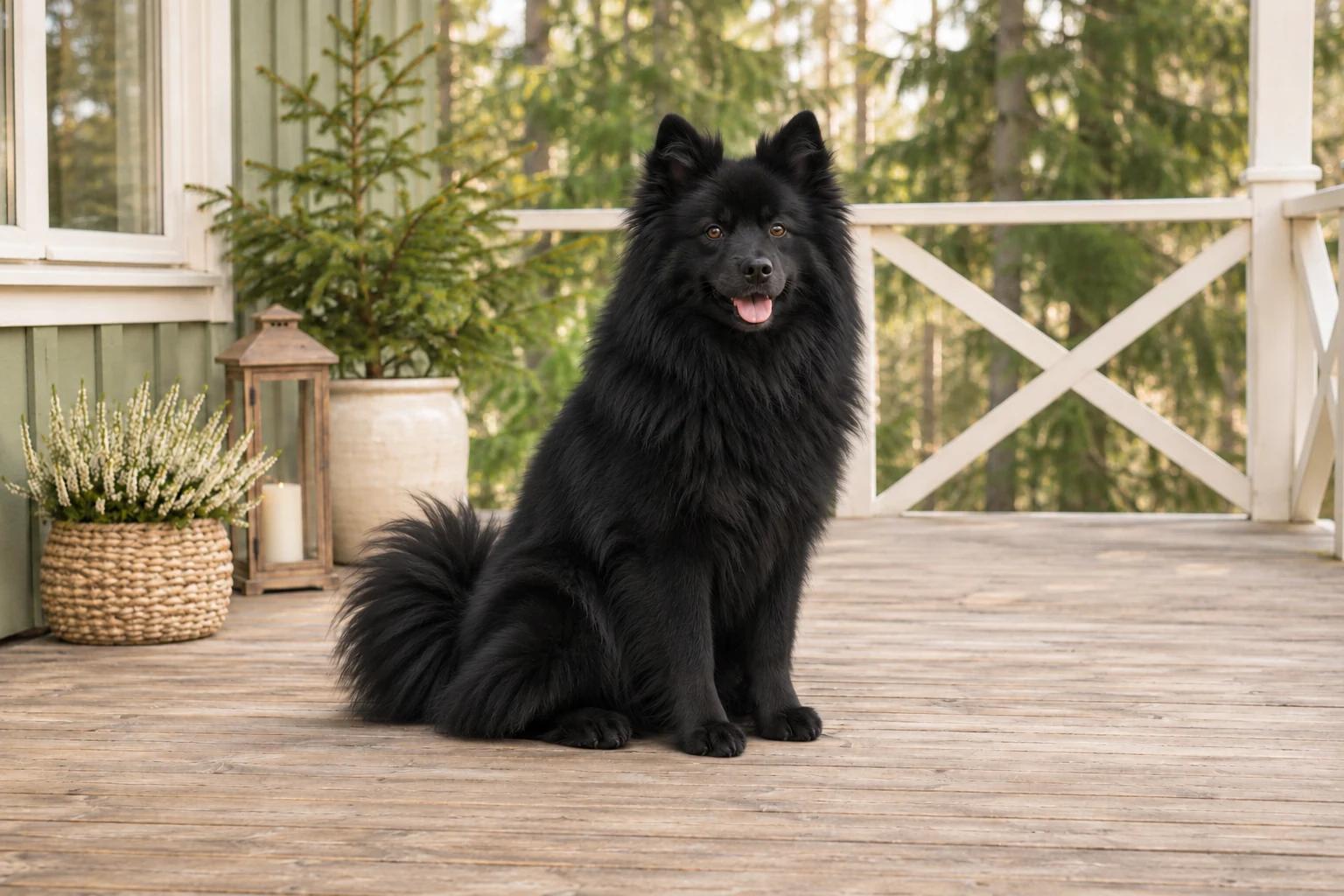
Swedish lapphund shedding belongs in the ownership decision, not just the cleaning routine after a dog arrives. The Swedish Lapphund profile identifies a long double coat, with shedding rated 3/5 and grooming frequency 2/5. Those two categories measure different things. A relatively low grooming-frequency reference does not describe a hair-free household, nor does a middle shedding reference promise that every week will look alike. Understanding that distinction is more helpful than choosing between the labels “easy coat” and “difficult coat.”
Swedish Lapphund shedding changes the brushing workload
The Canadian Kennel Club recommends weekly brushing and occasional bathing for the Swedish Lapphund, with more brushing when the undercoat sheds. Its grooming account describes heavier coat loss once or twice a year. Treat that as a description of a changing workload, not an appointment that every dog keeps on the same dates. Canadian Kennel Club: Swedish Lapphund.
The practical difference is between ordinary maintenance and a period when substantially more loose coat needs attention. A weekly routine can be a starting point without becoming a reason to leave obvious loose hair untouched until the next scheduled day. Conversely, the heavier period should not be presented as the dog's unchanging condition throughout the year.
For someone learning Swedish lapphund coat care, this makes seasonal experience particularly valuable. Ask the person caring for the individual dog to demonstrate both an ordinary brushing and what changes during its heavier shed. The amount of coat coming away and the time needed to work through it are more informative than a photograph taken immediately after grooming.
Work through the coat rather than polishing its surface
RSPCA Australia explains that a double coat combines an outer layer with a softer undercoat. Its guidance favors working in sections for longer coats, using appropriate combs or rakes and gentle, short strokes rather than scraping the skin. RSPCA Australia: grooming your dog.
Applied to this Lapphund, the purpose is to reach the coat that needs attention without turning pressure into the tool for getting through resistance. Part a manageable section and work carefully instead of repeatedly sweeping over the same outer surface. A neat-looking finish does not establish that the underlying coat has been checked.
Include less visible places, such as behind the ears and around the legs, rather than giving all the attention to the broad back. Watch the dog as well as the hair: if the session becomes uncomfortable or worrying, stop rather than pulling harder to finish. Ask a professional groomer for help with mats or a technique you cannot perform comfortably. The useful outcome is a coat that has been gently attended to, not a pile of hair collected at any cost. More force is not more thorough grooming.
Make washing and handling separate skills
PDSA recommends introducing grooming gently, rewarding cooperation and stopping when a pet becomes worried. Its dog-care guidance also covers bathing with suitable dog shampoo and consulting a groomer when coat problems exceed what an owner can safely manage. PDSA: grooming pets.
A Lapphund that accepts a brush on its back may still need help becoming comfortable with a bath. Do not assume that success with one part of care transfers immediately to water, a different location or a longer handling session. Keep the experience manageable rather than adding every grooming task to the same encounter.
For washing, follow the product's directions and rinse thoroughly. Avoid substituting a human cosmetic product simply because it is already in the bathroom. The objective is cleaning, not making the dog smell like its owner. If you are unsure how to wash this particular coat, ask a groomer to demonstrate instead of improvising a stronger treatment. Professional help can also be appropriate before tangles turn a home session into a struggle. Cooperative handling and an appropriate product matter more than creating an elaborate bathing ritual.
Separate ordinary coat replacement from hair loss concerns
The Merck Veterinary Manual distinguishes normal replacement of old hair from hair loss that leaves bald areas or an obvious reduction in the coat. It also explains that itching, pain and skin changes can accompany hair loss, and that identifying the cause requires veterinary assessment. Merck Veterinary Manual: hair loss in dogs.
For a breed whose owners expect loose undercoat, that distinction is important. Expecting shedding should not become a reason to dismiss a new bare patch, repeated scratching or a change in the skin. Nor can the amount in a brush, considered alone, identify the cause of an unusual change.
Contact your veterinarian about concerning coat loss rather than trying to diagnose it from the breed label. Useful observations include where it started, whether it has spread and whether the dog seems itchy or uncomfortable. These are details for an examination, not a home test that proves a particular condition. Keep the focus on the dog beneath the coat: the same visible hair loss can have different explanations, and choosing a remedy from appearance alone can miss the underlying problem.
Read the breed's care reference in context
The current adult reference is 31–44 pounds, with females listed at 31–35 and males at 35–44. This is not a toy-sized dog despite the rounded impression a full coat can create. When considering how to groom a swedish lapphund, meet an adult rather than basing your expectations solely on a puppy picture.
The breed quiz can help place coat ownership beside the rest of the commitment. For a separate look at shared activities, see the Swedish Lapphund activity-choice article. A suitable coat routine is only one part of choosing this breed.
Frequently asked questions
Is the Swedish Lapphund a non-shedding breed?
No. Its current profile records a double coat and a 3/5 shedding reference. That is not a promise of a hair-free home or a precise quantity of loose hair for an individual.
Does grooming frequency 2/5 mean no coat care?
No. Grooming frequency and shedding are separate profile categories. The lower grooming reference should not be interpreted as an exemption from maintaining the dog's coat.
How large is the adult dog whose coat I will be caring for?
The current reference lists females at 31–35 pounds and males at 35–44 pounds, with an overall height interval of 16–20 inches. These describe adults, not a guarantee about a puppy's final dimensions.
Sources behind this article
- Canadian Kennel Club: Swedish Lapphund ↗
- RSPCA Australia: grooming your dog ↗
- PDSA: grooming pets ↗
- Merck Veterinary Manual: hair loss in dogs ↗
Article source checked: November 16, 2026. Source checked 2026-11-16
Keep reading

Affenpinscher Grooming: A Practical Coat-Care Routine
Read article →