Sussex Spaniel Size: Weight, Build and Growth
Understand Sussex Spaniel size through adult weight and height, substantial build, puppy growth and individual body condition.
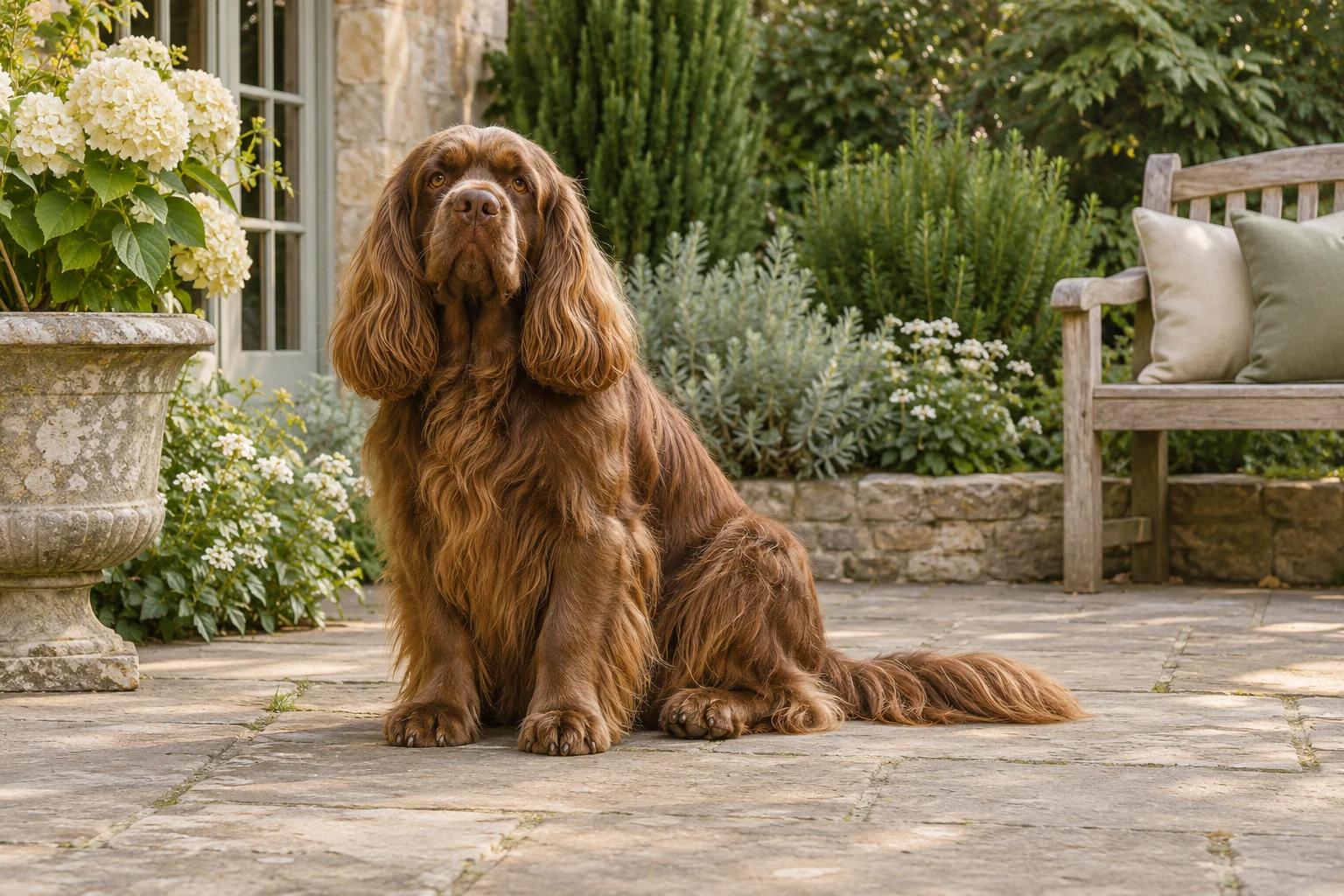
Sussex spaniel size is best understood using weight and height together. The Sussex Spaniel profile lists adults at 35–45 pounds and 13–15 inches. Neither interval predicts an individual puppy's final measurement. For someone picturing a small companion from a photograph, the weight deserves as much attention as the height. This guide explains the physical outline and the difference between adult references, growing bodies and individual condition.
Sussex Spaniel size includes a substantial rectangular body
The AKC standard describes a muscular, long-bodied dog whose outline is rectangular rather than square. Its short, heavily boned legs sit beneath a deep, wide chest, with substantial width through the back and loin. This is not simply a taller spaniel reduced in every dimension. AKC: Sussex Spaniel standard.
The forefeet are large and round, and the hindquarters are broad and strong. The head also contributes substance: a wide skull, broad muzzle and fairly heavy brows belong to the overall picture. Do not judge the dog's physical scale from leg length alone.
The standard connects the combination of chest shape, short legs and long body with a rolling gait. It nevertheless describes coordinated, powerful movement, not clumsiness. Watch the whole dog moving rather than interpreting every sideways shift as awkwardness. Conformation language describes an intended breed outline; it does not diagnose an individual dog's movement. A change in comfort or mobility needs veterinary assessment, not an explanation based only on breed identity. Structure and the ability to move comfortably are related questions, but they are not interchangeable judgments.
Height can stabilize before the adult body is finished
AKC's growth guide explains that long bones lengthen through growth plates, which gradually harden as development progresses. Once skeletal growth ends, muscle and body composition can still change. An apparently settled height therefore does not mean that every aspect of development has finished. AKC: puppy growth.
For a young Sussex, distinguish becoming taller from gaining weight and developing an adult physique. These are not three names for one event. A photograph or a single weigh-in cannot show which process accounts for a change.
The guide also points to information from the puppy's family as useful context when estimating eventual size. Ask about the parents and previous relatives, while allowing for variation within the breed and litter. That is more informative than assigning an exact finishing age from a generic size label. Your veterinarian can assess the individual puppy's development and advise on appropriate activity. Avoid treating an adult-looking outline as permission for demanding exercise; an owner's visual impression is not an examination of skeletal maturity. A growth estimate remains an estimate, not a deadline the puppy must meet.
Body condition answers a different question from pounds
VCA's puppy-weight guidance considers the waist and the ability to feel the ribs, not just the number on a scale. It recommends asking the veterinary team for help when an owner is unsure how to assess condition. VCA: evaluating puppy weight.
For a Sussex puppy, that distinction matters whenever someone assumes that reaching a breed reference automatically proves an appropriate body condition. The number describes total weight; it does not separately identify muscle, bone and fat. A dog can fall within a published interval without that interval answering the individual condition question.
Ask your veterinary team to demonstrate what they assess on your dog rather than trying to reproduce an online silhouette by changing food. Growth and feeding needs change together, so a plan deserves review as the puppy develops. Do not feed toward the largest figure because it sounds more impressive, or toward the smallest because it seems easier to manage. The useful target is appropriate development for this individual. Concerns about unexpected weight change belong with the veterinarian, not a homemade diet adjustment based solely on a breed chart.
Follow a growth pattern instead of chasing the middle line
Waltham's growth charts compare puppies by sex and anticipated adult size. The institute explains that a puppy tracking a lower curve can be growing normally; the central line is not a target every puppy should reach. Changes in the pattern deserve interpretation rather than an automatic attempt to move the dog upward. Waltham: puppy growth charts.
For a Sussex, use the expected adult range as a starting point for choosing a chart with your veterinary team, not as a guaranteed final weight. Accurate age and comparable measurements matter. Use the same scales when possible, and remove accessories that add weight. A veterinary scale is preferable to an awkward attempt to lift a dog that is too heavy or uncomfortable being held.
A series of measurements is more informative than repeated checks immediately around meals or toileting. If the pattern seems unusual, discuss it with your veterinarian; a curve is not a diagnosis. The chart should help you understand change over time, not turn puppy growth into a contest between littermates or a race toward the upper adult reference.
Read the adult reference without inventing a single ideal
The profile's Sussex spaniel weight interval spans ten pounds. Forty pounds is its arithmetic midpoint, but the midpoint is not a requirement. Likewise, a Sussex spaniel height of fourteen inches lies between the published endpoints without becoming the only correct adult height. A range deliberately leaves room for more than one adult measurement.
When asking how big do sussex spaniels get, keep both units in the answer: pounds describe weight, while inches describe height. Neither supplies an exact body length, and multiplying the height by an imagined universal proportion would introduce precision that the profile does not provide.
The breed quiz considers ownership beyond size. If the coat's appearance also interests you, the separate golden-liver hair-tip article explains that topic without turning color into a substitute for physical measurements.
Frequently asked questions
What is the adult Sussex Spaniel weight reference?
The current profile lists 35–45 pounds. This is an adult breed reference, not a promise that a particular puppy will finish at one endpoint or at the midpoint.
How tall is the adult reference?
The profile lists 13–15 inches. Read height alongside the 35–45-pound weight interval rather than using either measurement alone as a complete description of size.
Must every adult weigh forty pounds?
No. Forty pounds is simply halfway between the profile's weight endpoints. The published interval does not identify one mandatory weight for every individual.
Sources behind this article
- AKC: Sussex Spaniel standard ↗
- AKC: puppy growth ↗
- VCA: evaluating puppy weight ↗
- Waltham: puppy growth charts ↗
Article source checked: November 16, 2026. Source checked 2026-11-16
Keep reading
Sussex Spaniel Temperament: Company and Character
Read article →