Standard Schnauzer Grooming: Coat and Everyday Care
Understand Standard Schnauzer grooming, wiry coat maintenance, professional clipping choices and everyday care beyond the breed’s low shedding reference.
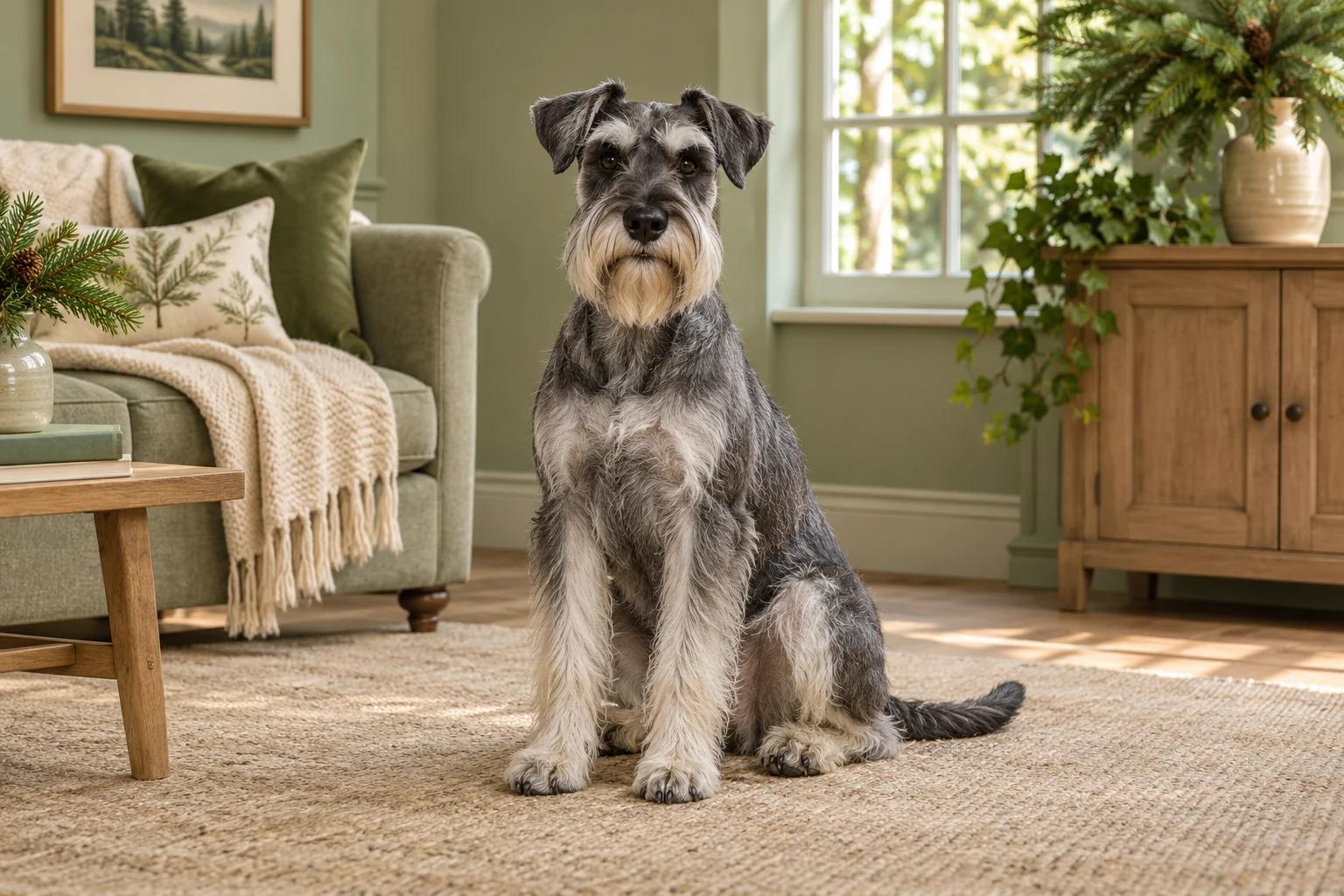
Standard schnauzer grooming is a meaningful part of ownership, even though the Standard Schnauzer profile gives shedding a low reference. Its grooming-frequency rating is 3/5, not the lowest category. Loose hair and maintenance effort are different questions. Before choosing the breed, understand what lies behind the familiar appearance and what routine care involves beyond keeping a dog presentable in photographs.
Standard Schnauzer grooming: understand the two coat layers
The AKC standard describes a harsh, wiry outer coat over a soft, close undercoat. The outer hair stands away from the back when examined against its direction of growth rather than lying smooth and flat. This is a textured double coat, not a single smooth covering. AKC: Standard Schnauzer standard.
The beard, eyebrows and longer leg hair are called furnishings. They should complement the dog's working outline rather than become excessively profuse. The brows should not obstruct vision or hide the eyes. The rectangular head and its facial hair belong to a complete, functional picture, not a requirement to grow the longest possible beard.
The standard also describes a show presentation in which the body coat is plucked to emphasize the outline. That explains what a conformation photograph depicts; it does not teach an inexperienced owner how to perform the procedure. Separate understanding the breed's appearance from undertaking skilled grooming. A description of the ideal coat is not a hands-on lesson in preparing one.
Decide how the coat will be maintained
The Standard Schnauzer Club of America explains that beard and leg hair need brushing and combing often enough to prevent mats. Its guidance distinguishes hand-stripped show coats from pet coats maintained with professional clipping. Clipping is a simpler option, but the club notes that the coat texture can soften over time. SSCA: frequently asked questions.
That is the central practical choice in standard schnauzer coat care. Ask an experienced groomer to explain the difference on your dog's actual coat, including what you will need to maintain between appointments. Do not assume that a machine-trimmed outline and a hand-stripped texture are the same result.
Neither approach eliminates the beard and leg-care task. A professional appointment is not a substitute for noticing a developing tangle between visits. If you want to learn how to groom a standard schnauzer yourself, begin with a demonstration of ordinary maintenance and discuss the more specialized work separately. The club offers a grooming guide covering both approaches, which can support instruction rather than replace practical help with an unfamiliar technique.
Brush thoroughly without treating resistance as a challenge
AKC's home-grooming guidance recommends gentle strokes that reach through the coat, with checks for debris, mats and skin changes. The areas behind the ears and under the legs deserve attention. Ask a groomer which tools suit the individual coat rather than buying a brush solely because another dog's owner recommends it. AKC: home grooming.
For this Schnauzer, a smooth-looking surface should not be your only criterion for finishing. Check the areas you can easily overlook while admiring the visible outline. A damp towel can remove ordinary outdoor dirt; bathing calls for dog-specific products and thorough rinsing. More shampoo is not automatically better care.
Inspect the paws and nails too, and get professional help with trimming if you or the dog find it difficult. Do not insert objects deep into the ears. Redness, unusual discharge, injuries or other concerning changes belong with your veterinarian. Grooming offers a chance to notice a problem, but the groomer or owner should not diagnose its cause simply from how the coat looks.
Teach mouth care as a separate cooperative skill
VCA's toothbrushing lesson starts with a comfortable position and rewards for remaining comfortably in place before dental equipment is introduced. A soft brush and pet toothpaste are appropriate; human toothpaste is not. Your veterinary team can demonstrate the technique for your dog. VCA: successful toothbrushing.
Introduce the brush in small, pleasant steps, then brief contact with the accessible outer teeth. Do not pry the mouth open. Short brushing intervals followed by rewards can build toward longer care as the dog remains relaxed.
This matters for a bearded dog because a tidy-looking muzzle does not mean the teeth have received attention. Coat care and oral care are different tasks. Watch for turning away, tense lips, freezing or retreating from the brush. Those are reasons to slow down, not tighten your hold. If progress stalls, ask a professional experienced in cooperative care for help. The goal is a repeatable, comfortable routine, not completing the entire mouth on the first attempt. Your dog sets the learning pace; the calendar does not make an uncomfortable step acceptable.
Fit the care commitment to the whole dog
The profile lists a double, wiry coat and a grooming-frequency reference of 3/5. Standard schnauzer shedding is rated 1/5, but that number should not be read as a zero-hair promise or an assurance about allergies. It also does not measure the amount of skill involved in a chosen presentation.
The adult reference is 30–50 lb, with females 30–45 lb and males 35–50 lb. Plan care around the adult you will actually handle rather than a photograph of a small puppy. Size alone does not describe the individual's experience of grooming, and two dogs in the same weight interval may have learned different care routines.
The breed quiz can help you consider grooming alongside the rest of ownership. For a separate look at organized activities, see Standard Schnauzer Barn Hunt and Earthdog distinctions. Interest in the breed's work should sit alongside willingness to provide its ordinary care.
Frequently asked questions
Does low shedding mean low grooming effort?
No. The profile gives shedding 1/5 and grooming frequency 3/5. The two categories describe different aspects of ownership, so the lower shedding reference does not cancel the maintenance commitment.
Do male and female Standard Schnauzers have identical adult weight references?
No. The profile lists males at 35–50 lb and females at 30–45 lb. Their intervals overlap, so sex alone does not establish which of two individuals is heavier.
Does the breed's training rating mean grooming is already learned?
No. A breed-level learning reference cannot tell you what a particular dog has experienced. Ask about the individual's existing care routine rather than assuming that breed identity represents completed training.
Sources behind this article
- AKC: Standard Schnauzer standard ↗
- SSCA: frequently asked questions ↗
- AKC: home grooming ↗
- VCA: successful toothbrushing ↗
Article source checked: November 16, 2026. Source checked 2026-11-16
Keep reading

Affenpinscher Grooming: A Practical Coat-Care Routine
Read article →