Staffordshire Bull Terrier Exercise Needs
Understand Staffordshire Bull Terrier exercise needs with controlled tug, Rally, nose-target learning and practical ways to meet an active dog’s needs.
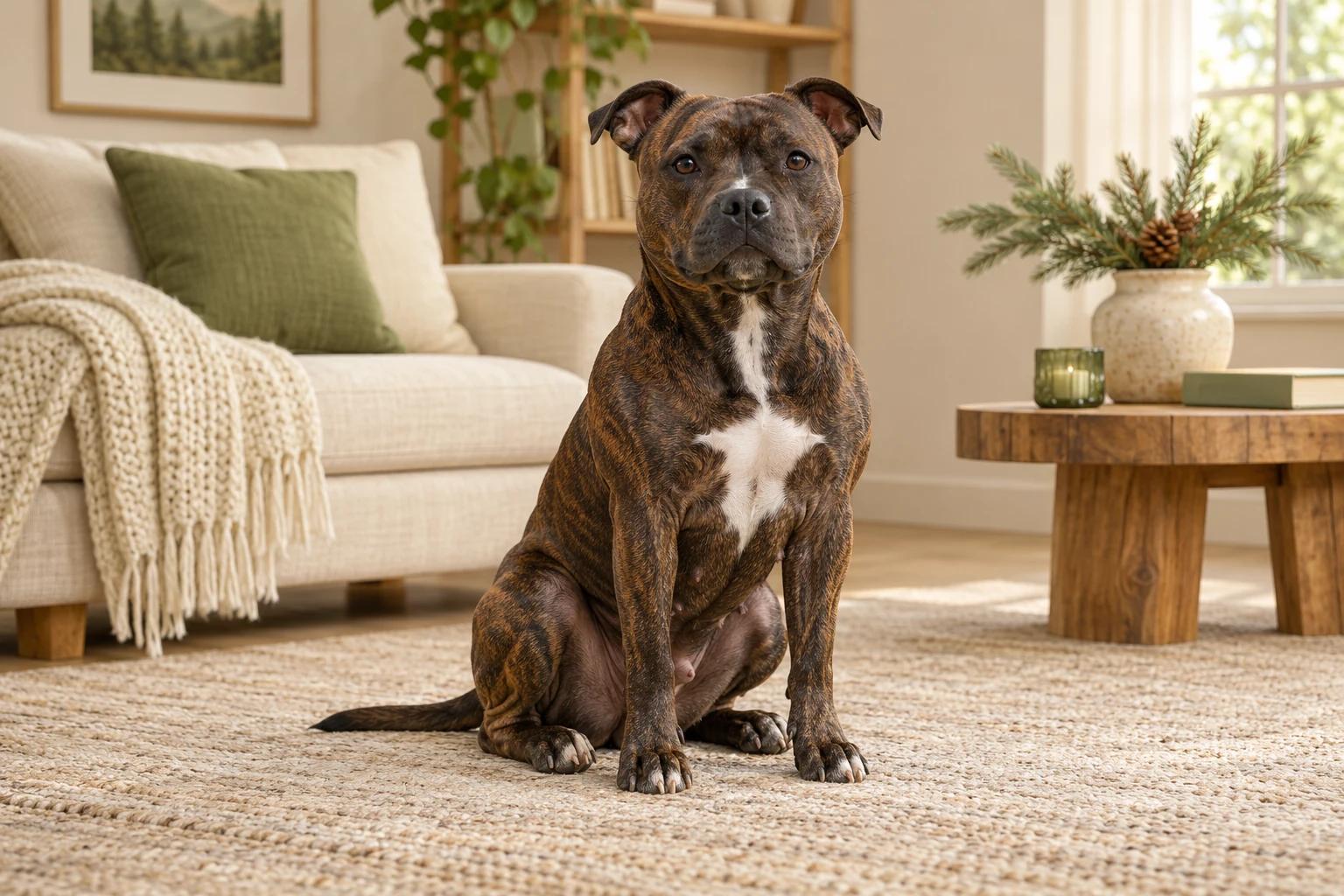
Explore the
Staffordshire Bull Terrier
Background, care, and everyday considerations.
View breed profile →Staffordshire bull terrier exercise needs deserve serious attention despite the breed's relatively compact size. The Staffordshire Bull Terrier profile lists adult weight at 24–38 lb, activity at 5/5 and mental engagement at 4/5. Those figures describe different things: the weight range is not evidence that the dog needs little to do. This guide looks at practical activities that combine movement, interaction and learning.
Staffordshire Bull Terrier exercise needs: an active partnership
PDSA describes an energetic dog that enjoys playing with its owner, with chewing and scent-based activities among its interests. It recommends a mixture of walks, play and mentally challenging training, rather than treating one outing as the entire day. Suitable, durable toys matter for a dog inclined to put its mouth to work. PDSA: Staffordshire Bull Terrier.
A food-reward puzzle can offer a different challenge from running. Choose an appropriate item for the individual rather than assuming that anything sold as a dog toy will withstand its attention. The aim is a usable activity, not a test of how quickly the dog can destroy the equipment.
PDSA also notes that some Staffies dig or jump their way past inadequate boundaries. Check the security of an exercise area before relying on it for free movement. A garden can support activity, but its existence does not automatically supply interaction or training. The breed's enthusiasm makes the quality of that space relevant, not simply the area listed in a property description.
Keep tug cooperative and physically controlled
AKC's tug guidance treats the game as shared play, not a contest for dominance. Use an invitation to begin, a learned release and brief bouts with pauses. A sufficiently long, comfortable toy helps keep hands away from the dog's grip. AKC: playing tug.
Keep the dog's feet on the ground and its neck and spine in a natural alignment. Do not jerk the toy vertically, twist the dog or lift it by its mouth. Adjust resistance to the individual, and consult your veterinarian if physical comfort is uncertain.
For a Staffy, this can be an opportunity to practice switching between taking the toy, releasing and re-engaging. The interesting part is the interaction, not how much force either partner can produce. Letting the dog win is not surrendering authority, and chasing it to reclaim the toy is not a necessary part of the game. If tug is not appealing to your dog, use another reward. A breed-level playfulness rating is not an instruction to insist on one particular game.
Explore Rally for movement with precision
AKC Rally has dog-and-handler teams follow signs that specify skills along a course. The emphasis is accurate teamwork rather than speed. Handlers can encourage their dogs with verbal cues and hand signals, and the Novice level is performed on leash. AKC: Rally introduction.
That offers a useful direction for an owner who wants the Staffordshire bull terrier activity level to have a learning component. You are not merely adding faster movement; you are learning to communicate while moving together. A beginner class can teach the required skills and show the handler how to navigate the signs.
You do not need specialized equipment to start learning, and watching a course can make the format easier to understand. Competition is a later choice, not the first requirement. Practice the component skills with suitable instruction before imagining a complete trial performance. A dog can enjoy the work while its owner is still learning where to go. Treat the activity as a partnership in which the human has skills to develop too, rather than an examination of the dog's intelligence alone.
Add a simple nose-target lesson
Battersea teaches a nose touch by first offering a hand in a quiet setting and rewarding the dog's investigation. Progress to rewarding actual nose contact, then add a cue once the action is understood. Move the target gradually rather than immediately presenting it in difficult positions. Battersea: nose touch.
This can add a small learning task to a staffordshire bull terrier daily walk once the foundation is established. Begin somewhere easy, not in the middle of a distraction that already absorbs the dog. If the dog moves away from the hand, give it more space rather than pursuing its face.
The lesson can eventually transfer to another target, such as a note placed on an object. That creates options beyond touching your palm. Keep progress at the dog's pace; frustration or loss of interest is a reason to simplify. A successful touch close by is enough for an early session. You are building an understood action, not trying to make the dog follow a hand around indefinitely for an unseen reward.
Distinguish the profile's activity, play and training references
The profile rates playfulness 4/5 and responsiveness to training 5/5. Alongside the high activity and mental-engagement references, this describes a substantial opportunity for shared involvement. It does not mean every Staffy will arrive with the same skills or enjoy the same activities.
The family-affection reference is also 5/5. Wanting to include this dog in family life and wanting to meet its activity demands should be compatible goals, not competing plans. A small adult weight range does not make the daily commitment disappear, and a high learning reference does not replace the time spent teaching.
Use the breed quiz to compare that overall fit with your life. The existing Staffy dog-park article addresses a different question about unfamiliar group play; the activities here focus on working directly with your own dog.
Frequently asked questions
How much exercise does a Staffordshire Bull Terrier need?
The profile's activity reference is 5/5, with mental engagement at 4/5. That indicates a significant daily commitment, not a universal minute allowance. Discuss an individual dog's physical capabilities and restrictions with its veterinarian.
Does a 24–38 lb adult size mean modest activity needs?
No. Adult weight and activity are separate profile categories. The Staffordshire Bull Terrier combines that relatively compact weight range with the highest activity reference on the five-point scale.
Is a high training score a substitute for mental engagement?
No. Responsiveness to training describes a learning tendency. The separate mental-engagement reference remains high, so a dog that learns readily still needs opportunities to use that ability.
Sources behind this article
- PDSA: Staffordshire Bull Terrier ↗
- AKC: playing tug ↗
- AKC: Rally introduction ↗
- Battersea: nose touch ↗
Article source checked: November 16, 2026. Source checked 2026-11-16
Keep reading

Afghan Hound Exercise Needs: Build a Workable Active Day
Read article →