Stabyhoun Grooming: Coat, Shedding and Gentle Care
Understand Stabyhoun grooming, shedding, regional coat structure and gentle handling, with practical advice for routine care and professional help.
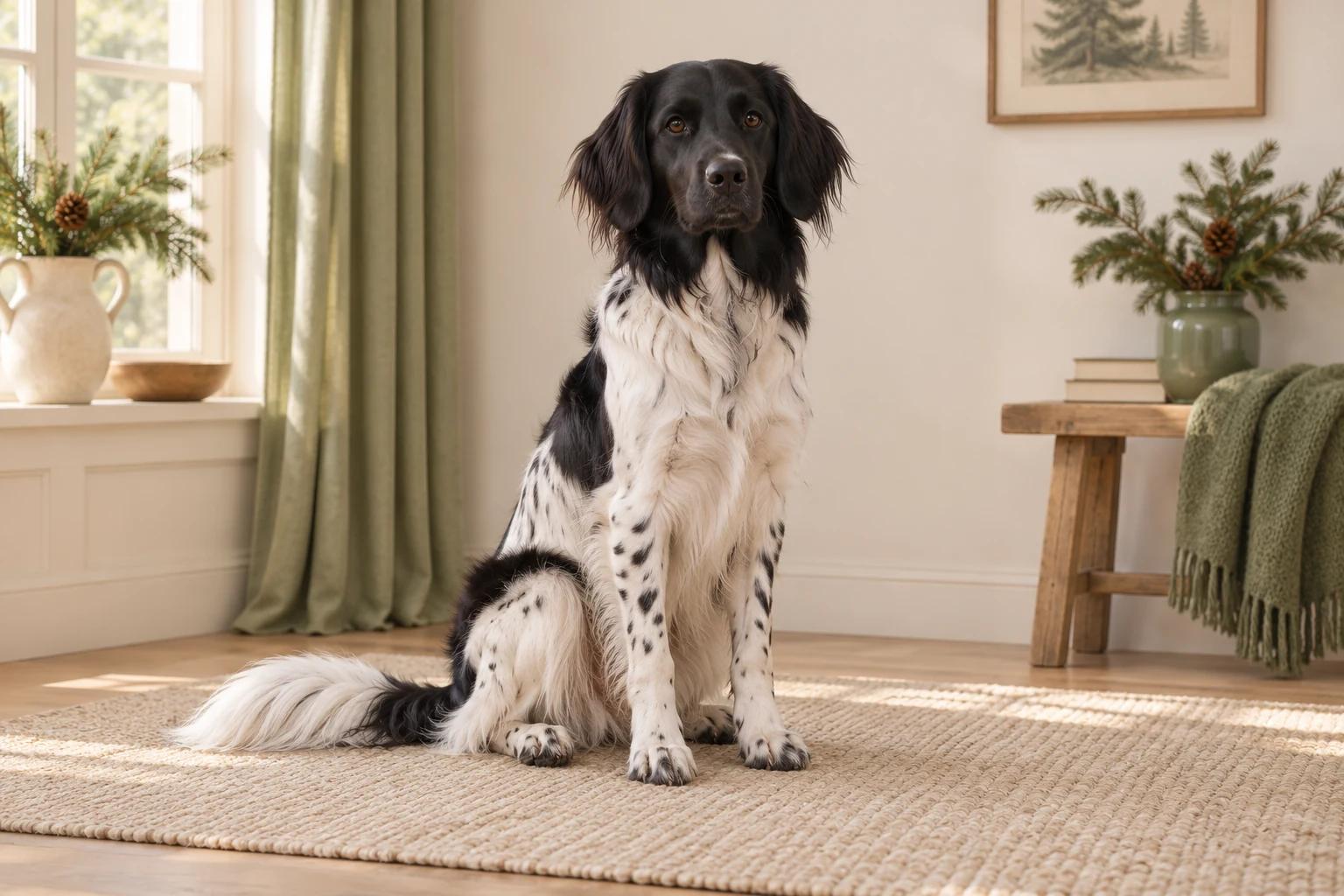
Stabyhoun grooming needs to fit the dog in front of you. The Stabyhoun profile gives grooming frequency a low reference rating, but shedding a moderate one. Those are different features: a relatively modest maintenance commitment does not mean a hair-free home. This guide separates coat structure, practical cleaning and teaching the dog to participate, rather than treating all three as a single brushing chore.
Stabyhoun grooming starts with the coat's different regions
The FCI standard describes a weather-resistant undercoat, short hair on the head and front of the legs, and longer hair behind the forelegs. The trousers and tail are bushy rather than thinly feathered. Ear hair changes along its length, with the lower third short-haired. These regional differences matter: the surface of a leg is not a guide to what you will find behind it. Do not use one visible patch as a reason to skip the rest of the coat. FCI: Stabijhoun standard.
Use a breed-specific routine rather than cosmetic remodeling
The UK association's grooming guidance, adapted from the Dutch breed club, explains that much dirt comes away as the coat dries. An occasional rinse can be enough; when washing is needed, use an appropriate dog shampoo. Check behind the ears and around the trousers for tangles, and give the coat additional attention during moulting. Stabyhoun UK: grooming the Stabyhoun.
The club also draws attention to debris caught in hair around the feet. After a muddy outing, examine that area rather than judging cleanliness solely by the dog's back. Ask a qualified groomer to demonstrate any necessary tidying instead of attempting close scissor work around moving toes.
Stabyhoun coat care is not about clipping the entire body into a different silhouette. The club's approach favors maintenance of the natural coat. If you are unsure whether an area needs brushing, trimming or professional attention, show the groomer the actual problem. A photograph of a fashionable haircut on another breed is not a substitute for that assessment.
Work through the coat gently, and leave tight mats to a professional
VCA recommends gentle grooming and particular attention to places where tangles develop, including behind the ears, under the arms and in the groin. Check for plant material after outdoor activity. Work carefully rather than dragging a brush through a resistant patch. VCA: grooming and coat care.
A tangle should be addressed before bathing, because washing can make matting harder to manage. Severe mats belong with a professional; cutting them out with scissors risks cutting the skin. Do not turn a stubborn knot into a contest between your grip and the dog's willingness to remain still.
For a bath, use a product intended for dogs and rinse thoroughly. Human shampoo is not the default substitute. If you discover a skin change, discomfort or an unusual coat problem, ask your veterinarian rather than trying to diagnose it from appearance. Routine grooming can help you notice a change; it cannot tell you the cause. Keep the task within ordinary coat care and get appropriate help when it stops being ordinary.
Teach comfortable participation before asking for a full session
Dogs Trust starts handling practice in a quiet setting with gentle, brief contact. Touch, remove your hand, then reward; build duration gradually while watching the dog's response. Introduce a brush similarly, beginning with a brief, gentle touch rather than immediately working through the whole coat. Dogs Trust: handling your dog.
That is a useful answer to how to groom a stabyhoun that has not learned to accept the process. Practice can begin without removing a single tangle. The first useful achievement may be a comfortable touch followed by a reward, not a finished-looking dog.
Do not force the dog to remain in place when it is worried. Return to an easier stage, and seek veterinary or qualified behavioral support if handling brings fear, aggression or possible pain. A predictable order can help, but it does not override the dog's response. Teaching cooperation and completing necessary care are related tasks, not permission to insist on a full session regardless of discomfort.
Put the profile's ratings in the right context
The Stabyhoun's grooming reference is 1/5 and shedding is 3/5. Read those separately when deciding whether the breed suits you. The first describes expected maintenance frequency at breed level; the second still allows a meaningful amount of loose hair in daily life. Neither rating predicts precisely what will land on a particular sofa.
Its activity and mental-engagement references are both 4/5. Coat care therefore belongs alongside an active dog's wider routine, not in place of it. A clean dog has not necessarily had its activity needs met, and an interesting walk has not completed the separate care task. The training reference of 5/5 also describes a tendency, not an already-trained grooming behavior.
Consider that complete ownership picture with the breed quiz. The Stabyhoun population-context article covers a different question about a historical breed count. Rarity is not a maintenance category and does not tell you how much care an individual needs.
Frequently asked questions
Does a low grooming rating mean Stabyhoun shedding is negligible?
No. The profile rates grooming frequency 1/5 and shedding 3/5. A comparatively low maintenance reference can coexist with moderate shedding; the categories do not measure the same thing.
Does a high training rating mean my Stabyhoun already accepts grooming?
No. The profile's training reference is a breed-level description, not a record of your dog's experience. Ask what the individual has already learned rather than assuming a rating represents completed training.
Should I choose the breed on its grooming score alone?
No. The same profile describes substantial activity and mental engagement. Grooming is only one part of ownership, so a low score in that category does not describe the total commitment.
Sources behind this article
- FCI: Stabijhoun standard ↗
- Stabyhoun UK: grooming the Stabyhoun ↗
- VCA: grooming and coat care ↗
- Dogs Trust: handling your dog ↗
Article source checked: November 16, 2026. Source checked 2026-11-16
Keep reading

Affenpinscher Grooming: A Practical Coat-Care Routine
Read article →