Stabyhoun Exercise Needs: Walks, Learning and Play
Explore Stabyhoun exercise needs through varied learning, short retrieves, recall practice and sensible water decisions, alongside daily activity.
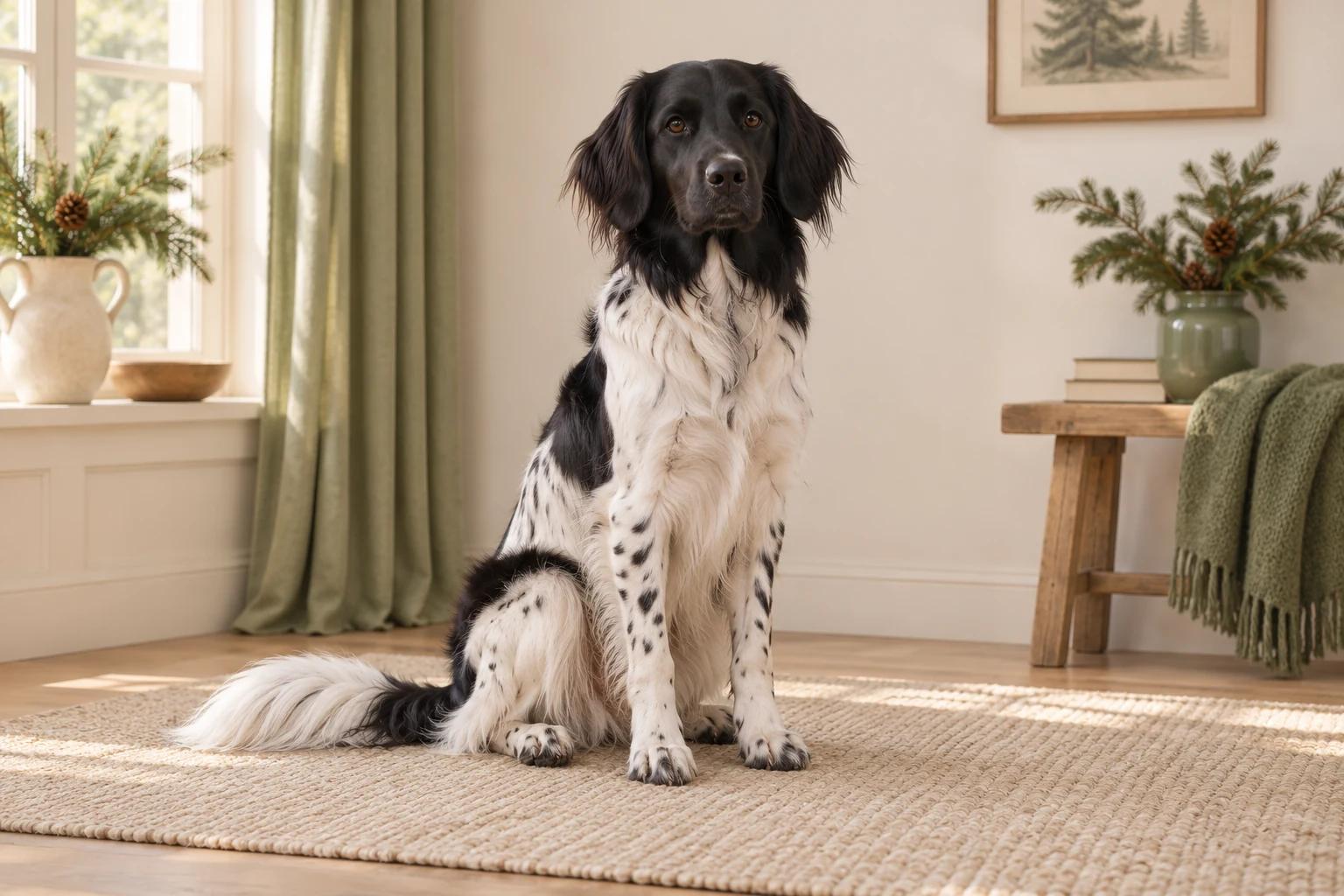
Stabyhoun exercise needs involve both activity and mental engagement. The Stabyhoun profile rates each at 4/5, alongside a 5/5 training reference. That combination deserves attention before choosing the breed: an appealing appearance and manageable adult size are not the whole ownership picture. A useful routine gives the dog things to do with you, not simply an impressive distance on a map.
Stabyhoun exercise needs: variety beyond repetitive drills
The Ameri-Can Stabyhoun Association describes an energetic dog that benefits from mental stimulation as well as physical activity. Its training discussion favors positive teaching and warns that repetitive drilling can lose the dog's interest. Enjoyable games and learning need not become competitive sport to be worthwhile. Ameri-Can Stabyhoun Association: about the breed.
For a family Staby, that suggests looking at what an activity asks the dog to do. Repeating a familiar movement endlessly is different from learning a manageable new task. The objective is participation, not proving that the dog can tolerate more repetition than it wants.
The club discusses a range of possible pursuits rather than one compulsory outlet. You can explore an activity with suitable instruction without deciding in advance that your dog must earn a title. A dog that enjoys a recreational version has not failed because you do not compete. Build on the individual's interest and capability, and leave room to discover which activities the two of you actually enjoy together.
Teach a retrieve in small pieces
AKC's fetch lesson begins with interest in a toy, then builds toward taking and briefly holding it. Reward those small steps before expecting the complete retrieve. Once the dog can take the toy from your hand, progress to picking it up from the floor nearby, increasing distance gradually. AKC: teaching fetch.
This gives a Stabyhoun an alternative to a game based solely on ever-longer throws. The learning challenge can be a controlled pickup close to you. Use a toy the dog finds appealing and reward success; retrieving is not automatically rewarding for every individual.
If the dog runs to a toy but leaves it there, identify the missing step instead of throwing it farther. Going outward, taking the object and returning are separate pieces of the task. Keep the exercise easy enough for success and work at the dog's pace. A short, understood retrieve is a more useful starting point than repeated confusion at a distance. This is a taught game, not a test that every dog must pass instinctively.
Make returning part of the walk, not its punishment
Battersea recommends beginning recall in a secure, low-distraction setting, using a consistent cue and a reward the dog genuinely wants. Start nearby and add difficulty only after the dog understands. A harness and long line provide management while practicing outside before reliability is established. Battersea: teaching recall.
For a stabyhoun daily walk, practice should not happen only when you are about to leave. If returning always ends the interesting part of the outing, you are making your invitation less attractive. Reward returns during the walk as well as at its conclusion.
Do not begin the hardest lesson while the dog is completely absorbed in another activity. Choose an easier moment, then gradually introduce distractions. If the response falls apart, revisit the simpler stage instead of becoming frustrated with the dog. A breed-level training rating does not replace teaching this particular cue in this particular setting. Until the skill is dependable, management remains part of the outing rather than an admission that the dog is incapable of learning.
Treat water as a separate safety decision
Dogs Trust warns that calm-looking water can hide currents, underwater obstacles and other hazards. Check entry and exit points, local warnings, depth and water quality before considering a swim. Avoid suspicious algae, fast-flowing water and places where the dog could become trapped by steep banks. Dogs Trust: water safety.
A Stabyhoun's enthusiasm is not evidence that the location is suitable. Confidence in the water and reliable recall matter, but neither removes environmental risks. If conditions are doubtful, keep the dog out and choose another activity.
Watch for slowing movement, loss of enthusiasm or difficulty staying afloat. Even a fit dog can become exhausted. Do not put yourself in danger by entering unsafe water during an emergency; summon the appropriate emergency service. After suspected exposure to harmful algae or illness following swimming, seek veterinary help promptly. Swimming is an optional activity, not something to attempt merely because a dog is energetic or a breed has a working background. A land-based outing remains a valid choice.
Read the activity profile as a whole
The Stabyhoun activity level is not described by its weight alone. The profile's adult reference is 40–60 lb, but that number is a size description rather than a daily exercise prescription. Two adults within the interval need not have identical experience, fitness or abilities.
The profile also rates family affection 5/5 and playfulness 3/5. Strong interest in family life does not mean every dog will prefer constant play, and a moderate playfulness reference does not erase the separate activity and mental-engagement ratings. These categories describe different aspects of life with the breed.
Use the breed quiz to consider the combined commitment. The Stabyhoun population-context article addresses historical numbers rather than the day-to-day demands of an individual dog.
Frequently asked questions
How much exercise does a Stabyhoun need?
The profile gives activity and mental engagement high references, both 4/5. Those scores describe a substantial commitment, not a universal number of minutes. Discuss an individual dog's capabilities and any restrictions with its veterinarian.
Does the breed's adult weight determine its exercise allowance?
No. The 40–60 lb reference describes adult size. It is not a formula for calculating walk length or a target that tells you what an individual can comfortably do.
Is playfulness the same as activity level?
No. The profile lists playfulness at 3/5 and activity at 4/5. A dog need not be continually inviting games to have meaningful activity needs, so do not use those categories interchangeably.
Sources behind this article
- Ameri-Can Stabyhoun Association: about the breed ↗
- AKC: teaching fetch ↗
- Battersea: teaching recall ↗
- Dogs Trust: water safety ↗
Article source checked: November 16, 2026. Source checked 2026-11-16
Keep reading

Afghan Hound Exercise Needs: Build a Workable Active Day
Read article →