Spinone Italiano Size: Build, Weight and Growth
Understand Spinone Italiano size, distinctive body proportions, puppy development and body condition without treating adult weight as a target.
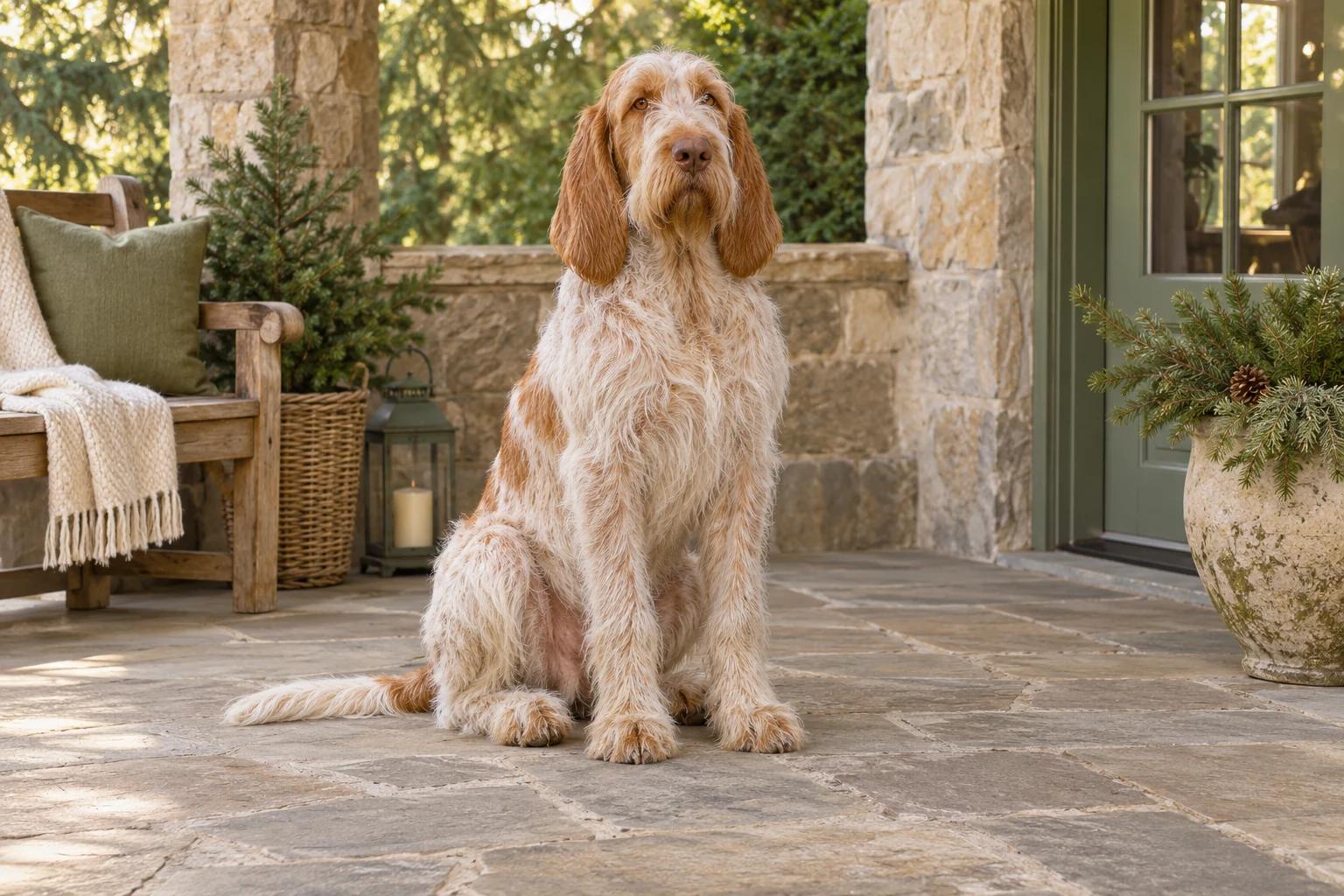
Spinone italiano size raises several different questions: what the adult looks like, how a puppy develops, and whether an individual is carrying an appropriate amount of weight. These questions deserve separate answers. The Spinone profile is the starting point for the breed; this guide explains how to interpret the dog in front of you rather than ranking puppies from smallest to largest.
The current My Breed Atlas adult reference is 62–82 pounds overall: females 62–66 pounds and males 71–82 pounds. Listed height is 22–25 inches for females and 23–27 inches for males. Keep these sex-specific references separate from assessment of an individual’s body condition; a range is not a feeding target.
Spinone Italiano size includes chest, bone and proportions
The AKC standard describes a broad chest reaching at least to the elbows, well-sprung ribs and only a slight abdominal rise. Straight forelegs have strong, oval bone; front feet are rounded, while rear feet are slightly more oval. The neck is muscular, and the back has two gently changing segments rather than one ruler-straight line. Ground-to-elbow distance is half the height at the withers: a reference for leg and chest proportions, not just overall tallness. Weight is proportionate to structure in working condition. These details explain why spinone italiano height alone is an incomplete description: the chest, limbs and body outline matter too. AKC: Spinone Italiano standard.
Why this is a substantial Italian hunting dog
The Spinone Club of America's breed history connects its development with difficult Italian mountain and marshland environments. Thick skin and a bristly protective coat accompanied the sturdy build. Its background includes searching, pointing, tracking and retrieving, both on land and in water. The breed was not developed merely to look imposing beside a handler. Spinone club: breed background.
The club also describes regional Italian forms that were later brought together under the Spinone name. That history is useful context for the breed's identity: a modern dog represents a working tradition, not a recently invented label for an oversized companion. It does not establish how big an individual puppy will become or prove that a particular dog can perform demanding work.
For the separate question of movement, read the existing Spinone hunting-gait article. Here the distinction is between the physical dog and its historical purpose, not between competing claims about which dog covers ground fastest.
Growing up is not a race to adult weight
VCA explains that growth involves genetics, nutrition and environment. Large dogs can take longer to mature than smaller breeds, but a general developmental range is not an exact birthday on which every Spinone becomes physically adult. The goal is appropriate growth, not the fastest possible increase on the scale. VCA: growing puppies.
For a Spinone puppy, discuss growth-food suitability and measured portions with the veterinary team. VCA highlights the importance of appropriate calcium balance for large-breed puppies and cautions against adding vitamin or mineral supplements without veterinary advice. Extra supplements are not a shortcut to a better adult frame.
Regular weight and body-condition assessments help the veterinarian follow development. A puppy's current weight is one observation along that path, not an instruction to catch up with a littermate. Ask for interpretation of the puppy's own progress rather than copying another owner's feeding amount.
Frame and body condition are different questions
AAHA recommends assessing fat coverage and body shape rather than relying on weight alone. It notes that a stocky appearance or coat can complicate casual judgments. Have your veterinary team show you how to assess the individual Spinone, including feeling the ribs and interpreting the waist, rather than deciding from a photograph. AAHA: assessing weight.
A useful conversation about spinone italiano weight therefore asks whether this dog's condition is appropriate, not whether it has reached an impressive number. If weight changes, tell the veterinarian about changes in activity, appetite or comfort as well. Difficulty moving should not simply be dismissed as the inevitable result of owning a big dog.
AAHA also emphasizes individualized veterinary help with weight concerns. Do not respond to a heavier reading by abruptly imposing a diet or strenuous exercise programme. Assessment comes before a plan, particularly when the reason for the change is unclear.
Read a size description precisely
When comparing descriptions of Spinoni, identify what the writer actually measured. A shoulder-height figure and a measurement to the top of a raised head answer different questions. Likewise, the word 'length' is incomplete without the two endpoints: nose to tail tip is not the same measurement as the torso alone. Ask for the definition before comparing figures.
Photographs introduce another problem. A dog standing close to the camera can look disproportionately large beside a person farther away. An image cropped tightly around the dog provides no reliable scale at all. Neither is evidence that a puppy has unusually large parents. Compare like with like, and avoid turning an attractive portrait into a measurement it never supplied.
Size does not replace screening information
The breed profile identifies hip, elbow and ophthalmologist evaluations among the health questions to raise. These are separate from an adult's dimensions. A description such as 'large male' does not tell you whether those evaluations exist, which dog they concern, or what the documents report.
When considering a Spinone puppy, request the actual screening information and discuss it with your veterinarian. Keep questions about adult appearance distinct from questions about health documentation. Neither a desirable size description nor an appealing photograph answers both. The breed quiz can help with the wider ownership comparison, but it is not a health assessment of a prospective dog.
Frequently asked questions
How big do Spinone Italianos get compared with their puppy photographs?
A puppy photograph cannot establish adult dimensions. Camera distance and perspective can distort apparent scale; use clearly defined measurements rather than estimating from the size of a person or object elsewhere in the picture.
Should a Spinone puppy grow as quickly as possible?
No. Aim for appropriate development with veterinary guidance, not maximum speed or competition with littermates.
Is a heavier Spinone necessarily in better condition?
No. A scale reading alone cannot establish body condition. Ask your veterinarian to assess the individual rather than treating a larger number as an achievement.
Sources behind this article
- AKC: Spinone Italiano standard ↗
- Spinone club: breed background ↗
- VCA: growing puppies ↗
- AAHA: assessing weight ↗
Article source checked: November 16, 2026. Source checked 2026-11-16
Keep reading

Airedale Terrier Temperament: What Everyday Life Can Feel Like
Read article →