Spanish Water Dog Temperament: An Involved Companion
Understand Spanish Water Dog temperament, social preferences, play and rest, with practical ways to interpret behavior beyond a breed label.
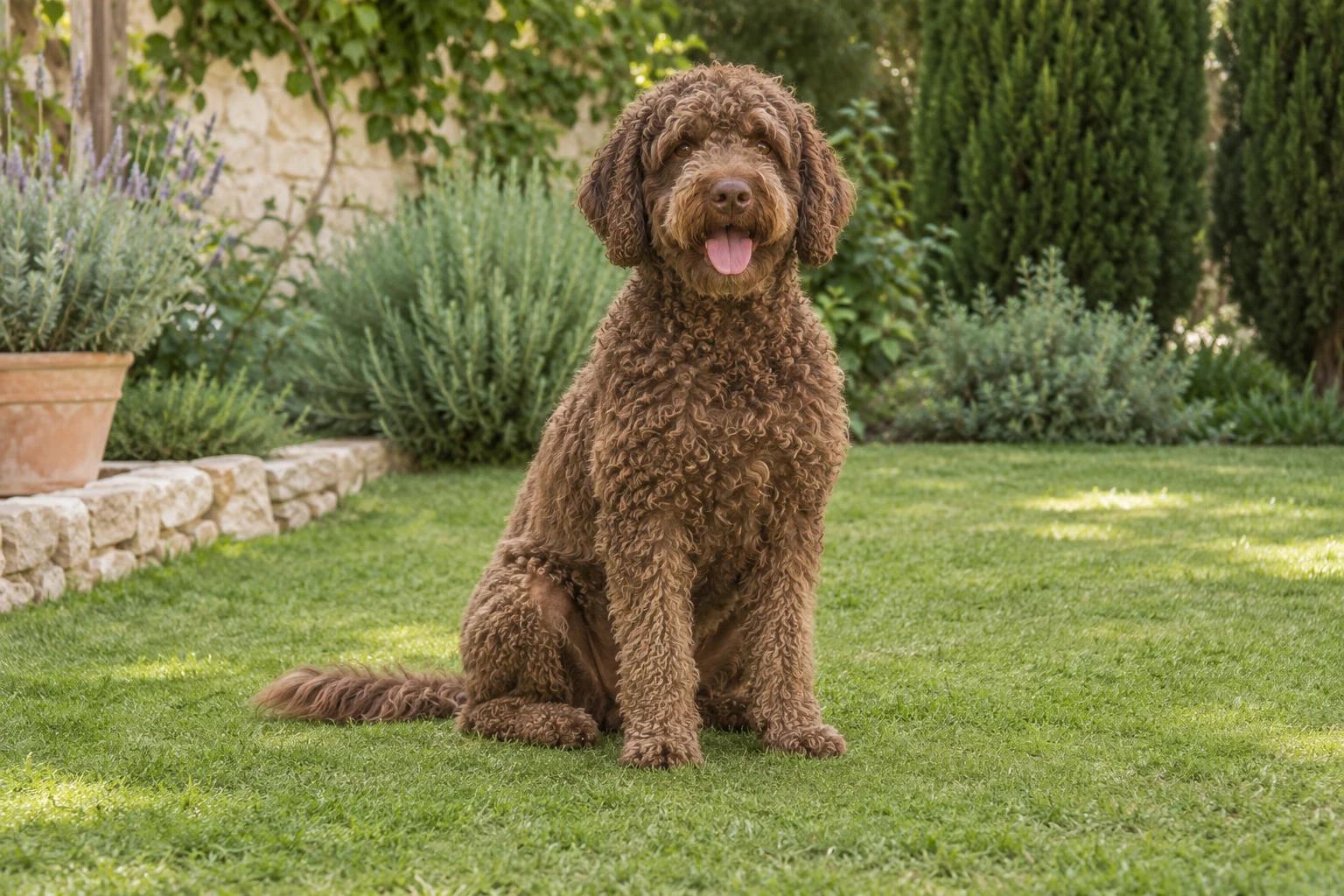
Spanish water dog temperament is best considered as several qualities working together. My Breed Atlas gives this breed strong family affection, high activity and particularly high mental engagement. That combination appeals to people who want to share a substantial part of everyday life with a dog, rather than simply admire one between occasional outings.
Spanish Water Dog temperament in context
The UKC standard describes an attentive, animated working dog with herding, hunting and guardian instincts. It also describes reserve toward strangers without treating shyness as desirable. This distinction matters: a dog can notice an unfamiliar person without immediately seeking contact. The standard is a description of an ideal, not permission to provoke or test a dog. Meet the individual as they are, rather than demanding a display of confidence or sociability to prove their breeding. UKC: Spanish Water Dog standard.
Activity and rest need not compete
Dogs Trust explains that restlessness can reflect unmet activity needs, but also worry, overtiredness or physical discomfort. For an active Spanish Water Dog, automatically adding another exciting game can therefore miss the problem. The question is what the dog needs now, not how much movement you can extract from the afternoon. Dogs Trust: restlessness.
A peaceful resting place away from passing feet and loud activity gives the dog a different option from staying involved. Sniffing or an appropriate chewing activity may provide a gentler transition after excitement. This is not the same as withholding enjoyable activity; it is making room for different states during the day.
If a previously settled dog becomes restless, or cannot get comfortable, discuss the change with your veterinarian. Do not write it off as working-breed energy. Likewise, persistent difficulty relaxing deserves help rather than an escalating contest to tire the dog out. An owner can value an active companion while recognizing that movement, contentment and comfort are not interchangeable. A dog still pacing after an outing may need something other than a longer outing.
Read the whole interaction, not a single gesture
VCA's communication guidance describes how dogs can feel competing motivations, such as wanting closeness while also being worried about something nearby. A Spanish Water Dog approaching the family does not necessarily welcome every element of the situation. The approach and any hesitation both deserve attention. VCA: canine communication.
Look at the combination of posture, head position, facial expression and movement. Turning away, licking the nose or lowering the body may indicate uncertainty in context; no isolated gesture provides a complete translation. A wagging tail should not cancel the rest of what you see.
VCA also cautions against interpreting an appeasing posture as proof that a dog knows it has done something wrong. Calling the dog 'guilty' can obscure its response to the person standing over it. For this responsive companion, understanding the interaction is more useful than attributing human motives. Signals can change rapidly, so do not wait for a dramatic warning before taking discomfort seriously. These observations help describe what is happening; they do not replace professional assessment when safety is in question.
Play should involve willing partners
AKC's guidance on dog play emphasizes loose, exaggerated movement, turn-taking and repeated voluntary engagement. A Spanish Water Dog's relatively high playfulness does not establish that every encounter with another dog is enjoyable. Watch the other participant as carefully as your own dog. AKC: evaluating dog play.
A chase in which both dogs return for more differs from one dog repeatedly trying to leave. Stiffness or an increasingly one-sided interaction should not be dismissed because the game began happily. The useful measure is not how spectacular the wrestling looks, but whether both dogs remain comfortable and able to disengage.
Some dogs prefer a familiar companion or play with their person rather than a busy dog park. That is a legitimate preference, not a social failure. Supervise interactions and prevent crowding or repeated pursuit of a dog trying to get away. Never put your hands between fighting dogs. If you are unsure about an interaction, seek qualified guidance rather than repeating it as an experiment. Breed enthusiasm is not a reason to leave the participants to sort out escalating tension themselves.
Family interest and sociability are different traits
The Spanish Water Dog profile rates family affection five, while openness to new people and interaction with other dogs each sit at three. The spanish water dog personality should therefore not be summarized as either universally outgoing or generally detached. Familiar relationships and unfamiliar social situations are different parts of the picture.
For a household mainly seeking shared time at home and on outings, the strong family dimension may be appealing. For someone whose ideal weekend revolves around crowded social gatherings, the middle social references deserve equal consideration. A dog's interest in its household is not a substitute for knowing how it experiences a particular setting.
Adaptability also sits in the middle. It is worth comparing your preferred lifestyle with the whole profile, rather than assuming that affection makes every change equally easy. The dog breed quiz can help place these preferences alongside the other qualities you want in a companion.
Enthusiasm does not answer every ownership question
Among spanish water dog characteristics, high mental engagement stands out even beside high activity and playfulness. This is an important distinction for someone who enjoys long walks but has little interest in interacting with a dog at home. Physical activity is one part of the profile, not its entirety.
Watchfulness and vocal tendency are both moderate. Neither describes a silent companion, nor one whose main defining quality is constant alarm. Think about your tolerance for ordinary canine communication without assuming that every sound proves a problem or a breed-specific purpose. The coat article addresses appearance and maintenance separately; a preferred hairstyle says little about this behavioral combination.
Frequently asked questions
Is Spanish Water Dog behavior mainly about exercise?
No. The profile's mental-engagement reference is even higher than its activity reference, and family affection is strong. Someone choosing this breed should want an involved relationship, not just a companion who can join physical outings and otherwise require little interaction.
Is this an especially outgoing breed with other dogs?
The Atlas other-dog reference is in the middle of the scale. That does not decide an individual pairing. It does mean that choosing the breed on an assumption of universal canine sociability would overlook the actual reference profile.
Does a high family rating mean high adaptability?
Not necessarily. Family affection is rated five, while adaptability is three. Those traits address different questions: how strongly a dog tends toward familiar relationships and how readily it tends to accommodate change. One should not be used as a substitute for the other.
Sources behind this article
- UKC: Spanish Water Dog standard ↗
- Dogs Trust: restlessness ↗
- VCA: canine communication ↗
- AKC: evaluating dog play ↗
Article source checked: November 16, 2026. Source checked 2026-11-16
Keep reading

Airedale Terrier Temperament: What Everyday Life Can Feel Like
Read article →