Sokoke vs American Shorthair: Build, Coat and Daily Companionship
Compare Sokoke vs American Shorthair build, coat, activity and transitions while avoiding guarantees about settling, health or compatibility.
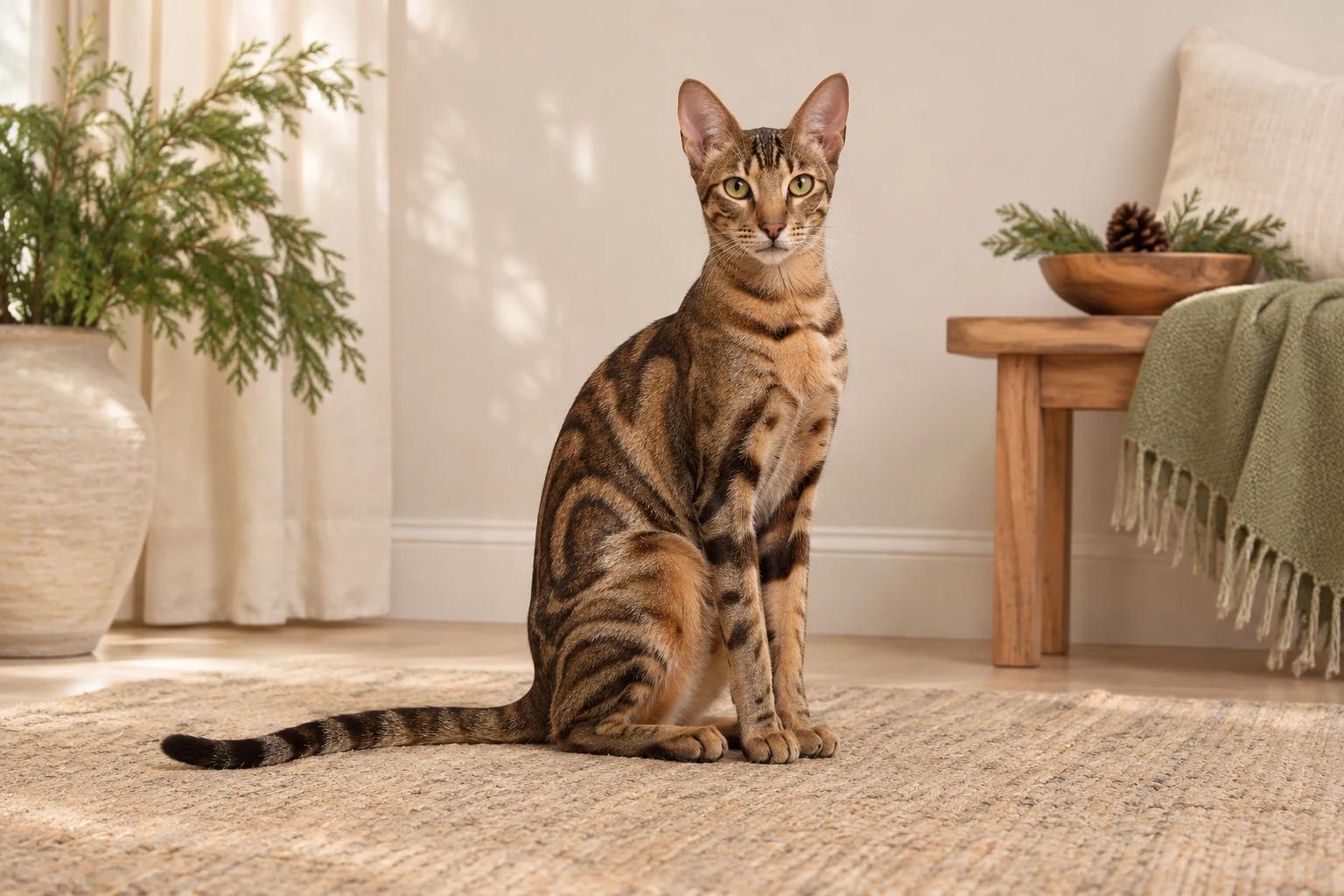
Sokoke vs american shorthair comparisons bring together two shorthaired domestic breeds with different physical descriptions and documented backgrounds. FIFe describes a medium, long, lean Sokoke with long legs and a distinctive blotched, ticked tabby pattern. CFA describes a more substantial, muscular American Shorthair with a dense coat and a much wider variety of colors and patterns.
If you are considering a sokoke or american shorthair, those distinctions are a starting point. They do not tell you which individual will enjoy your home, adapt on a timetable or need less attention during an ordinary working day.
Sokoke vs American Shorthair: compare documented descriptions
The Sokoke profile retains the lean, long-legged description and its Kenyan breed-development context. The American Shorthair profile describes a sturdy, muscular working-breed outline. Neither description authenticates an undocumented animal solely from a tabby coat.
FIFe explains the Sokoke's hollow-looking blotched pattern and ticking. CFA notes the American Shorthair's broad range of coat patterns. A difference between sokoke and american shorthair therefore involves more than asking whether both photographs show stripes or brown fur.
Ask what records support the breed description and preserve uncertainty where background is unknown. An appearance comparison should not become a reason to invent ancestry or assign a care need the individual has never demonstrated.
Ask how the animal uses its environment
FIFe emphasizes Sokoke activity and climbing. CFA's American Shorthair account includes interactive play alongside a more self-directed reputation. Those different emphases can shape questions without establishing that every Sokoke is busier than every American Shorthair.
Ask each caregiver to describe a familiar activity and a familiar resting choice. Learn what happens while people are occupied, not only during a play demonstration. A cat choosing to watch from a distance is still providing useful information about that setting.
Review stable climbing opportunities, usable routes and access to essentials for either candidate. Follow equipment instructions rather than treating a lean body or a working-breed history as certification. Another animal should not be able to block every useful option.
Take transitions seriously
FIFe specifically notes strong Sokoke bonds and the possibility of a longer adjustment when an adult or older bonded kitten is rehomed. That qualification deserves attention before commitment. It is not a deadline or a prediction that every individual will struggle in the same way.
Ask about the actual animal's established relationships and the advice of the rehoming organization or caregiver. Do not make independent decisions about separating bonded animals from a generalized comparison. Explain your household and seek guidance for the individuals involved.
The American Shorthair's more self-sufficient reputation is not a promise of instant settling either. Prepare a suitable transition space, resources and patient introductions. One favorable breed adjective cannot replace a plan for a particular move.
Compare coat work through the individual routine
The Sokoke profile offers gentle weekly brushing as general short-coat care, explicitly not a measured breed-specific schedule. The American Shorthair profile retains regular attention to a denser coat. The shared word shorthaired should not erase those different descriptions or determine one universal tool.
Ask which equipment is familiar and how loose hair is managed. Learn how the animal signals a pause and what requires professional help. Do not choose a stronger brush simply because a coat appears thick or a lighter routine solely because another cat looks sleek.
Changes in skin, coat or accepted handling need appropriate advice. This comparison recommends no supplement, bathing program or allergy-related choice. A coat's texture explains part of maintenance, not the whole clinical picture.
Do not turn voice into a compatibility score
The Sokoke description includes vocal interaction and strong attachment. The American Shorthair account includes quieter communication as a tendency. An american shorthair vs sokoke decision still requires an honest conversation about the actual sounds and circumstances in each animal's familiar day.
Ask about ordinary calling without requesting a performance. A quiet visit does not promise silence, and one excited moment cannot describe every future setting. Share the household's work and sleep needs without accepting a guarantee about fixed volume.
Contact your veterinarian about a new or concerning change rather than explaining it entirely through the breed. Personality descriptions cannot identify pain, illness or the cause of an unfamiliar response.
Keep outdoor history separate from indoor preparation
The existing Sokoke outdoor-access guide addresses containment and maintenance as a separate decision. A forest-related name does not make roaming necessary or establish that a garden is suitable.
The American Shorthair's working history likewise does not authorize unrestricted hunting or remove ordinary household hazards. Compare the care you can provide now rather than attempting to recreate a historical role. Suitable activity can be planned without making outdoor exposure a test of breed identity.
FelineVMA's indoor-cat guidance links play with retreat, resources and positive contact. Those needs apply to either choice. A useful room offers more than an object intended to keep the animal busy while people ignore the rest of its environment.
Decide from a comparable care history
Use the cat quiz to organize your preferences, then collect the same practical information for both candidates: an established activity, a contact preference, a coat task and a question still requiring advice. Include care during absences and any transition responsibilities.
Adults should guide children and supervise introductions. Social history with one person or animal cannot guarantee a result with another. Let either cat choose distance and maintain independent access to essential resources.
An informed shortlist does not need a numerical energy ranking or an invented size chart. It needs a clear account of each individual and the work the household can sustain. The coat pattern may begin the comparison; care should determine what happens next.
Frequently asked questions
Does a tabby coat prove either breed identity?
No. FIFe and CFA describe distinct breeds and features, but appearance alone does not authenticate an individual's background. Ask about relevant records.
Is every Sokoke more active than every American Shorthair?
No individual ranking is established. Use registry tendencies to ask about familiar daily activity rather than predict a result for every animal.
Does the Sokoke's name make outdoor roaming necessary?
No. History and current access are different questions. The separate linked article considers a specific maintained arrangement without recommending unrestricted roaming.
Can a self-sufficient reputation replace transition planning?
No. Both individuals need appropriate preparation. FIFe's Sokoke account also specifically cautions that established bonds may make rehoming adjustment longer.
Sources behind this article
Article source checked: November 20, 2026. Source checked 2026-11-20
Keep reading

Abyssinian vs Somali: Coat, Size and Everyday Company
Read article →