Soft Coated Wheaten Terrier vs Standard Schnauzer
Compare the Wheaten and Standard Schnauzer through coat, build, learning and activity, with practical differences beyond their bearded faces.
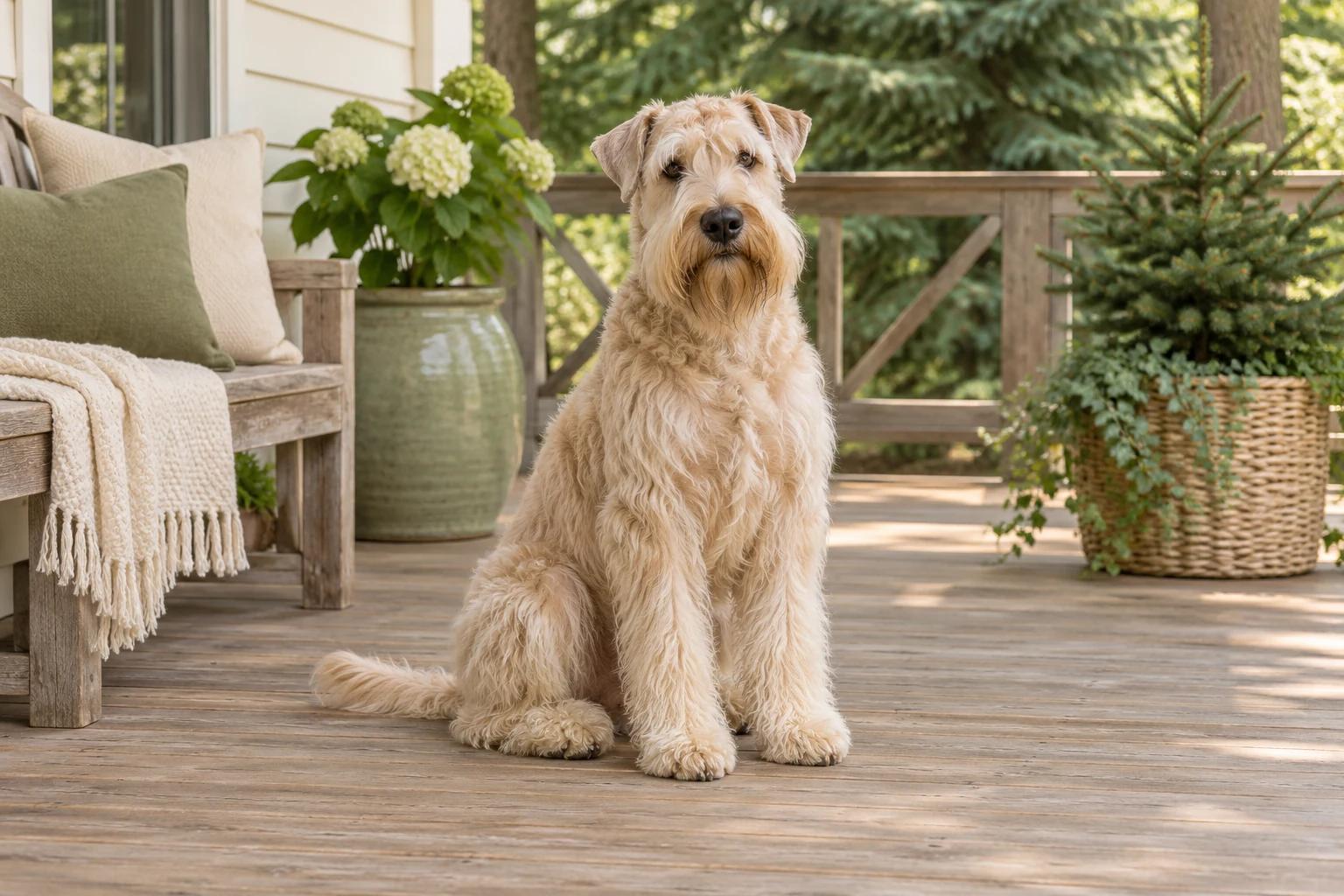
Explore the
Soft Coated Wheaten Terrier
Background, care, and everyday considerations.
View breed profile →A soft coated wheaten terrier vs standard schnauzer comparison begins with two companionable dogs, but similar facial furnishings can hide important differences. Build, coat and ways of learning deserve separate consideration. My Breed Atlas offers a starting point for those questions, not a reason to reduce the decision to a contest over which breed needs more activity or thinking.
Use the Wheaten profile and Standard Schnauzer profile together. The comparison below separates physical appearance from the daily relationship, so you can decide which combination interests you rather than choosing by face alone.
Soft Coated Wheaten Terrier vs Standard Schnauzer: the Wheaten
The Wheaten standard describes a square, balanced terrier with a strong, level back and a deep chest. Its soft, gently waved coat changes the visual impression without making the dog underneath delicate. The rectangular head and forward-falling hair contribute to its characteristic expression. AKC Wheaten standard.
That distinction matters when looking at a full-coated adult. A flowing outline is not evidence of a slight frame, and a shorter pet presentation does not create a different underlying build.
The Schnauzer's contrasting outline and texture
The Standard Schnauzer standard also calls for square proportions, but describes a robust, well-muscled dog with substantial bone. Its harsh outer coat sits above softer undercoat. Wiry eyebrows and whiskers frame the face rather than producing the Wheaten's softer visual effect. AKC Standard Schnauzer standard.
The standard's outline is compact and strong, without seeking either excessive bulk or a fragile appearance. These details are useful when comparing adults standing side by side: color and furnishings draw attention, but the whole body matters. A Standard Schnauzer is not merely a Wheaten with a different haircut.
The two accepted Schnauzer colors are black and pepper-and-salt. That appearance is part of the breed description, not a guide to temperament or a reason to rank one dog above another. Similarly, a striking beard should not distract from the practical commitment of living with the animal underneath. Separate your preferred appearance from your expectations about company and activity before making a choice.
Wheaten enthusiasm needs an appropriate outlet
The Soft Coated Wheaten Terrier Club of America describes lively, affectionate dogs and specifically flags chasing, jumping up and pulling on lead as behaviors owners may encounter. It stresses the need for manners while retaining the dog's spirit. Those observations help explain why an appealingly soft appearance should not be mistaken for a passive temperament. SCWTCA: temperament.
A greeting can be enthusiastic enough to need teaching even when the dog's intention is social. Likewise, interest in moving animals is a reason to maintain secure boundaries, not to test whether affection for the owner will override everything outside.
For someone choosing a soft coated wheaten terrier or standard schnauzer, the relevant Wheaten question is whether this combination is appealing in daily life: an affectionate companion whose exuberance still requires thoughtful work. Do not evaluate the dog only during a particularly cute greeting. Consider how that same physical enthusiasm would feel when you are carrying groceries, returning from a walk or sharing a narrow hallway.
The Schnauzer's coat is a distinct commitment
VCA distinguishes regular brushing and combing of the Standard Schnauzer from maintaining the coat by hand stripping. Show presentation involves ongoing work by someone experienced with the breed. Low shedding therefore should not be read as an absence of grooming. VCA: Standard Schnauzer.
For a prospective owner, the practical conversation is about the finish you want and the maintenance it involves. Ask a breed-experienced groomer to explain the difference between everyday pet upkeep and the presentation you see in a show photograph. A lower loose-hair burden does not mean that the beard, furnishings and body coat look after themselves.
VCA also describes the Standard as strongly interested in companionship. This is not a choice between an emotionally involved Wheaten and a dog that wants no human interaction. You may prefer one breed's character, but neither should be selected on the assumption that an impressive outward appearance means a self-contained household ornament. Coat care and companionship are separate responsibilities.
Activity and thinking are not the same scale
The difference between soft coated wheaten terrier and standard schnauzer daily demands is best explored through concrete routines rather than an activity or mental-engagement hierarchy. Ask what a normal outing involves, which games the individual enjoys and what happens during a familiar lesson. Physical movement and opportunities to learn are related, but one does not supply a complete description of the other.
For someone who enjoys teaching detailed skills, the Standard's training-responsiveness rating of five is an interesting starting point. The Wheaten's is three. These are not promises about an individual lesson, and they do not rank intelligence or affection. Ask about the dog's experience and the teaching that has worked with it. A responsiveness reference is not a measure of how much total involvement you can omit from everyday life.
Both profiles give family affection five, openness to new people three and other-dog interaction three. The Standard's watchfulness is higher: five against the Wheaten's three. This makes a useful distinction between interest in the family and attention to what happens around the home. A dog can be closely involved with its people without responding to every unfamiliar arrival in the same way.
Compare care priorities honestly
Both breeds receive the lowest shedding rating, but grooming frequency is four for the Wheaten and three for the Standard. A standard schnauzer vs soft coated wheaten terrier decision therefore cannot be settled by the phrase “low shedding.” Consider how much ongoing coat attention you actually want alongside the behavioral differences.
The dog breed quiz offers a broader fit check. For a separate Wheaten ownership topic, read the guide to PLN results and follow-up; it is not a substitute for veterinary guidance or a reason to infer anything about an individual dog's health from appearance.
Frequently asked questions
Can activity alone settle the choice?
No. Consider the individual’s outings, learning, play and company together rather than choosing through a single comparative activity score. Ask for an ordinary-day example from someone who knows the dog.
Is the Standard less interested in family company?
Not according to the profiles: both score five for family affection. Their differences in watchfulness or training responsiveness should not be mistaken for a difference between wanting company and wanting none.
Does low shedding settle the grooming decision?
No. Both have low shedding ratings, while grooming frequency differs. The Wheaten scores four and the Standard three. Those are distinct commitments, so choose with more than loose hair in mind.
Sources behind this article
- AKC Wheaten standard ↗
- AKC Standard Schnauzer standard ↗
- SCWTCA: temperament ↗
- VCA: Standard Schnauzer ↗
Article source checked: November 16, 2026. Source checked 2026-11-16
Keep reading

Affenpinscher vs Brussels Griffon: Everyday Differences
Read article →