Soft Coated Wheaten Terrier Grooming: A Practical Guide
Learn what Wheaten grooming involves, from coat development and section-by-section combing to the difference between shedding and upkeep.
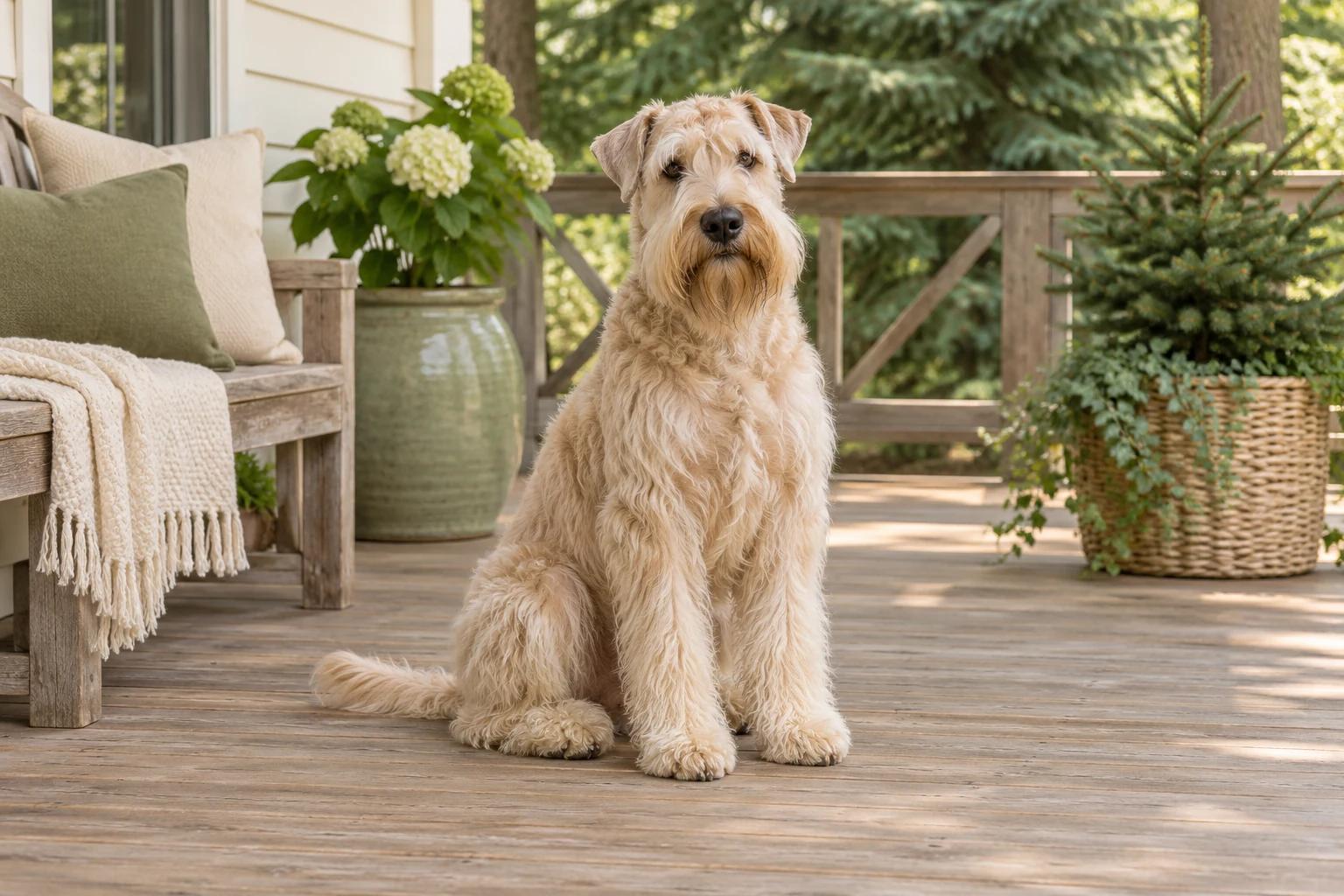
Explore the
Soft Coated Wheaten Terrier
Background, care, and everyday considerations.
View breed profile →Soft coated wheaten terrier grooming deserves serious consideration before you choose the breed. My Breed Atlas rates grooming frequency at four out of five, even though shedding receives the lowest rating. Those two facts belong together: a low loose-hair burden does not make this an occasional-care coat.
The Wheaten profile also describes an active, family-oriented companion. Your grooming commitment belongs within that larger relationship, not outside it as an optional way to improve a photograph.
Soft Coated Wheaten Terrier grooming and the developing coat
The breed standard describes an abundant single coat with a soft, silky texture and gentle wave. Puppies and adolescents may not yet show the mature wave, so a young dog's appearance is not a finished adult preview. AKC Wheaten standard.
The standard also distinguishes show presentation from coat description. Its instructions for a flowing outline concern exhibition, not a universal companion haircut. Discuss the practical finish for your own dog with a breed-experienced groomer rather than assuming every pet must look exactly like a show winner.
Brush sections, then check them with a comb
The American club's brushing guide explains line brushing: hold a section apart and work small amounts of hair in the direction of growth, gradually moving through the coat. Follow each brushed section with a comb. A neat-looking surface is not the same as hair that has been worked through beneath it. SCWTCA: brushing and combing.
For soft coated wheaten terrier coat care, this is a more useful method than sweeping repeatedly over the back and calling the dog finished. The guide specifically includes easily missed areas such as underarms, inner back legs, feet, tail and beard. Work in a position the dog accepts comfortably; do not force it onto its side to complete an idealized sequence.
Ask an experienced groomer to demonstrate the depth and pressure of the technique on your dog. If the comb catches, that is information, not a signal to pull harder. A tight or uncomfortable tangle needs appropriate professional help. The practical objective is thorough, comfortable access to the coat, rather than speed or a perfectly still dog at any cost.
The juvenile coat can change the workload
The British breed club describes the transition from puppy to adult coat as a period when owners can encounter substantially more tangling and loose hair within the coat. The timing varies between dogs. A routine that seemed effortless when the puppy was small may no longer be enough during this change. Wheaten Club of Great Britain: grooming.
That observation is useful because an owner may otherwise interpret extra work as personal failure or as evidence that the coat will always be equally difficult. Instead, ask a breed-experienced groomer to assess the current stage and demonstrate what this coat needs now.
The club also stresses comfortable early handling and a firm, nonslip surface. A helper can offer praise and rewards while the other person works gently. Keep the experience manageable rather than waiting until the coat demands a long session. The aim is familiarity before difficult maintenance becomes urgent. A professional trim does not remove the need to understand what happens to the coat between visits, especially while its texture and density are changing.
Give the face and outdoor debris their own attention
VCA highlights the Wheaten's facial fall and the need for careful grooming around it. It also notes that mud, snow and ice can accumulate in the coat. These are concrete reasons to think beyond the main body when assessing everyday upkeep. VCA: Soft Coated Wheaten Terrier.
After an outing, look at the dog in front of you rather than assuming the last full groom covers every later event. A beard containing dried food and hair carrying outdoor debris present different tasks from a clean body coat. Ask a groomer to show you how to keep the facial area manageable without attempting unfamiliar scissor work near the eyes.
VCA recommends regular brushing and combing as well as periodic attention to longer hair. For a companion, agree a practical finish with the person doing the grooming. Explain what you can maintain at home and ask what that finish will require between appointments. An attractive result on collection day is only part of the arrangement; the everyday coat still belongs to the dog and owner who go home together.
Low shedding is not a low-maintenance label
Soft coated wheaten terrier shedding is rated one out of five on My Breed Atlas, while grooming frequency is four. Neither number cancels the other. If you are comparing breeds because loose hair bothers you, the Wheaten's lower shedding reference may appeal, but it does not answer whether you want frequent hands-on coat care.
That distinction becomes especially important in a busy household. You might be entirely happy to spend time walking and interacting with a dog yet dislike grooming. Another owner may enjoy coat care but underestimate activity. The Wheaten profile combines both demands: activity is four and family affection five. It is not an either-or choice between an involved companion and a maintained coat.
Choose the whole companion
Understanding how to groom a soft coated wheaten terrier starts with recognizing that grooming is part of living with this particular breed. The dog breed quiz helps you compare coat preferences alongside activity and company. It is worth considering those together before committing to a dog whose appearance you admire.
For a separate aspect of Wheaten ownership, the existing PLN result and follow-up guide explains questions to take to a veterinarian. Coat appearance is not a replacement for that professional relationship, and this grooming guide does not assess an individual dog's health.
Frequently asked questions
Does the low shedding score mean little grooming?
No. The profile pairs shedding one with grooming frequency four. Treat these as separate preferences: how much loose hair you accept and how much coat care you want to undertake.
Is grooming the Wheaten's main demand?
It is one important demand, not the whole picture. The profile also records relatively high activity and strong family interest. An owner needs to enjoy the companion's everyday life as well as its appearance.
What should I compare before choosing this breed?
Consider coat involvement, activity and company together. A preference for less loose hair alone is too narrow to establish a good fit with the Wheaten's broader reference profile.
Sources behind this article
- AKC Wheaten standard ↗
- SCWTCA: brushing and combing ↗
- Wheaten Club of Great Britain: grooming ↗
- VCA: Soft Coated Wheaten Terrier ↗
Article source checked: November 16, 2026. Source checked 2026-11-16
Keep reading

Affenpinscher Grooming: A Practical Coat-Care Routine
Read article →