Soft Coated Wheaten Terrier Exercise Needs
Build a varied Wheaten activity routine with walks, searching games and suitable learning, without treating one time target as universal.
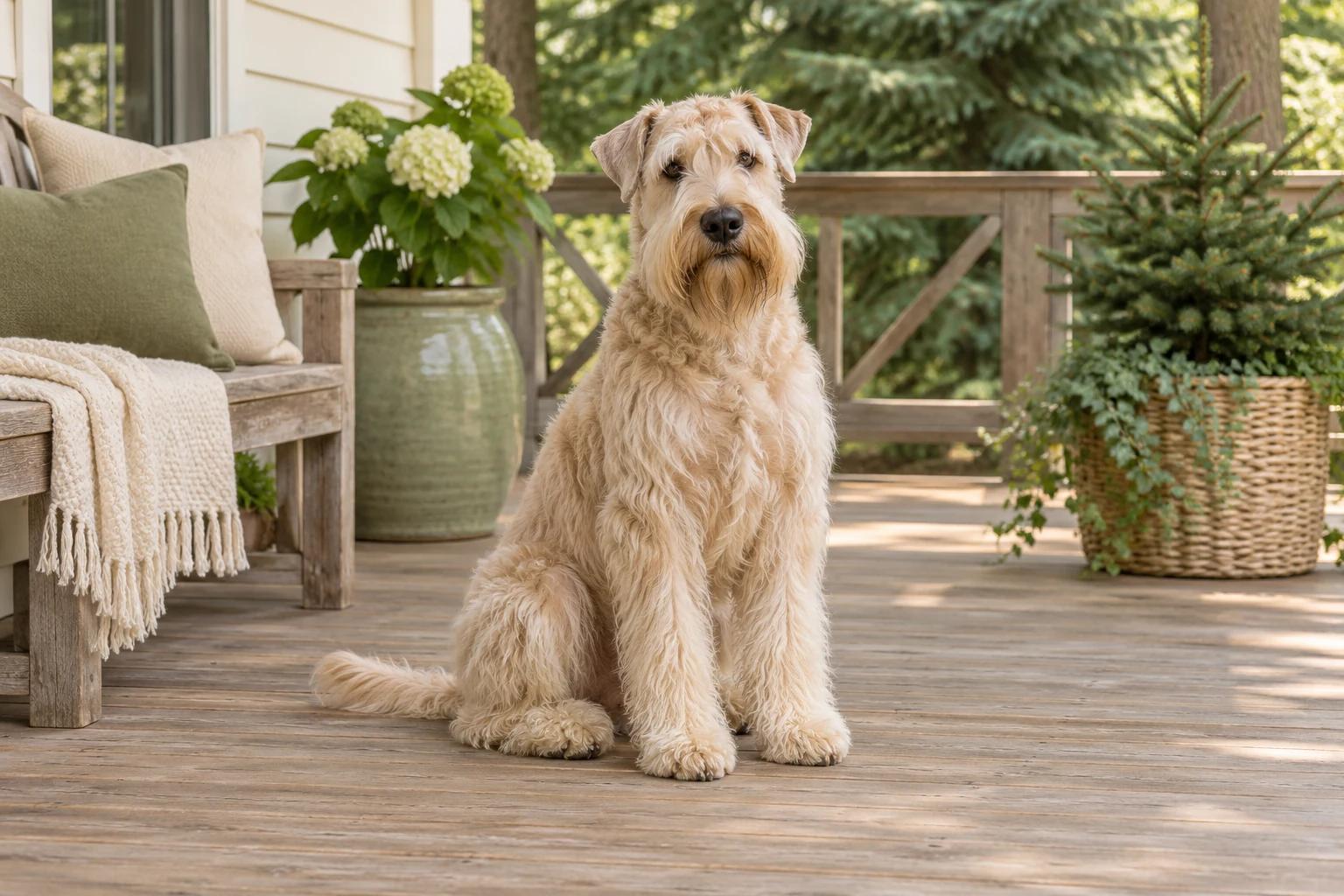
Explore the
Soft Coated Wheaten Terrier
Background, care, and everyday considerations.
View breed profile →Soft coated wheaten terrier exercise needs are an important part of choosing the breed, not an afterthought once the coat has caught your eye. My Breed Atlas rates activity four out of five and mental engagement three. The combination points toward an involved everyday life rather than a dog whose main requirement is looking tidy.
The Wheaten profile also records strong family interest. Consider activity as time shared with a companion, not merely a task to complete before the dog disappears from your day.
Soft Coated Wheaten Terrier exercise needs include variety
The American breed club describes a range of activities for Wheatens, including agility, obedience, rally, scent work and tracking. Its guidance connects choices to the individual dog's interests rather than presenting one compulsory sport for every Wheaten. SCWTCA: activities with Wheatens.
That gives an owner several ways to think about engagement. A dog that enjoys following a scent presents a different starting point from one most interested in moving with a handler. Neither interest obliges you to compete. An introductory class can help you find an appropriate activity without assuming the dog must immediately perform a complete course.
For a soft coated wheaten terrier activity level that fits your life, distinguish enjoying a pastime from demanding a result. A club's list of possible sports is an invitation to explore, not proof that every dog is physically ready for every option. Choose instruction suited to beginners and tell the instructor what your dog already knows. The useful outcome is an activity both of you can take part in comfortably, whether or not a title ever follows.
Change the activity with the life stage
Small Door Veterinary distinguishes a puppy's bursts of energy from adult stamina. Shorter opportunities to move and play, interspersed with rest, are more appropriate than treating a lively puppy as a finished adult athlete. A sleeping puppy does not need waking to complete an owner-imposed target. Small Door Veterinary: exercise through life stages.
For an older Wheaten, the relevant adjustment may be gentler activity divided into shorter outings. A soft coated wheaten terrier daily walk can remain part of the day without preserving exactly the route or pace used years earlier. Discuss changes in comfort or capacity with your veterinarian rather than deciding that age alone explains them.
Small Door also emphasizes individual veterinary guidance where medical conditions affect exercise. Tell the clinic what the activity actually involves: a level neighborhood outing and a demanding hike are not interchangeable descriptions. Ask what is suitable now, and revisit the plan if the dog's circumstances change. The breed's active reputation cannot determine an individual dog's current limits.
Try a simple toy search
Blue Cross describes searching games that begin with the dog watching a favorite toy being hidden in an easy place. Encourage the dog to find it, then make the hiding less obvious only after the basic game is understood. The hiding place should be somewhere the dog is allowed to reach. Blue Cross: playing with your dog.
For a Wheaten, a visible toy placed just behind a suitable piece of furniture is a clearer first task than an object concealed in another room. Stay nearby and keep the route accessible. Do not put the toy somewhere that requires climbing, squeezing into a gap or disturbing household objects you want left alone.
If toys do not motivate this individual, Blue Cross suggests using a little food instead. This is a change of reward, not a requirement to persuade every dog to love the same toy. Supervise the game and use suitable items without detachable pieces the dog might swallow. A search adds a different kind of participation to the day without turning every activity into repeated running.
A stationary weave offers a small learning project
AKC's leg-weave guide builds the trick in parts. With enough comfortable space between your legs, lure the dog through, then around one leg and back to the front. Reward the small success before asking for a complete figure eight. Teach the other side separately. AKC: teaching the leg weave.
Only combine the two sides once each is easy. Then replace the food lure with an empty-hand signal and reward from the other hand. A verbal cue comes after the movement is recognizable, rather than becoming a repeated instruction the dog does not yet understand.
For a Wheaten and handler who can both move comfortably, the stationary version can be a modest coordination lesson. It is optional: do not squeeze a dog through an unsuitable gap, twist your own body awkwardly or force a reluctant dog to pass beneath you. Begin with a simple comfortable passage, or choose another activity. Stop if either participant is uncomfortable. The exercise is a learning game, not a treatment or a test of physical fitness.
How much exercise does a soft coated wheaten terrier need?
The profile's activity rating describes a tendency, not a prescription in minutes. It is useful for comparison: a Wheaten sits toward the more active end of this reference, while its playfulness and mental-engagement ratings are in the middle. Those measures do not mean the dog must be continuously entertained or that every outing should be intense.
It is also important not to substitute one appealing trait for another. Strong family affection does not make this a low-activity lap companion. Equally, an active reference does not mean the dog should spend its entire day apart from people in an outdoor space. The profile combines physical involvement with interest in household company.
Before choosing the breed, picture the activities you genuinely enjoy sharing with a dog. If your main attraction is the Wheaten's appearance but you have little interest in outings or learning together, that mismatch matters more than finding an exact daily number. The dog breed quiz can help put those preferences alongside coat care and companionship.
For a separate ownership topic, see the Wheaten PLN result and follow-up article. This activity guide does not assess health or replace your dog's veterinary advice.
Frequently asked questions
Is the Wheaten a low-activity choice?
The My Breed Atlas reference places activity at four out of five. That makes an interest in an active daily life important when considering the breed, even though individual dogs differ.
Does strong family affection replace activity?
No. The profile gives family affection its highest rating while also recording relatively high activity. These are separate parts of the same companion's potential needs, not alternatives that cancel one another.
Should I choose mainly by the coat?
No. Grooming is a substantial commitment, but it is not the whole breed. Consider whether the Wheaten's combination of company, activity and mental engagement appeals to you before deciding that its appearance is enough.
Sources behind this article
- SCWTCA: activities with Wheatens ↗
- Small Door Veterinary: exercise through life stages ↗
- Blue Cross: playing with your dog ↗
- AKC: teaching the leg weave ↗
Article source checked: November 16, 2026. Source checked 2026-11-16
Keep reading

Afghan Hound Exercise Needs: Build a Workable Active Day
Read article →