Snowshoe Training: Teach a Clear Invitation to Look Toward You
Plan Snowshoe training around voluntary attention, appropriate rewards and consistent signals while keeping safety independent of cue reliability.
Snowshoe training can begin with a small communication skill: recognizing a consistent invitation to turn attention toward a familiar person. That is different from demanding that the cat cross a room, leave a resting place or respond beside an open exterior door. A clear first step gives you something observable without making reliability a safety claim.
This guide considers how to train a snowshoe through suitable rewards and voluntary attention. It keeps ordinary learning separate from the existing litter-transition article and does not present obedience as a cure for a behavior or health concern.
Snowshoe training: decide what counts before starting
Choose a quiet, suitable setting where the cat is awake, comfortable and free to leave. Your first objective might be a voluntary glance toward you. It does not need to include approach, touch or staying beside you.
FelineVMA's training guidance explains rewarding desired behavior and dividing tasks into manageable steps. Use that principle to define the response narrowly enough that your timing makes sense. A vague expectation to pay attention can leave several people rewarding different actions.
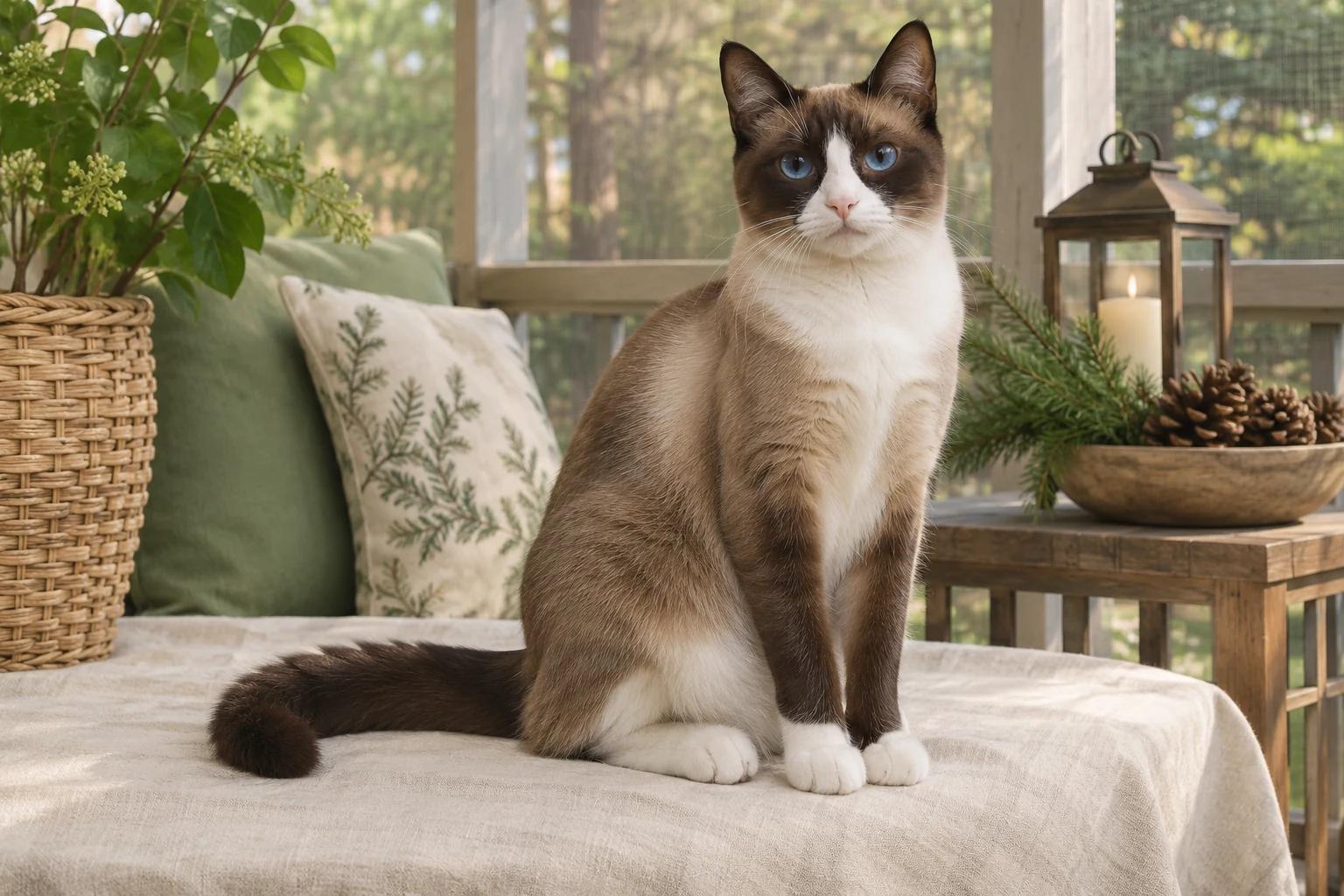
The Snowshoe profile supports small, reward-based care tasks. TICA describes interest in learning, but the individual has no obligation to perform quickly because of its breed. Begin with the animal in front of you rather than a promised rate of progress.
Arrange the reward within ordinary care
Have a suitable reward ready so it can follow the action you intended to acknowledge. Find out what this cat values instead of assuming every animal wants the same food or contact. Petting is only a useful response when it is welcome in that situation.
If food is used, keep it within the current care plan and ask the veterinary team about restrictions or concerns. Do not remove access to essential food or other resources to make the invitation more persuasive. Learning should not depend on an unmet basic need.
Prepare yourself before asking for anything. Searching through a bag after a glance, then rewarding a different movement, can make the exercise harder to interpret. A simple arrangement with fewer distractions helps the person as well as the cat.
Observe first, then introduce a consistent signal
Notice when the animal already turns toward you comfortably. Acknowledge that chosen response rather than repeatedly calling while it is engaged elsewhere. Once the response is becoming understandable, introduce a simple consistent signal with appropriate guidance about timing.
Agree with other caregivers what the signal means at this stage. It asks for attention, not a complete approach or a prolonged stay. Do not have several people call at once to see whom the cat chooses; that changes a learning opportunity into a social contest.
Keep the object of the exercise modest. You do not need a particular number of repetitions or a set session length. Stop while the setup remains comfortable, and let a departure end the opportunity without retrieving the animal for a final attempt.
Keep attention and approach as different steps
A glance can be useful without being treated as a failed recall. If you later want the cat to approach, that is an additional learning step with its own setting and clarity. Do not silently change the requirement after the original response has been offered.
Similarly, approaching you does not establish willingness to be lifted. Rewarding contact and then unexpectedly restraining the cat can make the experience different from the invitation it accepted. Ask your veterinary team about cooperative care when handling is the actual goal.
Write a short note if care is shared: signal, expected response and suitable reward. Another adult should understand whether the current stage is a glance or an approach. Clear communication prevents an early success from becoming an unrealistic household expectation.
Review confusion rather than increasing pressure
If the animal does not respond, consider the setting, reward and clarity. An unfamiliar room or another pet nearby changes the experience. Adding distance, repeated words and several gestures at once may make the task harder rather than explain it.
Snowshoe obedience is sometimes used to mean easier everyday life, but a reluctant response is not automatically defiance. Contact the veterinarian about a new change in activity, movement or handling. Do not practice repeatedly to decide whether a concern is genuine.
FelineVMA advises against training a frightened, sick or painful animal. Seek appropriate help rather than using persistence to override that limit. This guide recommends no punishment, treatment or home diagnosis.
Keep safety arrangements independent
A response learned in a quiet room cannot certify behavior around an exit, visitor or exciting distraction. Maintain secure doors and appropriate barriers independently of any signal. Do not open a hazardous opportunity to test whether training has worked.
The same applies to ordinary care. The Snowshoe litter-transition article addresses familiarity and individual preference in another setting. A cue should not be used to pressure the animal into a tray or replace veterinary advice about a toileting change.
A practical household skill has limits. Acknowledging them does not make it useless; it keeps a voluntary communication tool from being assigned responsibilities it cannot reliably carry.
Introduce new people thoughtfully
Snowshoe socialization does not mean asking every visitor to obtain the response. TICA allows for reserve around strangers, and an unfamiliar person changes the situation even if the words are identical. Let the cat observe and choose its distance.
Adults should guide children's participation. Preparing a reward or watching one comfortable response can be useful without making a child responsible for restraint or reliability. Do not require the cat to give everyone a turn.
Use the cat quiz to consider wider preferences about interaction before adoption. A sustainable routine includes rest, resources and appropriate help as well as learning. The useful result is a clearer invitation between caregiver and cat, not proof of intelligence or a guarantee of obedience wherever the household wants it.
Frequently asked questions
What is the first response in this guide?
A voluntary glance toward a familiar person in a suitable setting. Approach, carrying and staying nearby are separate demands, not automatically part of that response.
Should I repeat the signal until the cat responds?
Review clarity, reward and setting instead of escalating pressure. Let the animal leave and obtain appropriate advice about persistent difficulty or a new concern.
Does success in a room make an open door safe?
No. Keep physical safety arrangements independent. Do not create a hazardous situation to test a learned response.
Can visitors use training as an introduction?
Not automatically. New people are a separate experience; respect distance and retreat rather than requiring a demonstration for each guest.
Sources behind this article
Article source checked: November 20, 2026. Source checked 2026-11-20
Keep reading

Abyssinian Cat Training: Useful Skills for an Active Cat
Read article →