Small Munsterlander Size: Build and Practical Fit
Understand Small Munsterlander size through its working build, individual body condition and practical fit for water activities and car travel.
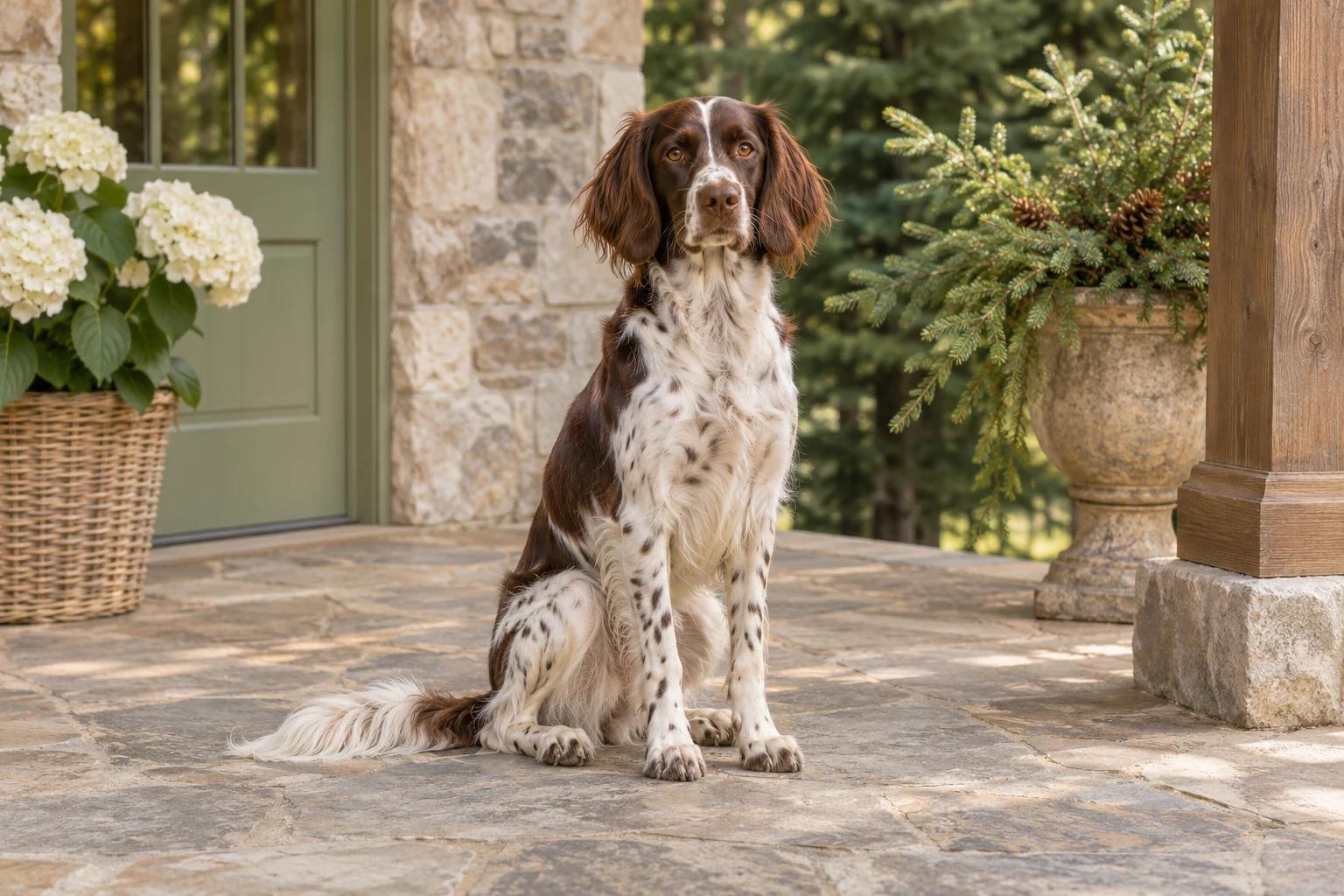
Small Munsterlander size should not be interpreted as toy-dog size simply because “Small” appears in the name. This is a substantial companion to accommodate in everyday life. The breed profile also records high interest in activity and learning, which matter just as much as the space occupied by a resting dog.
The current My Breed Atlas adult reference is 49–60 pounds overall: females 49–55 pounds and males 53–60 pounds. The listed height is 20.5–21 inches, without separate male and female ranges. These references describe adults; they are not growth targets or guarantees about the final size of a puppy.
Small Munsterlander size and working structure
The FCI standard describes strong bone, a firm muscular back and short, broad loins. The chest is deeper rather than broad, with a slight upward curve beneath the abdomen. The feet are rounded and arched, with close toes and substantial pads.
Together these details describe substance without cumbersome bulk. When looking at an adult, consider the relationship between its chest, limbs and trunk rather than searching for the heaviest specimen. More mass is not automatically a better representation of the breed.
Weight and condition answer different questions
Small Munsterlander weight is useful information, but not a complete assessment of condition. Cornell's veterinary overview recommends establishing an individual ideal with a veterinarian rather than guessing from appearance alone.
Ask for a demonstration of body-condition assessment on your own dog. How readily the ribs can be felt, the waist viewed from above and the abdominal outline from the side all contribute information. An active-looking dog is not automatically at an appropriate weight, and a scale cannot distinguish all the reasons two dogs of similar size differ.
For this highly trainable breed, rewards are also part of the practical conversation. Cornell notes that small portions can serve training well and that allocated daily food can sometimes supply rewards. Ask the veterinary team how these fit your dog's diet rather than adding an unmeasured quantity on top. Do not start a weight-loss plan or substantially restrict food merely to match another Munsterlander's number. Assessment, feeding decisions and follow-up belong together, especially when the dog's weight has changed unexpectedly.
Water equipment needs the individual dog's dimensions
If water activities are part of your plans, a breed name is not a life-jacket size. The AKC's fit guidance emphasizes dimensions and freedom of movement. Measure the dog against the particular manufacturer's instructions and use its actual weight where required.
The jacket should be snug without restricting movement, with room for two fingers under the straps. The dog must be able to sit and lie down as well as move comfortably. Check how it sits on the chest and body rather than assuming that fastening the buckles proves a good fit.
Introduce the equipment at home, allowing investigation and rewarding comfortable interactions before expecting the dog to wear it near water. A closely supervised check in shallow, suitable water lets you reassess its fit when wet and observe movement. A life jacket is a precaution, not permission to leave a dog unattended or to enter unsafe conditions. Bright material and a suitable handle can be useful features, but they do not replace close supervision and an appropriate setting for that individual dog.
Account for size during car travel
A dog that fits across a seat still needs safe restraint. Cornell's travel guidance recommends crash-tested travel equipment and warns against allowing dogs to roam freely in the vehicle. A loose dog can distract the driver and is vulnerable during sudden stops.
For a Small Munsterlander, choose a properly sized travel system and install it according to its instructions. Treat fitting the dog and securing the equipment as two separate checks. A crate fitting in the vehicle does not establish that the dog fits the crate; a harness closing around the dog does not establish that its vehicle attachment is correct.
Introduce the travel arrangement gradually, beginning with comfortable, brief experiences before longer journeys. Keep the dog's head inside the vehicle and never leave it unattended in a parked car. If travel produces persistent distress or sickness, ask your veterinarian for help rather than assuming the dog will simply adapt through repeated long trips. Physical accommodation and emotional comfort both belong in a workable travel setup.
Why a size-only shortlist misses this breed
If you are asking how big do Small Munsterlanders get because you want a manageable companion, define what “manageable” means in your home. Space, coat work, activity and interest in family interaction are separate demands. A dog can be physically accommodated while still being a poor match for the life someone wants to share.
The Atlas profile records activity and mental engagement at four out of five and responsiveness to training at five. That combination makes the time spent together a major part of the choice. Someone selecting mainly for a convenient physical footprint should look just as carefully at whether they enjoy an involved learning partner.
Conversely, a low grooming-frequency rating does not cancel the rest of the ownership commitment. The profile records some shedding and strong family affection. Neither is captured by a shoulder measurement. These are practical distinctions: the dog occupies your attention and shared routines as well as a bed or a place in the car.
For a broader comparison of those priorities, try the dog quiz. The existing breed-history article explains a different aspect of the Munsterlander and is useful background without being a prediction about an individual puppy.
Frequently asked questions
Does Small Munsterlander height predict its activity needs?
No. Height is a physical measurement; the profile's relatively high activity rating describes a separate tendency. A dog need not be exceptionally tall to require a household that enjoys an active, engaged companion. Consider both dimensions when choosing.
Is this a small commitment because its name includes “Small”?
No. The breed profile records substantial interest in learning and strong family affection. The name is not an estimate of the time, attention or involvement an individual will need. Read the complete profile rather than treating the name as a lifestyle label.
Does the lower vocal rating make size less important at home?
No. Voice and physical accommodation are independent considerations. The profile places vocal tendency toward the lower end, but that neither guarantees silence nor tells you how the dog will use a particular room, vehicle or shared space.
Sources behind this article
- FCI: Kleiner Munsterlander standard ↗
- Cornell: body condition and weight management ↗
- AKC: life-jacket fit ↗
- Cornell: traveling safely with your dog ↗
Article source checked: November 16, 2026. Source checked 2026-11-16
Keep reading

Airedale Terrier Temperament: What Everyday Life Can Feel Like
Read article →