Slovensky Cuvac vs Kuvasz: Company, Learning and Build
Compare Slovensky Cuvac and Kuvasz character, physical presentation and daily needs beyond their similar white coats.
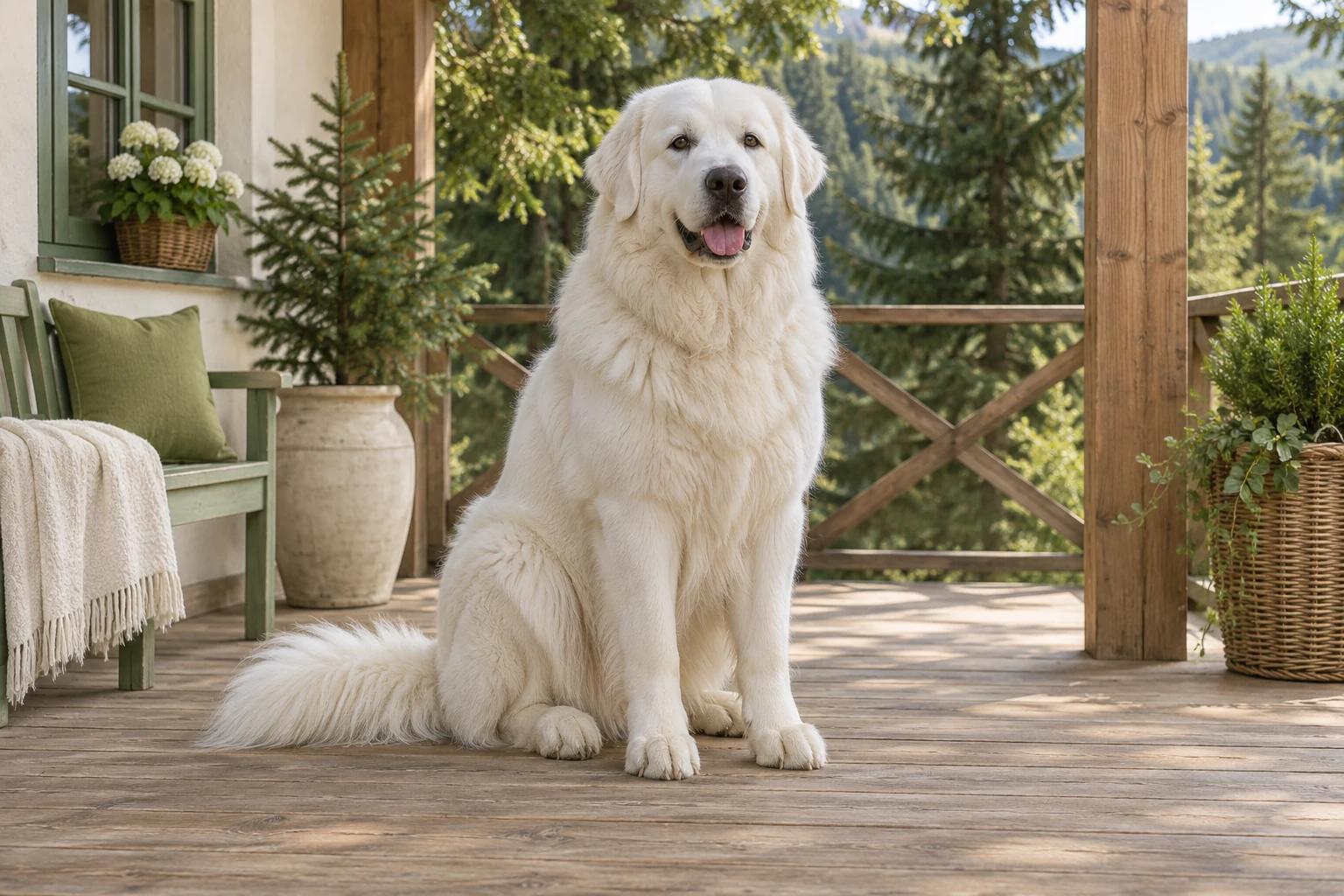
Slovensky Cuvac vs Kuvasz is a comparison worth making carefully. Both the Slovensky Cuvac profile and Kuvasz profile place family affection and watchfulness high on their reference scales. Neither description supports choosing a dog simply because a large white companion looks reassuring beside the house.
The useful differences concern how you expect to interact with the dog, teach it and include it in ordinary life. Atlas gives both breeds middle activity and mental-engagement ratings, but different reference points for training responsiveness and openness to new people. Look at those distinctions alongside the individual dog's actual experience.
Slovensky Cuvac vs Kuvasz: the Cuvac's social approach
The German Club Slovensky Cuvac's breed introduction describes attachment to familiar people alongside reserve toward strangers and unfamiliar situations. It recommends thoughtful social experience without overwhelming the dog with stimulation. This is a more useful picture than labeling the breed either universally friendly or inherently unapproachable.
During a meeting, let the dog become familiar with your presence rather than demanding physical contact immediately. An owner can describe how the dog behaves after a person becomes known, which may look different from its first response. The distinction matters particularly if your home receives many visitors.
Consider the quality of an introduction rather than its speed. A dog that remains comfortable at a little distance is giving you useful information. Reaching insistently toward it changes the encounter into something else. The club's description supports patient familiarity, not a test in which the dog must accept every new person on the same terms from the first minute.
The Kuvasz's head, feet and movement
The AKC Kuvasz standard describes an elongated but not pointed skull, almond-shaped eyes and V-shaped ears with slightly rounded tips. Its head is an important part of the breed's appearance, so a white coat alone is an inadequate identification guide.
The front feet are compact and rounded, with the rear feet somewhat longer. Movement is meant to be easy and elastic, with the feet traveling close to the ground. In an unexcited dog, the head may be carried around shoulder level while moving. That differs from the upright pose often chosen for an impressive portrait.
Watch a relaxed walking sequence as well as looking at photographs. Coat texture, head carriage and the position of the camera can all change the visual impression. Looking at the entire dog gives a more balanced view than choosing on the basis of a particularly dramatic mane or a close-up of the face.
Independence does not mean emotional distance
The Kuvasz Club of America's welcome brochure makes an important distinction: a breed developed for independent decisions still needs involvement with its family. Its account describes behavior changing with the situation, rather than a permanently solemn dog that never plays.
The brochure also recommends short, consistent lessons using praise and treats, rather than heavy-handed handling. For a prospective owner, that means independence is not a reason to abandon teaching. Nor is it a reason to make every interaction a confrontation. Clear, manageable practice belongs in the relationship.
Ask to see an ordinary interaction with the caregiver: a familiar cue, a moment of play or the dog joining the person outside. Those examples show how the individual participates when it understands the situation. A guardian background does not tell you exactly how demonstrative a particular dog will be, or how much experience it has had with the activities you hope to share.
Daily life with a Kuvasz still includes ordinary care
VCA's Kuvasz account describes regular walks or running opportunities, secure outdoor space and routine brushing. These practical needs are easy to overlook when a discussion concentrates entirely on guarding. Living with the breed still involves the everyday work of a companion dog.
A secure yard and an outing do different jobs. The yard provides a contained place to be outdoors; a walk provides shared movement beyond that familiar boundary. Neither should be treated merely as a substitute for the other. Ask what the dog actually does outside rather than assuming that access to a large area tells the whole story.
For coat care, have the caregiver demonstrate the routine on the dog rather than judging its difficulty by color or apparent fluffiness. A well-presented dog in a photograph does not show the time spent maintaining it. The relevant question is whether you can manage the individual animal's ordinary care alongside its other needs.
Where the Atlas reference points differ
The Kuvasz has a higher training-responsiveness reference than the Cuvac, while both sit in the middle for mental engagement. That is not a simple intelligence contest. It is a reason to discuss how readily the individual responds to familiar teaching and how much independent consideration it brings to a new task.
The Cuvac's openness-to-new-people reference is lower. The Kuvasz's middle rating does not promise instant sociability, and the Cuvac's lower one does not erase its strong family affection. A household with frequent unfamiliar visitors should explore actual greeting experience, not merely compare which breed sounds more protective.
Vocal tendency differs too: the Cuvac reference is lower, while the Kuvasz sits in the middle. Neither number proves what will happen when a particular dog hears an arrival or notices activity outside. High watchfulness and low vocal tendency can coexist; noticing something and barking at it are not identical traits.
The difference between Slovensky Cuvac and Kuvasz ownership therefore cannot be reduced to a single winner. Both profiles also put playfulness in the middle, so neither is presented as an automatic choice for someone wanting continuous toy games. Consider which style of companionship suits you, then meet dogs whose actual habits fit that picture.
The separate Cuvac coat article covers another aspect of appearance. Use the dog match quiz for the wider comparison.
Frequently asked questions
Is Kuvasz vs Slovensky Cuvac mainly a question of activity?
Both Atlas profiles place activity and mental engagement in the middle of the reference scale. Their differences in training responsiveness, openness to newcomers and voice may therefore be more useful discussion points than assuming one needs a dramatically different activity level.
Should I choose a Slovensky Cuvac or Kuvasz for quietness?
The Cuvac has the lower vocal reference, but that is not a promise of silence. Ask about the individual dog's actual triggers and routine. Both profiles have high watchfulness, which is a separate trait from how often a dog vocalizes.
Does either profile promise constant play?
No. Both have a middle playfulness reference. Look for the actual dog's preferred games and willingness to participate rather than assuming that an affectionate family companion must want repeated toy play throughout the day.
Sources behind this article
- Club Slovensky Cuvac: Breed information ↗
- AKC: Kuvasz standard ↗
- Kuvasz Club of America: Welcome brochure ↗
- VCA: Kuvasz ↗
Article source checked: November 16, 2026. Source checked 2026-11-16
Keep reading

Affenpinscher vs Brussels Griffon: Everyday Differences
Read article →