Slovensky Cuvac Size: Weight, Build and Everyday Space
Understand Slovensky Cuvac size, adult weight, physical proportions and practical access needs without treating a range as a puppy prediction.
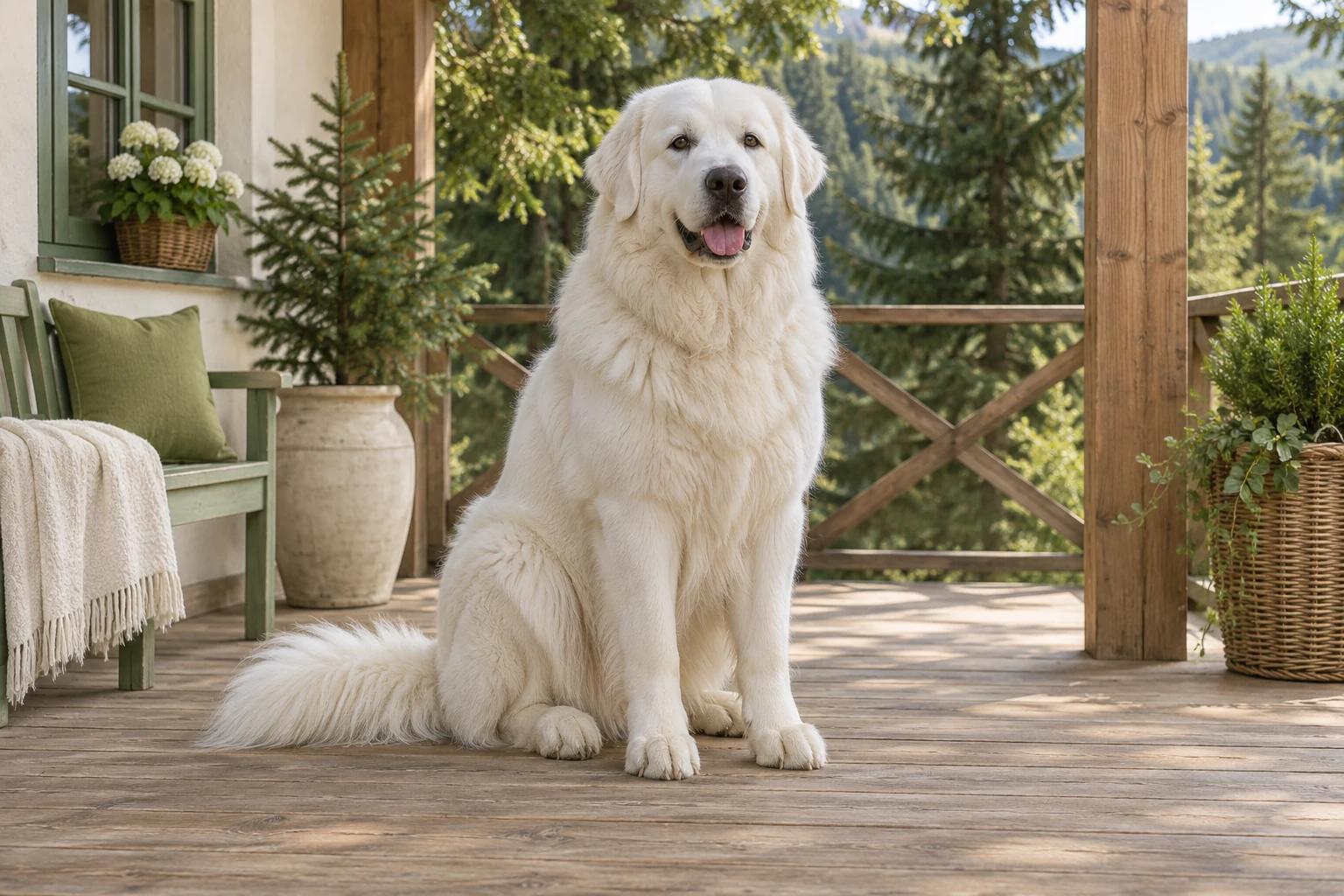
Slovensky Cuvac size means planning for a substantial adult. The current breed profile records 68–97 pounds overall, with females at 68–82 pounds and males at 79–97 pounds. These are reference ranges, not a promise about a puppy or a ranking in which the biggest dog is automatically the best choice.
The overlap matters: a larger female can outweigh a smaller male within those ranges. Sex alone therefore cannot answer every question about physical handling or space. Look at the dog's actual body and the situation in which it needs to move, rest or travel.
Slovensky Cuvac size includes a strong, rectangular frame
The FCI standard describes a moderately rectangular body on strong limbs, with substantial bone. It also describes a broad chest, well-sprung ribs and a strong back. This is a useful reminder that the Cuvac's presence is not simply an effect of a white coat.
The standard's description of light-footed movement is equally important. A powerful build is not meant to imply a cumbersome dog. Watch the animal walking and turning naturally rather than deciding how much room it needs from a posed photograph.
When assessing an adult, think about the whole frame: chest, body length and limbs. A weight reading cannot show all those dimensions. Two dogs of similar mass may still turn differently in a narrow space or present a different outline when standing beside a person. The aim is to understand the actual dog, not to turn its body into a single impressive number.
Separate body condition from the breed's weight range
PDSA's weight-check guidance combines looking at body shape with feeling beneath the coat. It considers the waist and the ease of feeling the ribs and other landmarks, and recommends asking a veterinarian to demonstrate the check. This is particularly relevant when a coat makes the outline harder to judge.
Being within the Slovensky Cuvac weight range does not by itself tell you whether an individual is in appropriate condition. Nor does looking broad in a photograph establish that the dog is carrying too much weight. The physical check and veterinary assessment answer a different question from the breed range.
Avoid trying to make a dog match the upper endpoint because you associate size with strength. If you are concerned about a change in shape or weight, discuss the individual with the veterinary team rather than changing food or exercise simply to reach a preferred number. The breed reference is context, not a feeding instruction.
Access matters when lifting is not practical
The AKC guide to ramps and stairs highlights width, a slip-resistant surface, stability and the equipment's weight limit. Those details matter for a Cuvac that needs help reaching a vehicle or another raised surface. A ramp that looks convenient for storage still has to suit the actual dog while in use.
Check the route from the ground to the destination, including the approach and the point where the dog steps off. The guide recommends gradual introduction with rewards and advises against pulling or pushing a dog onto unfamiliar equipment. Begin at an easy angle where possible, and build confidence through manageable steps.
A mobility aid is not a reason to ignore a new difficulty with movement. Ask the veterinarian about unexplained hesitation or discomfort. For everyday preparation, the useful lesson is to avoid assuming that you will always be able to lift the dog if it needs assistance. Appropriate access is a physical part of accommodating its size.
Transport measurements are not just shoulder height
IATA's pet-container guidance distinguishes the animal's length, elbow height, widest body point and natural standing height to the head or ear tip. It also distinguishes internal container space from the dimensions of the object outside. These are useful distinctions when preparing transport for a large Cuvac.
A dog must have space to stand and sit upright, turn normally and lie naturally. A container whose advertised length sounds generous may offer less usable space once its construction and bedding are considered. Measure the individual rather than assigning a container from the breed name alone.
For air travel, confirm the carrier's current requirements and acceptance before relying on a calculation or an “airline” label. Dimensions are only one part of arranging suitable transport. The immediate size lesson is simple: the dog's highest point is not its shoulder, and comfortable turning requires width as well as length. A single height measurement cannot answer every transport question.
What the reference means in an ordinary home
The overall adult range spans 29 pounds. That is enough variation to make the actual adult's size more informative than a generic description such as “large white dog.” If you are meeting an adult, compare its recent weight with what you see when it moves beside its caregiver. If you are considering a puppy, discuss its family background without treating that as an exact forecast.
Physical size is only one component of daily life. The Cuvac's Atlas activity and playfulness references sit in the middle, while family affection and watchfulness are high. A large individual is not necessarily more energetic than a smaller one, and neither is automatically content simply because it has ample floor space.
The profile records Slovensky Cuvac height separately from weight because these describe different aspects of the dog. For a household, observe actual head clearance, the room needed to change direction and how the dog positions itself near people. A familiar adult moving through an ordinary doorway often gives a clearer impression than a portrait with no reliable scale.
For the separate issue of coat appearance, read the Cuvac coat article. The dog match quiz helps weigh size alongside the relationship and activity you want.
Frequently asked questions
How big do Slovensky Cuvacs get?
The current Atlas adult weight reference is 68–97 pounds, with overlap between the male and female ranges. It describes a substantial breed but cannot predict a puppy precisely. An adult's actual weight is more informative than assuming it sits at the midpoint.
Are all males heavier than females?
No. Atlas records females at 68–82 pounds and males at 79–97 pounds, so the ranges overlap. These are population references rather than a rule that every male must outweigh every female. Evaluate the individual dog.
Does a larger Cuvac need a more intense lifestyle?
Size alone does not establish activity preferences. The breed's Atlas activity reference is in the middle of the scale. Consider the individual's participation and circumstances rather than using its weight to decide how demanding its day should be.
Sources behind this article
- FCI: Slovakian Chuvach standard ↗
- PDSA: Keeping your dog’s weight in check ↗
- AKC: Dog stairs and ramps ↗
- IATA: Traveler’s Pet Corner ↗
Article source checked: November 16, 2026. Source checked 2026-11-16
Keep reading

Airedale Terrier Temperament: What Everyday Life Can Feel Like
Read article →