Slovakian Wirehaired Pointer vs Weimaraner: A Comparison
Compare Slovakian Wirehaired Pointer and Weimaraner coat, learning, play and companionship without treating them as interchangeable.
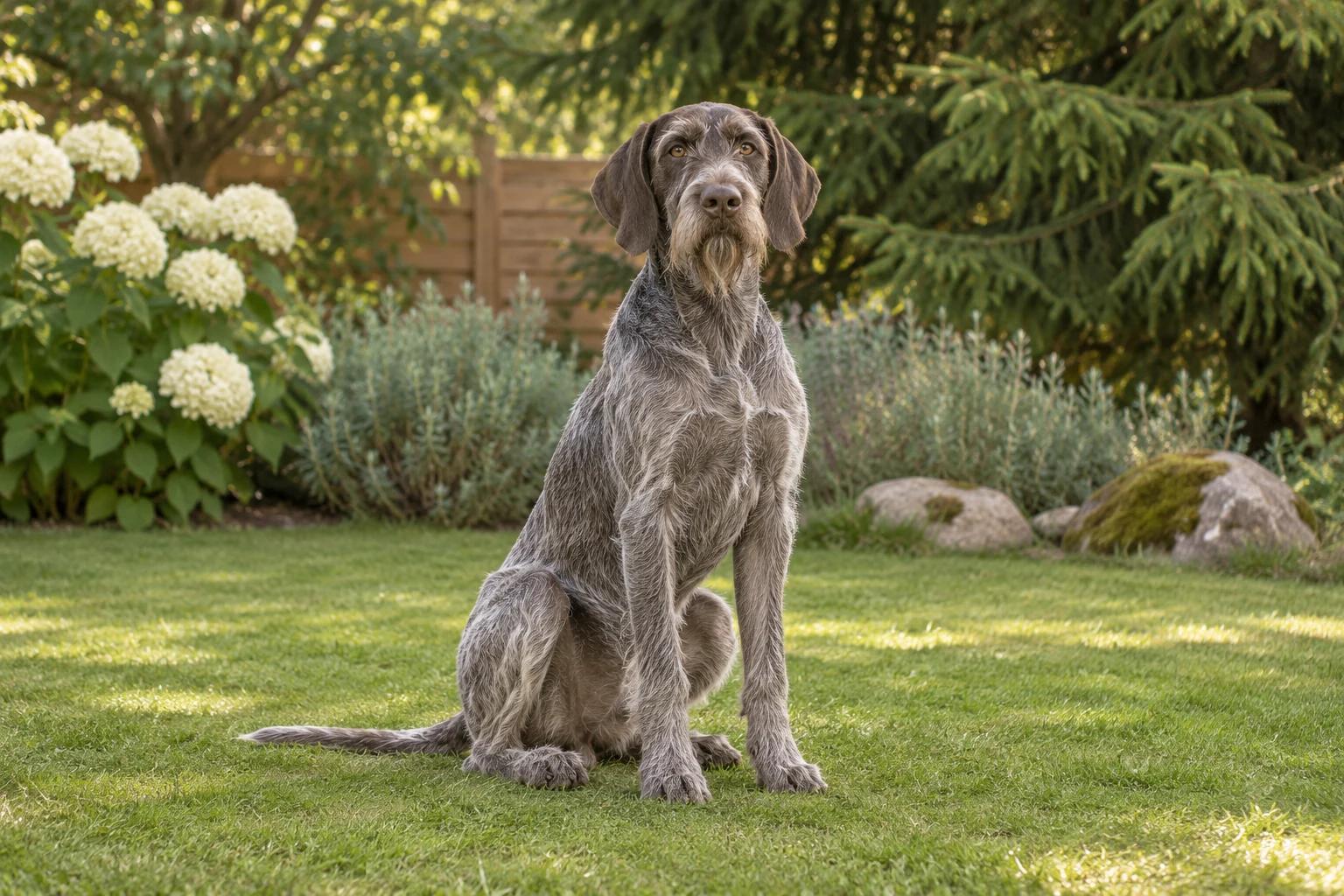
Explore the
Slovakian Wirehaired Pointer
Background, care, and everyday considerations.
View breed profile →Slovakian Wirehaired Pointer vs Weimaraner is not simply a choice between two versions of a gray dog. The Slovakian Wirehaired Pointer profile and Weimaraner profile both describe strong interest in family interaction and responsive learning, while the Weimaraner reference points toward more substantial physical activity. Mental engagement deserves a separate discussion rather than a comparative ranking.
That combination matters more to daily life than a shared color impression. A person who enjoys active teaching may find either worth investigating, while someone who wants minimal involvement should not interpret an easy-looking coat as an easy overall commitment. Start with their separate identities, then compare the way each individual lives.
Slovakian Wirehaired Pointer vs Weimaraner: related, not identical
The Slovakian breed club's history names the Weimaraner among the breeds involved in developing the Slovakian Rough Haired Pointer, alongside the Cesky Fousek and German Wirehaired Pointer. It also explains an early classification as a rough-haired Weimaraner, followed by separation from that classification. The connection is real, but it does not make the present breeds interchangeable.
This is useful when interpreting an advertisement or talking with an owner. “Like a Weimaraner with whiskers” may communicate a visual impression, but it is not a complete breed description. Ask which breed is actually being discussed and look at the dog's documented background.
Ancestry also does not justify assigning a fixed percentage of one ancestor's personality to a modern dog. The club's account describes development and selection across generations, not a recipe for predicting a puppy's behavior. Evaluate the Slovakian breed in its own right instead of assuming that every Weimaraner trait transfers unchanged.
The Weimaraner's physical presentation
The AKC Weimaraner standard describes a short, smooth coat in gray shades, a deep chest and a moderately long head. The long ears are slightly folded, and the neck is clean in outline. Together, these features create a different presentation from a conspicuously furnished face.
The standard also emphasizes coordinated movement rather than a dramatic pose. Viewed from the side, the back should remain strong and level during the gait. That gives an owner a reason to look beyond a still photograph: a natural walking view adds information that a carefully positioned portrait cannot provide.
Do not confuse the smooth surface of the coat with a lack of substance underneath. The chest and muscular body remain part of the dog's physical presence. When meeting a Weimaraner, watch the whole dog turning, standing and moving beside its person rather than evaluating it only from a face-on image or the apparent shine of its coat.
Weimaraner company can be very involving
In Living With A Weimaraner, Carole Lee Richards describes a breed keen to participate in human activity. Her examples involve following people around and wanting to be near them, not simply occupying the same property. This is an important distinction for someone imagining a companion that is largely self-contained.
The article also emphasizes activity shared with a person and consistent teaching. A backyard by itself is not the same thing as doing something together. Consider whether you actually enjoy having a dog involved in ordinary movement around the home as well as deliberate outings.
For a prospective owner, observe how an individual Weimaraner engages with its familiar person. Does it bring a toy, follow a change of room or wait for an invitation? Those details make the broad description more concrete. They also help distinguish an appealing sense of companionship from a level of involvement that would frustrate someone who wants greater distance.
The Slovakian coat has a different texture
The FCI Slovakian standard describes a harsh, straight outer coat with fine undercoat. Longer, softer hair forms the moustache, with more pronounced hair above the eyes. This is texture and furnishing, not merely a different shade of gray.
Look at the coat in an ordinary, unstyled state. The face should be considered alongside the body coat rather than treating a beard as the only identifying feature. A photograph lit from behind can exaggerate stray hairs, while a distant image can conceal texture altogether.
Compare the kinds of interaction you enjoy
The Atlas profiles give both breeds a high responsiveness-to-training reference. Ask separately about the learning the individual enjoys and the frequency of shared games. Liking to learn does not determine a whole daily routine, and a familiar response does not reveal how a dog will experience every new task. Compare ordinary lessons rather than ranking mental engagement.
Imagine two ordinary evenings. In one, you enjoy repeated opportunities to engage with a dog through play and learning. In the other, you prefer fewer, more focused interactions. Neither description makes an individual dog predictable, but it gives you a concrete way to discuss the difference between Slovakian Wirehaired Pointer and Weimaraner ownership with experienced caregivers.
The Slovakian profile rates other-dog interaction more highly, while the Weimaraner profile places watchfulness higher. These are conversation starters, not promises about a particular pairing or an invitation to encourage guarding. Ask how each dog actually behaves around familiar dogs, unfamiliar dogs and arrivals at home. One friendly encounter does not describe every setting.
Do not assume either breed will be silent. Ask about the individual’s vocal behavior in familiar settings instead of relying on a comparative noise ranking. The Slovakian’s lower shedding and grooming-frequency reference points may be convenient, but they do not cancel its activity needs. When weighing a Slovakian Wirehaired Pointer or Weimaraner, consider these dimensions together.
The separate article on the Slovakian's work description covers its historical tasks. The dog match quiz helps compare the broader ownership commitments.
Frequently asked questions
Is Weimaraner vs Slovakian Wirehaired Pointer mainly about coat?
No. The Atlas profiles also raise questions about physical activity, play, watchfulness and other-dog interaction. Compare the dogs’ ordinary routines and social experiences alongside appearance, without assuming that a higher score in one category establishes higher needs in every other area.
Which breed is more responsive to training?
Both have high responsiveness-to-training reference ratings on Atlas. That does not show which particular dog will learn a particular task sooner. Compare the individual's experience and interest in working with a person rather than treating the score as completed training.
Which breed has the lower shedding reference?
The Slovakian Wirehaired Pointer has the lower Atlas shedding reference. Both still need appropriate coat care. Choose with the whole ownership picture in mind rather than assuming that a more convenient coat makes the dog's other requirements smaller.
Sources behind this article
- Slovakian Rough Haired Pointer Club: Breed History ↗
- AKC: Weimaraner standard ↗
- Weimaraner Club of America: Living With A Weimaraner ↗
- FCI: Wirehaired Slovakian Pointer standard ↗
Article source checked: November 16, 2026. Source checked 2026-11-16
Keep reading

Affenpinscher vs Brussels Griffon: Everyday Differences
Read article →