Sloughi Exercise Needs: Walking, Running and Engagement
Understand Sloughi exercise needs through secure running, rewarding learning, scent exploration and an individual approach to activity.
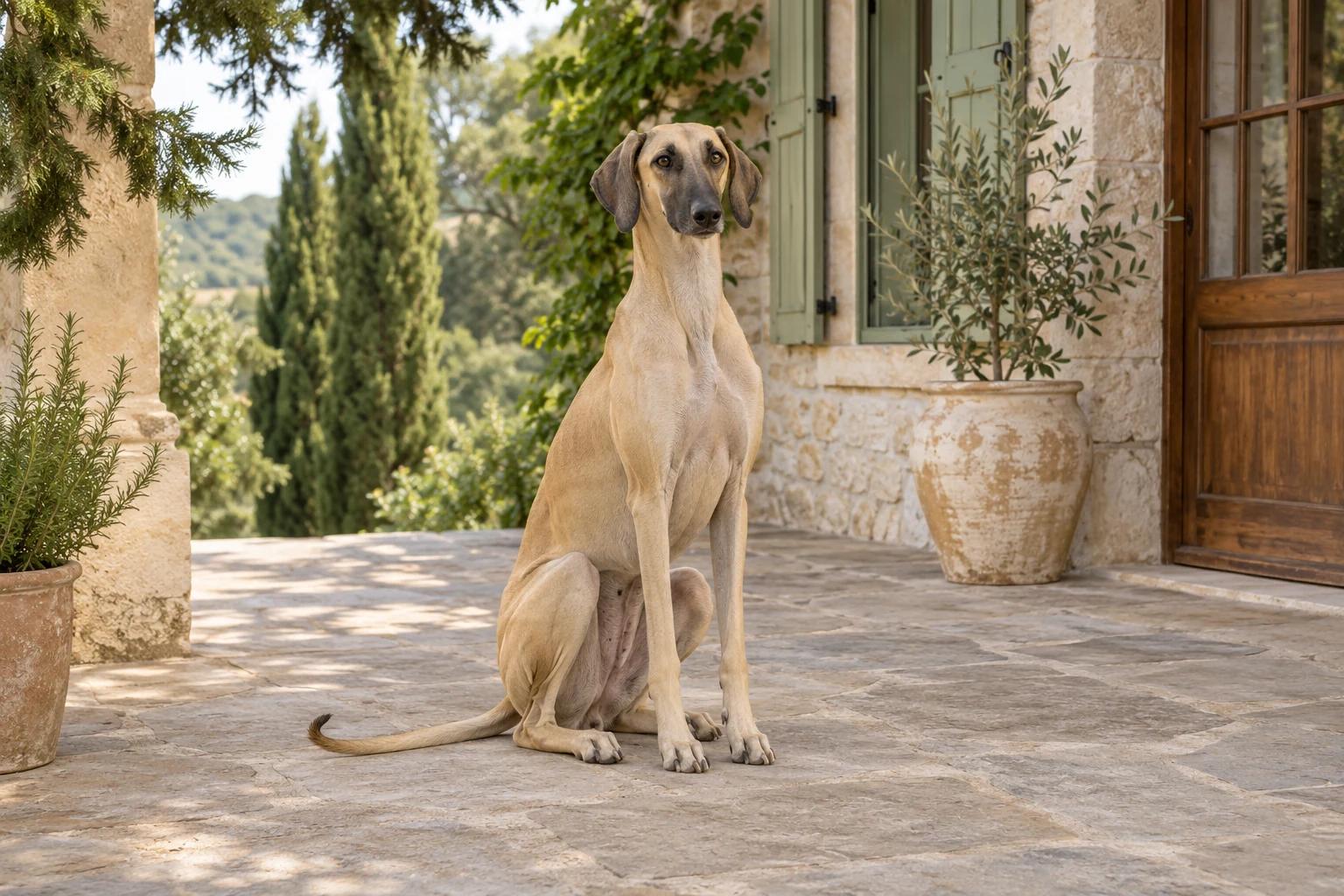
Sloughi exercise needs are an important part of choosing the breed, not an afterthought once you have admired its appearance. The Sloughi profile places activity toward the higher end of its reference scale, with mental engagement also part of the day. A low grooming commitment does not turn this into a low-activity dog.
Think in terms of different experiences rather than one impressive total. Moving with you, making choices, learning and playing can each occupy a distinct place. The question is what the individual dog does during its active time, not simply how many minutes pass before you return home.
Sloughi exercise needs include opportunities to stretch out
The American Sloughi Association's FAQs emphasize regular opportunities to gallop in a secure area. That is a useful distinction from treating every outing as a short trip around the same block. A Sloughi needs an appropriate outlet for moving at its own running pace, not only matching a person's stride.
Look at the space itself before thinking about distance. A clear, adequately enclosed running area serves a different purpose from a narrow path. Inspect boundaries and entrances before releasing the dog. A familiar location still needs checking if a gate has been left open or a section of fencing has changed.
Running opportunities need not become a contest to produce the longest possible session. Allow the individual to pause rather than continually sending it out again. The aim is access to suitable movement, not repeated exertion until the dog can do nothing else. If you cannot provide that kind of space yourself, suitable secure facilities are worth investigating before committing to the breed.
Teach useful skills without relying on them as fencing
The association's separate article on training a Sloughi explains the challenge of strong interest in moving prey. A response learned at home does not make an open area safe. Keep the dog on lead outside secure enclosures rather than using a promising recall as the only protection.
The same guidance supports positive teaching. Reward participation and work with manageable distractions. A Sloughi can learn useful everyday skills without becoming a dog that ignores everything happening around it. Avoid turning a difficult moment into a test of whether the dog respects you.
For instance, practice returning to your side in an easy setting before expecting attention near activity at a field entrance. If the dog is absorbed by movement beyond the boundary, make the situation easier instead of repeatedly calling louder. Learning and environmental safety do different jobs. You can develop the first while maintaining the second, without asking either to substitute for the other.
Understand what organized lure coursing offers
United Kennel Club's introduction to lure coursing describes dogs following an artificial lure around a planned course. Regular meets focus on sighthounds, while coursing aptitude tests are open to all dogs. It is an organized way to explore an interest in pursuit, rather than encouraging a dog to chase wildlife.
For a Sloughi owner, the useful distinction is between enjoying a chase and being ready for a particular event. Contact the organizing club about introductory opportunities and the conditions for participation. Watching a meet can also clarify how dogs are brought to the start and collected afterward, without assuming that a video of the running itself shows the whole process.
Do not treat a sport label as an automatic suitability assessment. Your dog's individual interest, preparation and comfort still matter. A club can explain its activity; your veterinarian can advise about physical suitability. The goal is an appropriate experience for this dog, not entering solely because the breed is associated with the sport.
Leave room for the nose as well as the legs
VCA's guide to sniffing walks describes exploration as mental engagement, with the emphasis shifted away from speed and mileage. Being a sighthound does not mean a Sloughi should be hurried past every interesting smell. A walk can have a different purpose from a running session.
Choose a suitable route where there is room to pause. Let the dog investigate a safe patch rather than pulling it onward whenever your own walking rhythm is interrupted. You can cover less ground while giving the dog more opportunity to investigate its surroundings.
For indoor variety, the guide also suggests finding hidden treats. Use accessible locations and an appropriate portion of the dog's normal food allowance. The interest lies in searching, not in creating an impossibly difficult puzzle. A simple search and a slower exploratory walk can add different experiences to a day that otherwise consists entirely of moving from one destination to another.
Match the outing to the individual, not the illustration
The Atlas profile gives the Sloughi a middle playfulness rating. That matters when choosing activities: do not assume that the most active-looking dog must also want endless ball games. Offer a few suitable invitations and notice which the dog actually accepts. Repeatedly presenting the same unwanted toy is not meaningful variety.
Social demands also change an outing. The profile describes reserve with new people, so a busy meeting place may feel very different from a familiar route with one person. More visitors and more greetings are not automatically a better day. Consider whether your dog can participate comfortably, rather than judging an outing by how eventful it looked to you.
Likewise, the breed's comparatively low vocal reference should not be used as the only measure of satisfaction. A quiet dog still needs opportunities for the activity and engagement described in its profile. Look at participation across the day rather than waiting for barking to tell you that something is missing.
Explore the separate article on Sloughi body length and height proportion for appearance, and the dog match quiz for a broader comparison of ownership needs.
Frequently asked questions
How much exercise does a Sloughi need?
The breed has a higher activity reference, but the Atlas rating is not an individual prescription of minutes. Consider the dog's age, circumstances and actual participation; ask your veterinarian to help assess suitable exertion rather than forcing every Sloughi into one timetable.
Does the Sloughi activity level mean constant toy play?
No. The Atlas activity rating is higher than its middle playfulness rating. A dog may enjoy movement without wanting the same toy game repeatedly. Notice which activities engage the individual instead of assuming that energy predicts one particular play style.
Should a Sloughi daily walk always involve meeting people?
Not necessarily. The breed's lower openness-to-new-people reference makes comfortable participation more important than collecting greetings. A familiar route with fewer social demands can be a different and worthwhile outing, rather than an inferior version of a busy walk.
Sources behind this article
- American Sloughi Association: FAQs ↗
- American Sloughi Association: Training your Sloughi ↗
- UKC: Lure Coursing ↗
- VCA: Sniffing walks for dogs ↗
Article source checked: November 16, 2026. Source checked 2026-11-16
Keep reading

Afghan Hound Exercise Needs: Build a Workable Active Day
Read article →