Silken Windhound vs Borzoi: Shape, Learning and Daily Life
Compare Silken Windhound vs Borzoi appearance, learning styles, activity and coat expectations before choosing your sighthound.
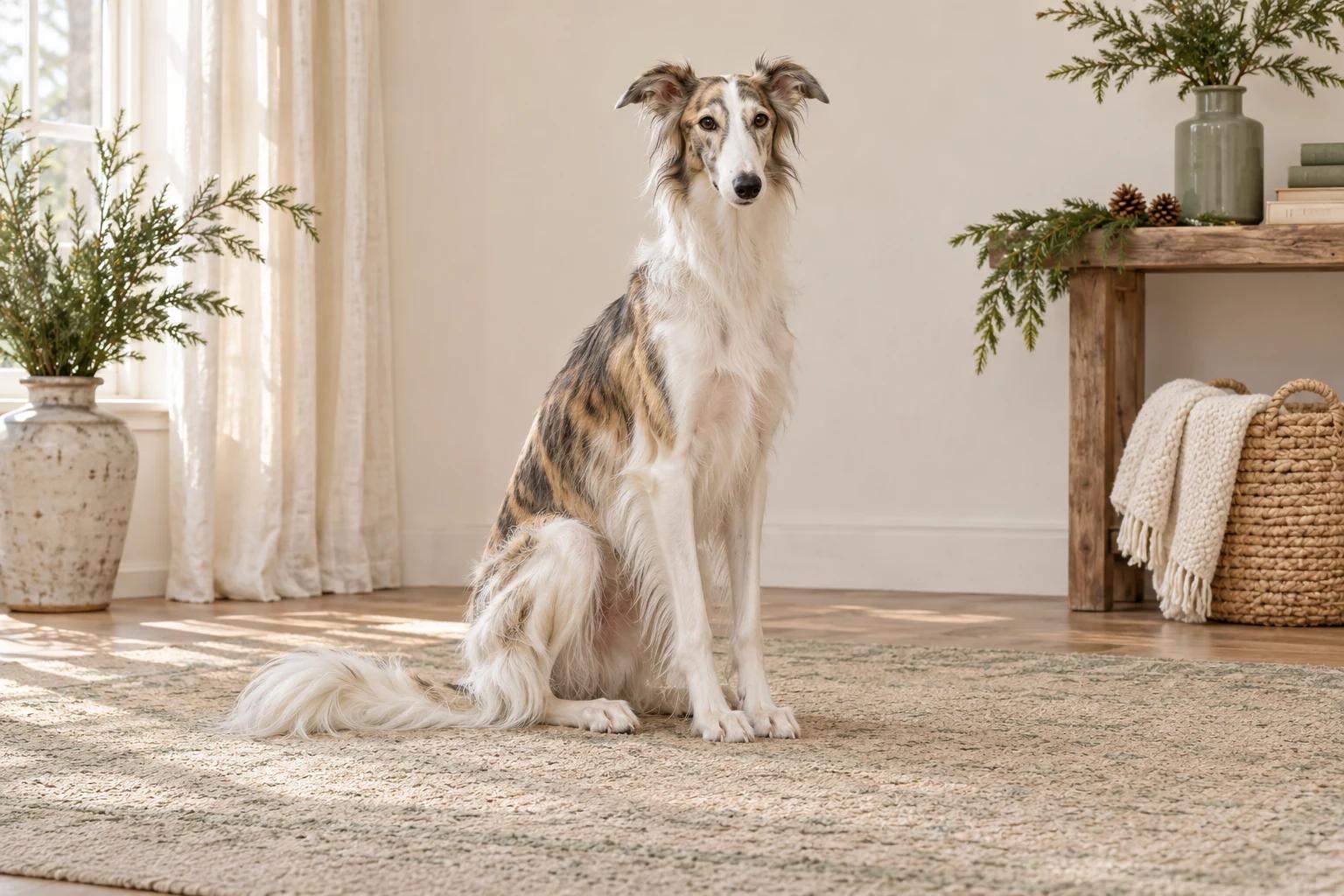
Silken Windhound vs Borzoi is a comparison worth making beyond photographs. My Breed Atlas places the Silken in the middle of its activity and training scales; the Borzoi has a higher activity rating and a more independent learning profile. Those differences matter when imagining an ordinary walk or lesson, not just deciding which outline you prefer.
Read the Silken Windhound profile and Borzoi profile together. Neither scorecard predicts the response of a particular dog. The useful question is which combination of physical presence, motivation and everyday demands you actually enjoy living with.
Silken Windhound vs Borzoi: the Silken outline
The UKC standard describes a Silken with fine bone and smooth muscle, rather than a fragile appearance. Its chest drops toward the elbow, then the underside rises into a pronounced tuck-up. Above that, the topline flows into an arch over the loin. Look at the body itself, rather than mistaking the feathering for its outline.
The head provides another useful identification detail: the skull and muzzle have nearly parallel upper planes, with little interruption between them. Small ears fold backward at rest but can rise when the dog becomes alert. An alert photograph and a relaxed photograph may therefore look surprisingly different without showing different ear types.
The coat can be straight, wavy or curly. Longer hair decorates the neck, underside, legs and tail, while the face and fronts of the legs remain shorter. Natural feathering should not conceal the dog beneath a massive coat. These features give you more to examine than the vague description “a smaller long-haired hound.”
The Borzoi has its own proportions
The AKC Borzoi standard describes a long, narrow head with a subtly rounded skull and an almost uninterrupted transition toward the nose. Its characteristic head is not simply the Silken head enlarged. The Borzoi also has a deep, relatively narrow chest, a curved loin and elongated feet with longer central toes.
Adult height makes the distinction conspicuous: the standard starts males at 28 inches and females at 26 inches. Look at an adult standing naturally alongside its handler rather than estimating scale from a close portrait. A low camera angle can make either breed appear monumental.
The coat may lie flat or form waves and curls, with a fuller neck frill and substantial tail feathering. At a trot, the desired impression is efficient ground coverage, not a succession of tiny steps. When comparing photographs, add a side-on walking video: it shows how the whole outline moves together rather than encouraging a choice based only on the face.
Silken learning can be a shared activity
The International Silken Windhound Society emphasizes participation in family activities and describes Silkens as receptive learners. Its examples include obedience and rally as well as running sports. This is a useful counterweight to the assumption that every sighthound is uninterested in working with people.
For someone deciding between Silken Windhound or Borzoi, the practical attraction may be teaching small, varied tasks rather than pursuing a single sport. A short sequence of positions and movement can be enjoyable in its own right. There is no need to turn every lesson into a competition goal.
The society also describes the contrast between outdoor exercise and quieter indoor companionship. That is not permission to replace outings with a sofa: the two parts belong together. When meeting a Silken, ask to see a familiar lesson as well as the dog at rest. An ordinary exchange with its owner reveals more about participation than a description such as clever or athletic on its own.
Borzoi independence changes the teaching approach
PDSA’s Borzoi guidance highlights independence and the need for patient, reward-based teaching. Affection toward familiar people does not mean the dog will automatically repeat whatever they request. Treat willingness to participate as part of the lesson, not a test of loyalty.
Start with something the dog can succeed at and make the reward worthwhile. If your ideal training session is a long series of identical repetitions, think carefully about whether that is the experience you want from this breed. Clear, satisfying practice is a better ambition than winning an argument over obedience.
The same guidance distinguishes attachment to family from wariness around unfamiliar people. A Borzoi taking time to approach a visitor is not necessarily showing how it behaves with its own household. Prey interest also deserves separate consideration: a composed social manner does not remove the need for secure exercise. Avoid using a quiet indoor meeting as evidence of dependable behavior around moving wildlife.
Compare the everyday demands, not an imagined winner
The difference between Silken Windhound and Borzoi is not a simple easy-versus-difficult ranking. The Atlas profiles show ordinary shedding for both. Neither is a choice for someone who expects no loose hair. The Silken’s grooming-frequency rating is higher, even though the Borzoi presents a more imposing coat-covered body. Time spent on coat care and the amount of dog occupying a room are different questions.
Voice deserves its own question rather than a quieter-breed ranking. Ask how the individual responds to arrivals, neighbors and ordinary household sounds. If noise is your main constraint, an adult dog’s known behavior in a comparable home is more informative than choosing from a general label. Include both the sound itself and the circumstances in your discussion.
Use the dog quiz to compare your priorities. For background rather than another care comparison, explore the Silken Windhound history article.
Frequently asked questions
Is Borzoi vs Silken Windhound mainly about looks?
No. Activity, learning, company and everyday care also belong in the decision. Discuss those practical dimensions alongside appearance, without treating a reference profile as a promise about one dog.
Does a Silken always have a straight coat?
No. The standard accepts straight, wavy and curly coats. Texture alone is not a reason to dismiss a Silken’s identity.
Is a Borzoi’s reserve the same as disliking its family?
No. Reserve with unfamiliar people and affection toward familiar people can coexist. Give the relationship context rather than judging it from one greeting.
Sources behind this article
Article source checked: November 16, 2026. Source checked 2026-11-16
Keep reading

Affenpinscher vs Brussels Griffon: Everyday Differences
Read article →