Silken Windhound Temperament: Company, Focus and Choice
Explore Silken Windhound temperament, individual social preferences, prey interest and practical ways to build attention and cooperation.
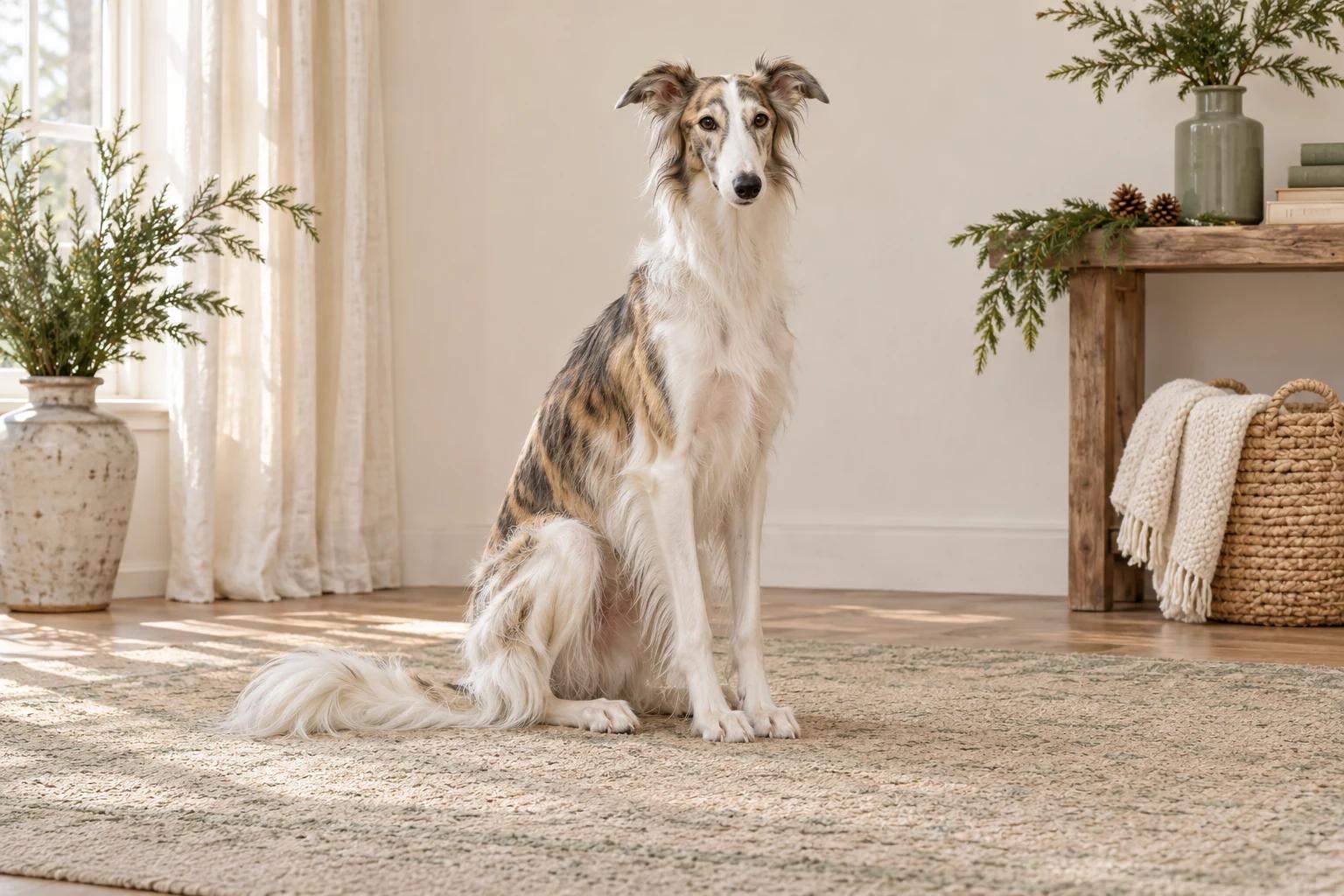
Silken Windhound temperament is more useful to understand through ordinary behavior than through a string of flattering adjectives. My Breed Atlas rates affection, openness to new people, playfulness and training responsiveness around the middle of its reference scale. There is room for considerable variation within that picture.
The Silken Windhound profile is a starting point for those tendencies. Look at how a dog approaches familiar people, responds to an invitation and occupies itself between activities. Those are separate observations. A dog need not demonstrate the same level of enthusiasm in every situation to be a rewarding companion.
Silken Windhound temperament includes individual preferences
The International Silken Windhound Society’s FAQ explicitly describes variation between personalities. Its picture includes affectionate companionship, periods of running and time spent resting near people, while acknowledging that some Silkens are busier than others. That is more helpful than imagining one universal Silken Windhound personality.
Notice the form companionship takes. One dog may approach for touch; another may lie nearby while keeping a little physical space. Neither observation alone tells you how much the dog values familiar company. Look for what it chooses when there is no visitor encouraging a greeting or toy inviting immediate play.
It is also useful to meet more than one adult. A particularly lively youngster can dominate your impression of the breed, just as a deeply relaxed older dog can. Ask which behaviors are characteristic of that individual rather than assuming the first example represents every Silken. The goal is not to select the most demonstrative greeting, but to understand the kind of relationship the particular dog already enjoys.
Affection and prey interest can coexist
The Royal Kennel Club’s breed account describes a gentle, affectionate household companion that retains a sighthound’s alertness and prey interest. These are not contradictory Silken Windhound characteristics. Social connection with people does not remove interest in something moving across the environment.
Separate those two questions when interpreting Silken Windhound behavior. Coming readily to a person indoors is evidence about that setting; it is not proof of what will happen with wildlife nearby. A warm greeting should never be treated as an off-lead qualification or a promise about compatibility with a smaller animal.
The club also notes participation in activities including scent work and agility, alongside running sports. This matters because engagement need not mean repeating one kind of chase. A dog’s responsiveness can be developed through different tasks with its person. Consider which activities interest the individual rather than assuming that being a sighthound dictates a single form of play or learning for its entire life.
Make looking toward you worthwhile
Dogs Trust’s name-training lesson starts by rewarding attention before asking for it. In a quiet place, notice when the dog looks toward you and promptly offer a valued reward. This gives the behavior a purpose before the name becomes a request.
Once the dog understands the exchange, say its name and reward the look. Dogs Trust suggests rolling a treat to one side, then asking again after it has been eaten. Alternating directions creates another opportunity to turn back toward you rather than expecting a prolonged stare.
For your Silken, this is a small, concrete communication skill, not a contest between affection and distraction. Practice again in a familiar outdoor place on lead; a new setting can make the task harder. If the dog does not respond, avoid chanting the name. Make the exercise easier and reward renewed attention. The aim is an understandable invitation that works through practice, not a louder word that somehow overpowers everything else in the scene.
Teach cooperation without holding the head still
AKC’s chin-rest lesson offers a voluntary alternative to restraining a dog’s head. The dog places its chin in your open palm. It is a useful cooperative skill to practice before asking for stillness during ordinary care.
Practice only when your dog is comfortable taking food near your hand. Begin with the palm facing upward and a treat positioned just beyond it. Reward the dog for bringing its chin over the hand, then gradually for making contact. Do not close your fingers around the muzzle. The important action belongs to the dog, not to the person arranging its face.
As the movement becomes familiar, remove the food lure while continuing to reward successful placement. Add a spoken cue only after the hand signal makes sense. Build a little duration gradually, including easy repetitions rather than making every attempt harder. Later, introduce small movements of your other hand separately from longer holds. A Silken choosing to participate in this exercise gives you a much clearer starting point for cooperation than assuming a friendly dog should accept any handling immediately.
What the middle ratings do and do not mean
The Atlas reference places vocal tendency in the middle, not at silence. If your Silken barks, identify the setting instead of deciding it has failed to match its breed. A greeting, activity elsewhere in the home and something outside the window are different situations to discuss with a trainer. A score cannot distinguish them for you.
The same applies to the moderate watchfulness rating. It is not a promise that the dog will guard a property, nor proof that it will ignore everything unfamiliar. Read the whole profile rather than selecting whichever single trait sounds most attractive. Playfulness, adaptability and social preferences all contribute to the daily experience, and the actual dog’s behavior remains more informative than an averaged label.
For a wider lifestyle comparison, use the dog quiz. For the breed’s background, read the separate Silken Windhound history article.
Frequently asked questions
Are all Silkens equally outgoing?
No. Individual personalities vary, including how much activity and contact they seek. Meet the particular dog instead of expecting an identical greeting from every Silken.
Does affection guarantee reliable behavior around wildlife?
No. A Silken can be attached to people while retaining prey interest. Indoor social behavior does not establish what the dog will do around moving animals.
Should I repeat the name until my Silken looks?
No. Repeatedly saying it is not the lesson. Return to an easier setting and reward attention so the request becomes meaningful.
Sources behind this article
- ISWS: Frequently asked questions ↗
- Royal Kennel Club: Silken Windhound ↗
- Dogs Trust: Name training ↗
- AKC: Teaching a chin rest ↗
Article source checked: November 16, 2026. Source checked 2026-11-16
Keep reading

Airedale Terrier Temperament: What Everyday Life Can Feel Like
Read article →