Silken Windhound Exercise Needs: Walks and Running Sports
Understand Silken Windhound exercise needs through daily walks, lure coursing, racing and gradual conditioning, without a fixed quota.
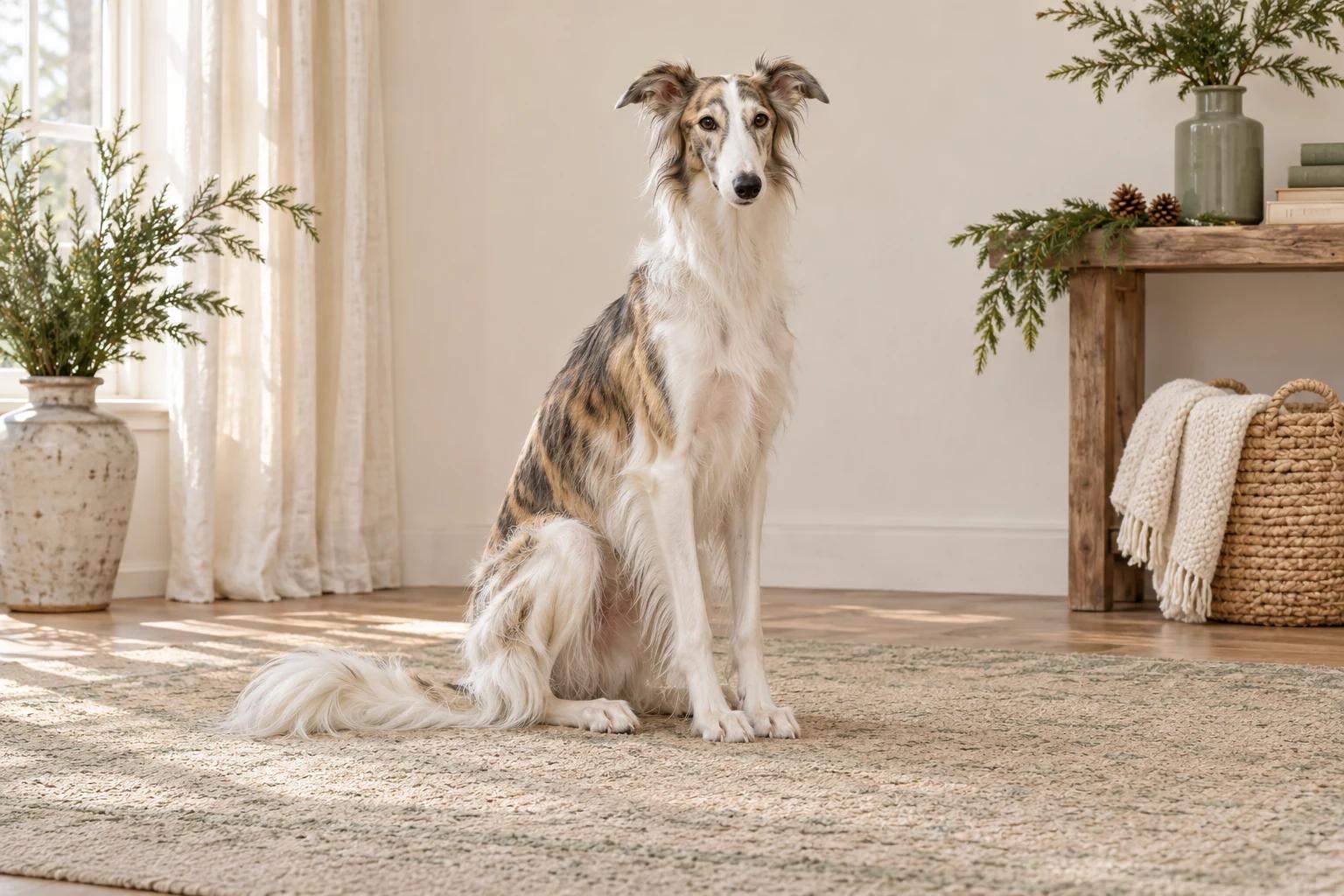
Silken Windhound exercise needs deserve more thought than counting the minutes until a walk is finished. The Silken Windhound profile places activity around the middle of its reference scale and recommends a mix of outings, play and learning. That is a useful starting point, not a precise exercise prescription for every age and condition.
A satisfying routine can include several kinds of movement. Ordinary outings, organized running and quiet learning are not interchangeable. Understanding what each provides helps you avoid treating a dramatic sprint as the only activity worth offering, or a neighborhood circuit as the only possibility.
Silken Windhound exercise needs and lure coursing
The International Silken Windhound Society’s ASFA introduction describes lure coursing as following an artificial lure moved mechanically across a course. The lure uses plastic bags, not live prey. The course asks for more than speed: following the lure, changing direction, enthusiasm and endurance all contribute to the performance.
That combination helps explain why a dog can be interested in the activity without its owner being interested in racing times. The point is the whole pursuit, not simply recording the fastest dash. It is also why repeatedly throwing a toy across a small room is not an equivalent version of the sport.
Before taking part, watch a club demonstrate the complete process, including the finish. Ask how newcomers are introduced to the moving lure and how the course is organized for their experience. A demonstration gives you a concrete picture of the activity. It should not become an invitation to reproduce mechanical equipment or a full competition course in an unsuitable backyard.
Straight racing asks a different question
The Rhodesian Ridgeback Club of the United States’ racing explanation describes LGRA straight racing as a flat 200-yard sprint. Unlike a coursing course, it does not ask the dog to follow a succession of turns. Dogs race with others of their own breed, wearing fitted racing muzzles and numbered blankets; finishing order determines placement.
For a Silken owner exploring running sports, the important difference is preparation for the whole event, not just willingness to chase. The club explains that starts may use boxes or hand release. A dog unfamiliar with a starting box needs an introduction to that equipment rather than being placed inside for the first time when everyone is ready to race.
Ask a host club about beginner practice and the process for demonstrating appropriate running alongside another dog. Running alone and sharing a racing line are different experiences. The distance describes an event, not a daily sprinting dose or puppy exercise target.
Build fitness between the exciting outings
AKC’s conditioning guidance warns against the pattern of inactivity followed by occasional exercise. Prepare for athletic work rather than moving straight from confinement to strenuous running. The same principle applies when the highlight of your Silken’s week is a club outing.
Discuss a proposed sport with your veterinarian before starting. Fitness, growth and health affect what is suitable; enthusiasm alone does not answer those questions. For a growing dog, obtain individual guidance rather than borrowing the routine of a mature competitor.
Include gentle movement before harder activity and a walking cool-down afterward. Do not end a run by immediately packing the dog into the car and assuming the job is finished. Regular activity between events matters too: the outing should build on an existing foundation, not substitute for one. If exercise has been interrupted, reassess the return to harder work instead of resuming at the previous intensity simply because the dog recognizes the equipment.
Give the daily walk a purpose beyond distance
PDSA’s exercise advice distinguishes brisk walking from slower exploration. Both can have a place in a Silken Windhound daily walk. Walking with purpose and investigating smells are different activities, even when they happen on the same route.
Leave room for the dog to explore rather than making every outing a continuous march. Play can add variety, but it does not replace walks. Choose toys designed for dogs, check them for damage and avoid sticks. A game that repeatedly produces skids and sudden stops deserves reconsideration, especially on slippery ground.
If your Silken does not seem to enjoy an outing, investigate the reason rather than automatically making it longer. Difficulty, fear and boredom are not the same problem. Speak to your veterinarian about physical struggles and seek appropriate behavioral help when fear is involved. An exercise plan should support comfortable participation; it should not become a way of insisting the dog perform despite a persistent problem.
Reading the Silken Windhound activity level
The Atlas profile pairs moderate activity with moderate mental engagement. That combination suggests a more useful question than whether this is an active breed: which part of the day currently lacks an outlet? A dog that has already had an outing may still be offered a small learning task without needing another long route. Conversely, a lesson indoors is not automatically a substitute for going outside.
Use the profile’s playfulness and training ratings as context, too. Neither says that every Silken will want to retrieve the same toy repeatedly or perform a long obedience sequence. Compare the dog’s actual preferences across the activities you can offer. A routine based on several enjoyable options is more adaptable than one built around a single favorite venue.
The dog quiz helps compare activity expectations with your lifestyle. The Silken Windhound history article covers the breed’s development separately from these exercise choices.
Frequently asked questions
How much exercise does a Silken Windhound need?
There is no single duration that fits every individual. Start with the breed’s moderate activity profile, then discuss the dog’s age, fitness and health with your veterinarian before adding demanding athletic work.
Is lure coursing just a straight sprint?
No. Coursing asks the dog to follow a moving artificial lure through a course, including changes of direction. Straight racing uses a different layout.
Does a race distance tell me how far to run my puppy?
No. A competition’s distance describes its format. It is not an exercise prescription for a growing dog or a beginner.
Sources behind this article
- ISWS: ASFA lure coursing ↗
- RRCUS: Racing explained ↗
- AKC: Conditioning basics ↗
- PDSA: Exercise for dogs ↗
Article source checked: November 16, 2026. Source checked 2026-11-16
Keep reading

Afghan Hound Exercise Needs: Build a Workable Active Day
Read article →