Siberian Husky Temperament: Social, Curious and Vocal
Understand Siberian Husky temperament through companionship, patient learning, play preferences and the context behind vocal behavior.
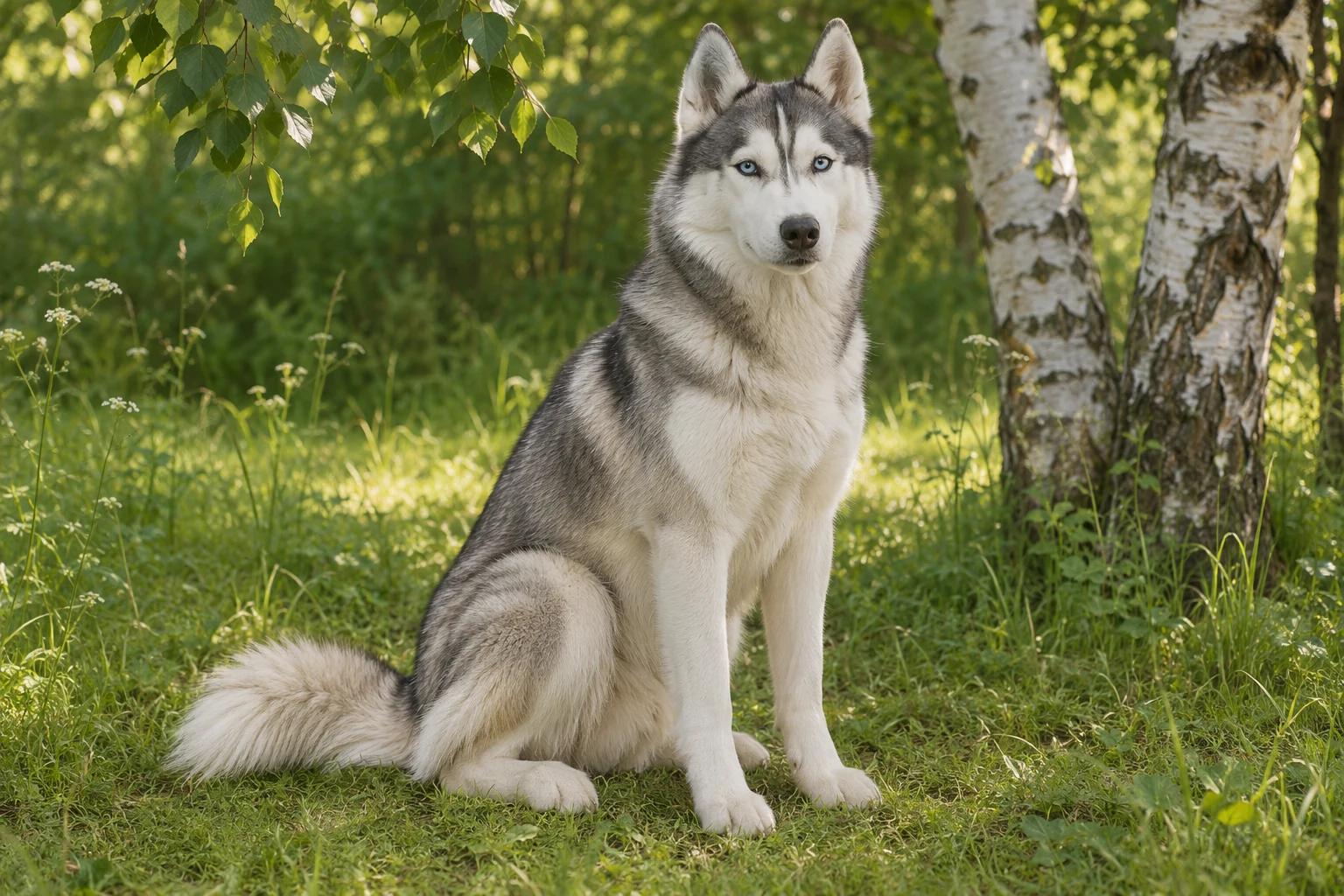
Siberian Husky temperament is easier to understand through ordinary interactions than through a montage of dramatic expressions. What happens when someone visits, when a lesson begins or when a familiar sound appears? The Siberian Husky profile provides the wider ownership picture. Here, the aim is to turn broad descriptions into questions you can investigate with a dog, while avoiding the assumption that one entertaining clip explains everything about life with the breed.
Siberian Husky temperament is not a guard-dog brief
The Siberian Husky Club of America describes affection toward family without constant fawning, an independent spirit and a generally hospitable attitude toward unfamiliar people. It specifically distinguishes that disposition from a watchdog's role. Appearance does not promise that visitors will be treated as intruders.
The club also warns of predatory interest in small animals. Social behavior toward people and interest in another species are different questions. Do not infer safety around cats, rabbits or other small pets from a warm greeting to a human visitor. Ask about history and seek guidance rather than staging a test encounter.
For the human relationship, notice how the dog chooses to participate. Affection need not mean waiting for instructions every moment, and independent choices do not automatically mean absence of attachment. Ask the caregiver what shared activities the dog seeks out and how it behaves during ordinary company. A nuanced account is more helpful than deciding that a dog must be either completely dependent on a person or uninterested in them.
Cooperation needs a reason the dog understands
The AKC Husky lifestyle guide recommends patient, consistent, reward-based teaching and activities that are enjoyable for both dog and person. It describes curiosity and substantial mental and physical engagement as part of the ownership picture. Those Siberian Husky characteristics give you a reason to make learning interesting, not an excuse to abandon it.
When a lesson stalls, ask what you are actually requesting. Have you made the desired action clear? Is the reward meaningful to this dog? Are you expecting a familiar skill in a setting where everything else is new? These questions are more useful than repeating a label such as stubborn while delivering the same unclear request.
Make one part of the task understandable before adding more. For example, learning a cue in an easy setting and using it amid a busy gathering are not identical achievements. Ask a reward-based trainer for a demonstration if you cannot see how to bridge that gap. The aim is a workable conversation between dog and handler, not winning an argument about which participant should have tried harder.
Learn the individual's play preferences
The AKC's Husky puppy-training guide encourages owners to observe which games their dogs enjoy rather than assume every Siberian will stay engaged by fetch. It also highlights the value of continued classes and varied activities beyond one introductory course. Learning need not end with a few puppy cues.
For your dog, distinguish interest in a toy from interest in the particular game you have invented. Taking an object, carrying it and bringing it back are separate actions. If the dog enjoys one but not the entire sequence, that is useful information for choosing an activity or asking a trainer how to develop it.
A class can provide another way to discover interests, provided its tasks suit the dog's stage and needs. Ask what the actual lesson involves rather than selecting solely by an impressive sport name. Is the dog engaged or merely following the handler around? A Siberian Husky personality becomes more recognizable when you notice those preferences, instead of expecting every dog to enjoy the same script.
Listen to howling in context
The AKC explanation of howling describes several possible contexts, including social communication, responses to certain sounds, distress and discomfort. Sound alone cannot establish the explanation. A siren-related chorus and repeated vocalization while alone deserve different questions, even when the recordings sound similar.
For Siberian Husky behavior, look at what happens immediately before and after the sound. Was there an obvious noise? Did someone leave? Is this a familiar pattern or a change? Do not assume that every vocal episode is a joke performed for an audience, or that every howl establishes a behavioral diagnosis.
If vocalization changes noticeably or comes with signs of discomfort, consult your veterinarian. If being alone appears distressing, seek qualified help rather than deliberately extending the situation to see how long the noise lasts. Understanding the context gives you a better starting point than simply trying to silence a signal. It also prevents a reputation for being vocal from becoming a reason to overlook a concern in this particular dog.
Meet the dog, not only the reputation
Before choosing a Siberian, consider your response to the interactions you have actually seen. Which parts did you enjoy, and which would be difficult to live with repeatedly? An amusing visit and a comfortable long-term match are different judgments. Be honest about that distinction before treating your enthusiasm for the breed's appearance as the entire decision.
The dog matching quiz can help you examine those expectations. For a separate practical responsibility, the Siberian Husky yard-and-gate article covers outdoor access. It is worth considering temperament and everyday management together without confusing one with the other.
Frequently asked questions
Does a hospitable greeting establish safety around small pets?
No. Human sociability and predatory interest are different matters; individual history and appropriate management still matter.
Must every Siberian enjoy a long game of fetch?
No. Observe the dog's preferences rather than assuming that one game will hold every individual's interest.
Does every howl have the same meaning?
No. Consider the situation and any changes; distress or discomfort needs attention rather than an assumption that the dog is simply entertaining you.
Sources behind this article
- SHCA: The Siberian Husky ↗
- AKC: Siberian Husky lifestyle ↗
- AKC: Siberian Husky learning ↗
- AKC: Why dogs howl ↗
Article source checked: November 16, 2026. Source checked 2026-11-16
Keep reading

Airedale Terrier Temperament: What Everyday Life Can Feel Like
Read article →