Shetland Sheepdog vs Collie: More Than Size
Compare Shetland Sheepdogs and Collies through stature, coat variety, learning and daily handling before choosing your companion.
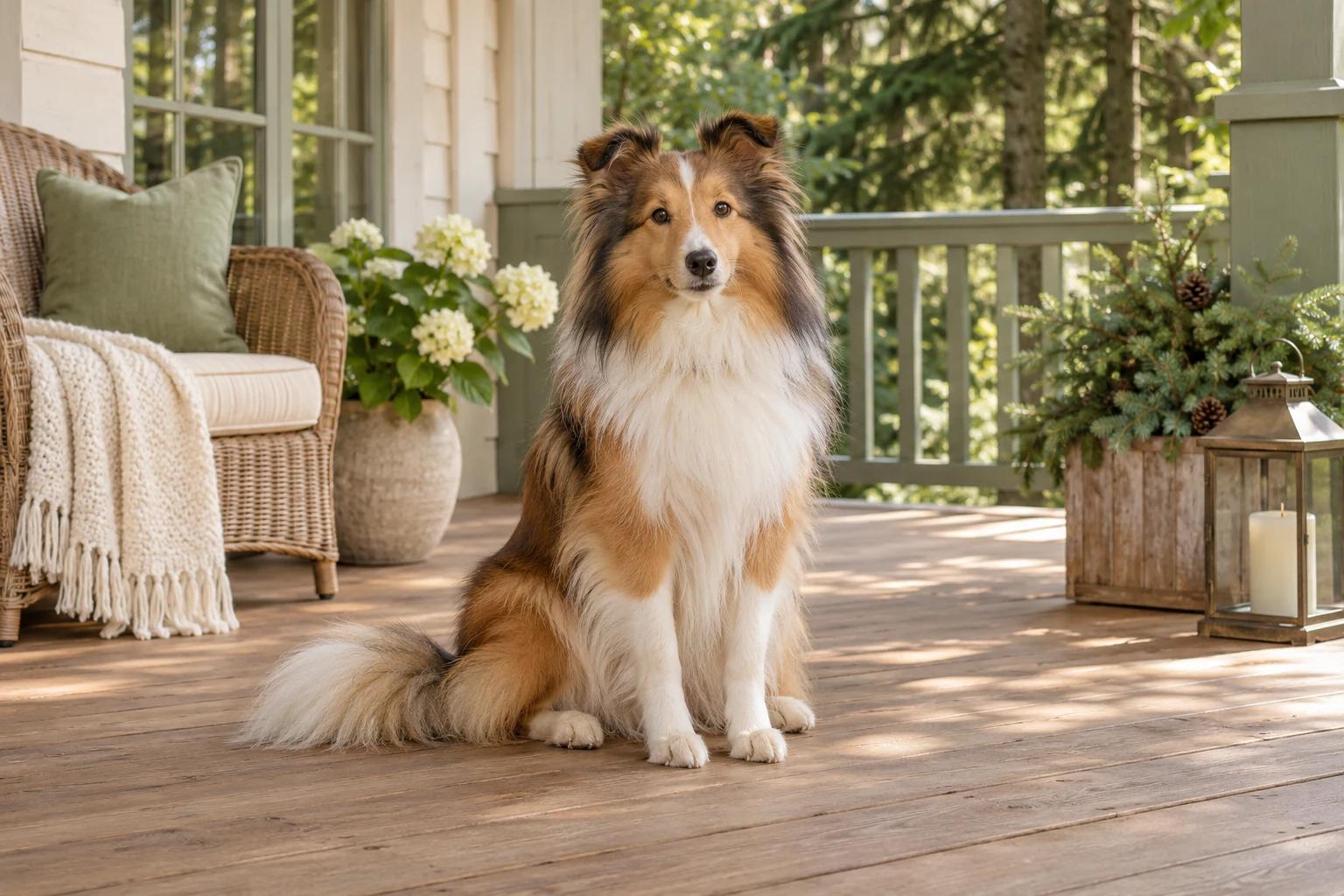
A Shetland Sheepdog vs Collie comparison should answer more than which face you prefer. Consider the body behind the coat, the way a dog learns and the social situations you expect to share. Those details can change the meaning of an apparently simple choice. The Shetland Sheepdog profile and Collie profile introduce both breeds; below are specific differences and practical questions to explore when meeting adults.
Shetland Sheepdog vs Collie: the Sheltie's working outline
The AKC Sheltie standard describes a small, alert, agile working dog standing 13–16 inches at the shoulder. The head forms a long, blunt wedge, with small ears carried mostly erect and their tips bending forward. A level, muscular back and deep chest belong beneath the abundant outline. This is not simply a decorative coat with legs underneath it.
The standard calls for smooth, economical trotting movement rather than bouncing or exaggerated high stepping. Watch an adult walk and trot naturally with its keeper instead of judging the silhouette only while the dog stands posed. You are looking at how the whole animal works together, not scoring a pet against a show standard.
For equipment, use the actual dog's shoulder height and body length. Measure the sleeping surface inside a bed, not its decorative outside edge. The scale of the dog and the volume of its coat are different things: neither a fluffy photograph nor the label “small” tells you whether a particular travel space allows comfortable standing and turning.
A Collie changes both scale and coat options
The AKC Collie standard gives males a shoulder height of 24–26 inches and weight of 60–75 pounds; females stand 22–24 inches and weigh 50–65 pounds. Its body is slightly longer than tall, with a deep chest and balanced proportions. These are adult breed dimensions, not a prescription for changing an individual dog's weight.
Collies have Rough and Smooth varieties. A Rough Collie carries abundant outer hair over dense undercoat. The Smooth has a short, hard, flat outer coat with undercoat beneath. Choosing the shorter coat does not turn the Collie into a smaller dog. Ask to see the individual beside ordinary furniture rather than using coat fullness as your size estimate.
This distinction matters in a vehicle: check usable interior height, length and width, including the doorway through which the dog enters. Consider the handler's position too. Plan from measurements and a suitable fitting, not the assumption that a Smooth will fit wherever a Sheltie does.
Sheltie learning and excitement
VCA's Sheltie guide describes a quick learner that responds to gentle, reward-based teaching. Reserve with unfamiliar people and heel-nipping during excited play are also mentioned. These tendencies are worth exploring without treating them as a prediction of every individual's behavior.
Ask the keeper to demonstrate a familiar exercise. Notice how participation begins, what rewards are used and what happens when the dog hesitates. Repeating commands louder does not show you how the dog normally learns. A comfortable exchange with a familiar person is more informative than making a stranger demand a performance.
Where running children or fast-moving games are part of home life, discuss the dog's experience of those situations. Do not stage a chase to see whether the dog reacts. Ask how the keeper prevents excitement becoming grabbing at moving feet, and what alternative activity has already been taught. For introductions, allow the dog time and space rather than interpreting reserve as a reason to press closer.
Collie learning and communication
The Collie Club of America describes intelligence, sensitivity and learning through positive reinforcement and consistent guidance. It also identifies vocal communication as part of Collie life. The appealing television image is not a substitute for teaching a real dog how your household works.
Ask what this Collie enjoys practicing, not simply whether it is obedient. A keeper might show how the dog follows a familiar cue or joins an ordinary activity. Watch the help offered between successful responses. A polished final movement tells you less about the relationship than the process that produces it.
Discuss voice directly: when does the dog vocalize, what is happening nearby and how does the keeper respond? “Quiet most of the time” is less informative than an example involving an arrival or an exciting event. Sensitivity also makes the teaching approach worth discussing. Look for clear, patient instruction rather than someone relying on intimidation to obtain compliance. You are choosing a dog whose communication you want to understand, not a silent actor expected to anticipate every human intention.
Choosing Shetland Sheepdog or Collie
A Collie vs Shetland Sheepdog visit is most useful when you bring a concrete question from your own life. If you commute with a dog, ask about that experience; if several people share care, ask who already handles the dog. The difference between Shetland Sheepdog and Collie is a starting point, not the whole decision.
Use the dog match quiz to clarify your priorities before visiting. For the separate home-training topic, the Sheltie window-barking guide addresses that specific situation. Keep that issue separate from deciding which individual companion fits your circumstances.
Frequently asked questions
Is a Smooth Collie a smaller Collie?
No. Smooth describes the shorter coat variety, not a smaller size category. Assess the individual dog's body rather than its fluffiness.
What should I watch during a Sheltie lesson?
Watch how the familiar keeper invites participation and helps the dog understand, not just whether it produces a finished response immediately.
Can one visit settle the choice?
A visit is one sample. Ask about ordinary life outside the meeting and arrange another opportunity where appropriate before making your decision.
Sources behind this article
- AKC: Shetland Sheepdog standard ↗
- AKC: Collie standard ↗
- VCA: Shetland Sheepdog ↗
- Collie Club of America: Living with a Collie ↗
Article source checked: November 16, 2026. Source checked 2026-11-16
Keep reading

Affenpinscher vs Brussels Griffon: Everyday Differences
Read article →