Shetland Sheepdog Grooming: Care Beneath the Frill
Understand Shetland Sheepdog grooming, shedding and coat checks, with practical ways to maintain the coat and choose appropriate help.
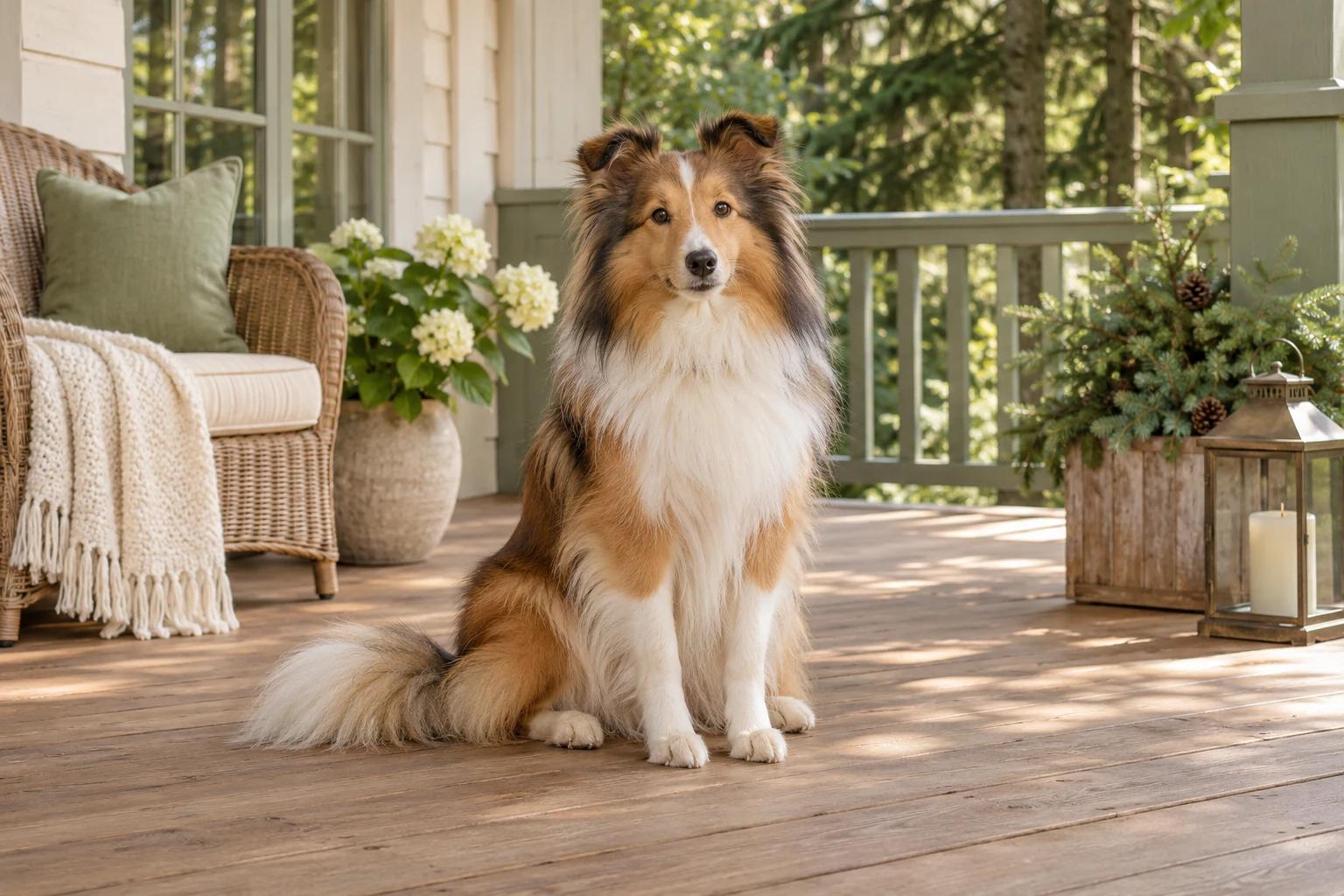
Shetland Sheepdog grooming takes practice. A useful session should leave you knowing what you checked, what still needs attention and whether your technique is comfortable for the dog. This guide explains practical approaches to learn with an experienced groomer, rather than promising a universal timetable. The Shetland Sheepdog profile gives the broader introduction, while the window-barking guide covers a different part of life at home.
Shetland Sheepdog grooming: learn line brushing
The Shetland Sheepdog Club of Queensland explains line brushing for the adult double coat. Rather than skimming the visible surface, work through small sections so the brush reaches the coat beneath. Its example progresses from the tail area toward the neck. The club recommends lightly dampening the hair and using a suitable pin brush for the adult coat.
Ask a groomer to demonstrate the section size, brush angle and pressure on your dog. Parting a manageable section lets you see where the tool is working; sweeping repeatedly across the outer surface can leave you unsure what happened underneath. Do not interpret “reach the skin” as pressing sharp pins against it.
A demonstration should also show a comfortable position for the dog and person. Learn how the coat is supported and how to move to the next section without dragging across an unfinished area. This turns an apparently simple instruction into a technique you can actually use.
Shetland Sheepdog coat care at the hidden points
The American Shetland Sheepdog Association identifies behind the ears, beneath the front elbows and the hair under the tail as places to check for mats. It emphasizes individual grooming needs and introducing handling while the dog is young. The visible back is not the whole task.
Have someone experienced show you how to expose each area without pulling a limb or twisting the dog into position. Behind the ear, for example, the point is to inspect the hair there rather than repeatedly brush the top of the head and assume the job is finished. Under the front leg, change your viewing position instead of asking the dog to hold an awkward stretch.
If a knot resists ordinary gentle work, do not keep pulling to complete a checklist. Ask a groomer to assess it. A useful home routine includes recognizing the boundary of your technique, not simply acquiring more tools and working harder on the same resistant patch.
Choose bathing products for the dog
VCA's personal-care guidance recommends pet-formulated products rather than assuming human shampoo and conditioner suit a dog. It also cautions against human lotions and directs owners with skin concerns to veterinary advice. A bathroom product that feels pleasant on your hands is not automatically a suitable treatment for the dog's skin.
For a Sheltie, separate a cosmetic goal from a skin problem. Wanting a cleaner coat is not the same request as addressing itching or a sore area. Tell the groomer about the latter and contact the veterinary team rather than selecting a stronger fragrance or trying a lotion to conceal the issue.
Follow the chosen product's dilution and rinsing directions. Keep its label available throughout the session, particularly if another person helps. An unidentified mixture makes it difficult to know what was applied or how much water it requires. If you have already used something and the dog develops a concerning reaction, give the veterinarian the product details rather than experimenting with another product to correct it.
Make handling and drying part of the appointment
The RSPCA's grooming guidance recommends discussing the dog's physical and behavioral needs, inspecting facilities and asking about handling. It favors gradual, reward-based familiarization and highlights the importance of appropriate drying arrangements and supervision. The finish is only one part of the service.
Ask how the groomer introduces the dryer, what happens if the dog becomes worried and whether work can pause. Describe observable difficulties: moving away when a foot is touched is more useful information than simply calling the dog difficult. A groomer can plan around specific information before the session starts.
Ask where the dog will be during drying and who watches it. Do not assume that a beautiful photograph at collection proves the whole appointment was comfortable. If your Sheltie is persistently distressed by grooming, seek veterinary or appropriately qualified behavior help rather than accepting increasingly forceful restraint. A suitable plan considers what the dog can tolerate now and how unfamiliar procedures will be introduced, not only how quickly a complete groom can be delivered.
Shetland Sheepdog shedding and the result you assess
The current breed profile describes seasonal increases in loose hair. Hair collected during a session and hair found on furniture are different observations, so do not use a spotless room as your only measure of care. Ask the professional working with your dog to demonstrate the result you should recognize, then explain any part you cannot reproduce at home.
If you are learning how to groom a Shetland Sheepdog, take the actual tools you own to that discussion. A demonstration with a completely different tool may not answer your question about why your own technique is awkward. The dog match quiz can help prospective owners consider whether regular hands-on care is a responsibility they want to share.
Frequently asked questions
Does brushing the outside finish the whole coat?
No. Surface brushing can leave deeper areas unchecked. Learn a section-by-section technique suitable for your dog's coat and comfort.
Should I keep pulling at a resistant knot?
No. Stop repeated pulling and ask a groomer to assess work that is beyond your technique or the dog's tolerance.
What should I bring to a grooming demonstration?
Bring the tools you use and a specific description of the task you find difficult. Ask to see that task rather than requesting a general grooming lecture.
Sources behind this article
- Shetland Sheepdog Club of Queensland: Grooming ↗
- American Shetland Sheepdog Association: Is the Sheltie right for you? ↗
- VCA: Personal care products ↗
- RSPCA: Choosing a groomer ↗
Article source checked: November 16, 2026. Source checked 2026-11-16
Keep reading

Affenpinscher Grooming: A Practical Coat-Care Routine
Read article →