Segugio Italiano Size: Build, Fit and Everyday Space
Understand Segugio Italiano size through proportions, individual measurements, equipment fit and comfortable space rather than a single target number.
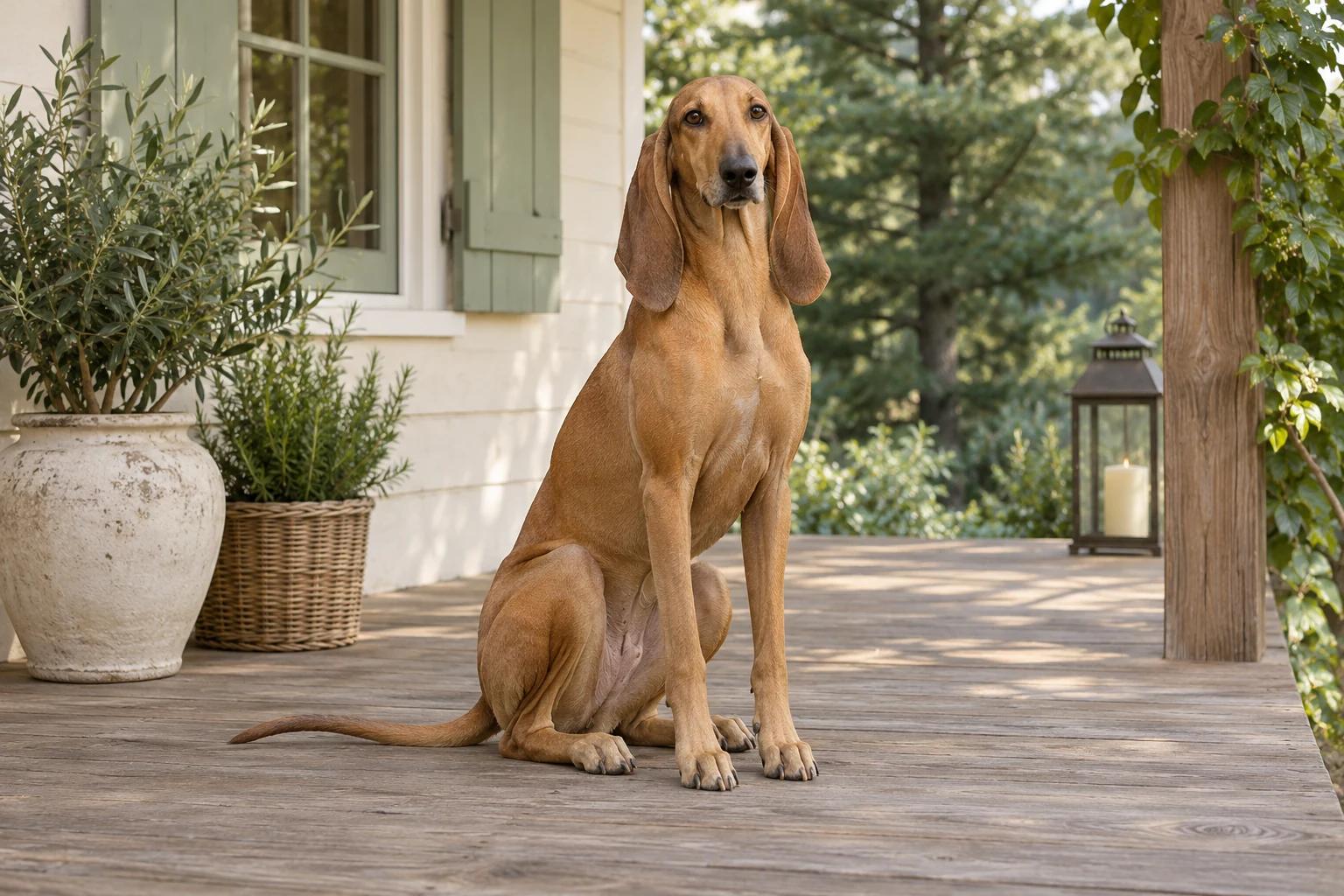
Segugio Italiano size is more useful as a practical question than a label. You need to know how the individual dog fits equipment, moves through your home and travels with you. A single figure cannot answer all three. Looking at proportions and taking purpose-specific measurements makes preparation much more reliable.
The Segugio Italiano profile introduces the breed more broadly. For the separate coat-reference discussion, see the existing Segugio article. This guide concentrates on the physical dog in front of you and the space you are preparing.
The current My Breed Atlas profile lists adult shoulder height at 19.5–24.5 inches for males and 19–24 inches for females. Its headline adult weight range is 40–62 pounds overall, with females at 40–57 pounds and males at 44–62 pounds. These are breed reference ranges, not a prediction for a puppy or a feeding target for an individual.
Segugio Italiano size starts with proportions
The FCI standard describes the short-haired Segugio as a medium-proportioned, robust but lean dog, with developed muscle and a body approximately as long as its shoulder height. The chest reaches the elbows without being barrel-shaped. This is a balanced outline rather than a compact, low-slung body or an exaggeratedly bulky one.
Look at an adult standing naturally from the side and front. The outline helps you understand why two dogs wearing the same broad size label may need different equipment. Do not try to alter an individual's shape to resemble a drawing; use the description to recognise proportions, then fit the actual dog.
What Segugio Italiano height measures
The AKC glossary defines a dog's height as the vertical distance from the withers to the ground. The withers are the highest point of the shoulders. Height is therefore not the distance to the top of an alert dog's head, and a photograph with raised ears or an extended neck does not supply that measurement.
For a useful home estimate, choose a level, nonslip surface and let the dog stand comfortably. Ask another person to help identify the shoulder landmark rather than following the curve of the neck with a tape. If the dog keeps moving, pause instead of manipulating it into a rigid pose.
Be clear about the purpose. Shoulder height describes stature; it is not automatically the dimension requested by every item of equipment. A supplier asking for a different measurement needs that measurement, not a familiar number copied from a breed description.
Check equipment on a moving dog
The AKC harness-fitting guide emphasises individual fit and freedom of movement. Straps should not pinch, press behind the elbows or interfere with the shoulders. It recommends an in-person fitting where possible, or following the maker's specific fitting instructions.
For a Segugio, inspect the fitted harness while the dog stands, sits and takes ordinary steps. Watch whether the front legs can move naturally rather than assessing only how neatly the straps lie in a still photograph. Check that adjustment has not solved one problem while creating another elsewhere.
A familiar size name is not a universal specification. Compare the actual product dimensions and adjustment range, and have a knowledgeable fitter help if the fit remains uncertain. Equipment should suit the dog, not require the dog to move differently to accommodate it.
Segugio Italiano weight needs individual interpretation
VCA's wellness examination guide explains that a veterinary examination considers body condition, muscle condition, stance and movement alongside the dog's history. Weight is one part of that assessment, not a complete description of size or wellbeing.
Bring questions about your Segugio's build to the veterinary team rather than choosing a target from photographs of other dogs. Ask what the current weight means for this individual's frame and life stage. If you notice a change in the dog's outline or movement, describe what changed and when rather than trying to explain it through breed type alone.
This is particularly helpful when comparing a growing youngster with an adult. A scale reading cannot tell you whether two dogs are at the same developmental stage. Food or exercise changes intended to reshape the dog should be discussed with your veterinarian, not improvised to match an appealing picture.
Make room for the whole resting dog
When asking how big do Segugio Italianos get, many people are really asking whether a dog will fit their home. Begin with the spaces where the dog will spend time, rather than the overall floor area. A generously sized room can still have an awkward resting corner between a swinging door and a chair.
Lay out the proposed resting area and walk through the usual household movements. Can someone open the cupboard without moving the bed? Can the dog leave without squeezing past a person? Is there a clear route to water? These are physical questions you can answer before the dog arrives.
During visits, notice how the particular adult lies down. A dog curled tightly on one occasion has not shown its full resting footprint. Allow for changes of position rather than buying around the smallest posture you happened to see. For a puppy, choose arrangements that can be adjusted as its body changes.
Think through transport before the first journey
Check the vehicle space with the intended restraint or carrier in place, not with an empty boot or back seat. Account for the access opening, nearby seats and the position of luggage. A space that looks ample from outside can become awkward when the actual travel equipment is installed.
Ask the current keeper how the dog enters and leaves a vehicle and what arrangement it knows. Do not assume that a dog which fits inside will understand how you want it to get there. Plan the handover somewhere you can take time, with secure control and without passing traffic close to the open door.
If you are comparing travel options, use the equipment manufacturer's requirements and seek appropriate fitting help. This is not a reason to select a dog by the smallest advertised size. It is a reason to check your practical limits honestly before committing. The dog match quiz can help frame that wider choice.
Frequently asked questions
Can a picture show whether a Segugio will fit my home?
Only roughly. Perspective, posture and the objects around the dog can change your impression. Seeing an adult in person and examining your actual resting and travel spaces gives a much more useful answer than estimating from a portrait.
Should I buy everything before meeting the dog?
Prepare essential spaces, but leave individually fitted items until you have the dog's current measurements and appropriate advice. Ask what familiar equipment can accompany the dog so the first journey does not depend on an untested guess.
Is choosing the smallest puppy a reliable space-saving plan?
No. Do not make a long-term housing decision around one puppy's relative size on one day. Discuss likely adult needs with the breeder, and be sure your arrangements can accommodate the dog as it grows rather than just at collection.
Sources behind this article
- FCI: Italian Short-Haired Segugio standard ↗
- AKC: Canine glossary ↗
- AKC: Well-fitting harnesses ↗
- VCA: Wellness examination in dogs ↗
Article source checked: November 17, 2026. Source checked 2026-11-17
Keep reading

Airedale Terrier Temperament: What Everyday Life Can Feel Like
Read article →