Sealyham Terrier vs Miniature Schnauzer: Everyday Fit
Compare Sealyham Terriers and Miniature Schnauzers through structure, coat care, learning and outdoor interests before choosing an individual dog.
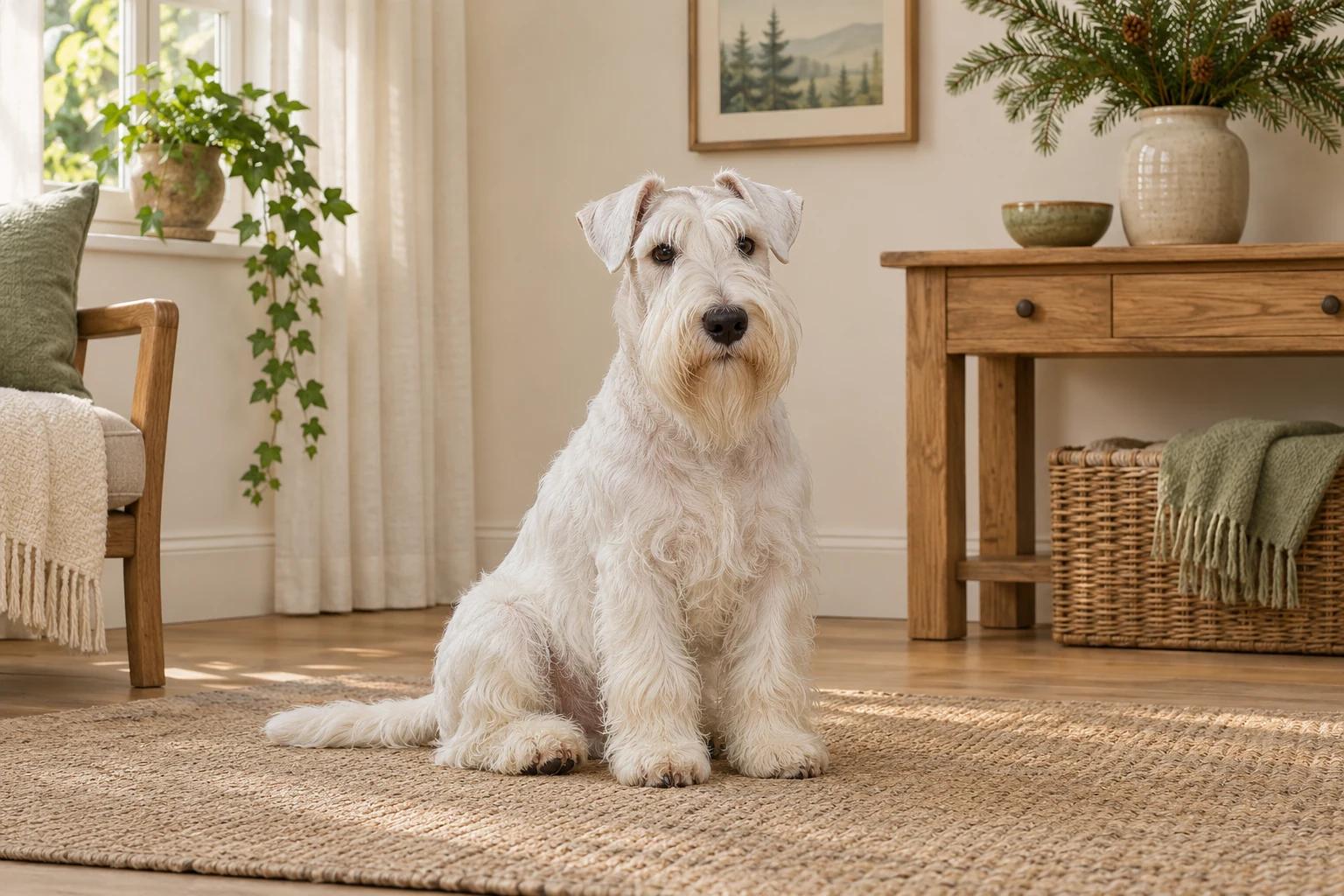
A Sealyham Terrier vs Miniature Schnauzer decision should start with the dog you want to live alongside, not just the face you prefer. Consider how you enjoy teaching, what everyday care you can provide and which situations are unavoidable in your home. A useful comparison makes those choices clearer rather than declaring one breed the winner.
The Sealyham Terrier profile and Miniature Schnauzer profile offer the broader introductions. For the separate question of Sealyham colouring, see the white coat and head markings article; this guide concentrates on life beyond the photograph.
Sealyham Terrier vs Miniature Schnauzer: the Sealyham's substance
The AKC Sealyham standard describes a substantial, short-coupled body with a deep chest, well-sprung ribs, strong forelegs and large compact feet. Its coat combines a soft, dense undercoat with a hard, wiry outer layer. Small stature should not be mistaken for a delicate frame or a coat with no maintenance beneath its surface.
Ask to see the dog standing and moving normally rather than judging only a head portrait. The chest matters when fitting equipment, while the coat's layers matter when learning care. A harness advertised for a small dog still needs an individual fit check; the category on the packaging is not a measurement of this dog's proportions.
For grooming, watch how the caregiver works through the coat rather than simply admiring the finished outline. Can you see where the comb reaches and how the dog is positioned? A demonstration is especially useful if your previous experience is with a smooth-coated dog whose daily care looks quite different.
The Miniature Schnauzer's outdoor interests
The American Miniature Schnauzer Club describes a playful, affectionate companion with a sometimes vocal, watchful nature and an interest in chasing small prey. It recommends a fenced area or on-lead outings. Its account also stresses involvement with familiar people rather than treating the dog as a self-contained accessory to the household.
Ask what catches the individual dog's attention outdoors. A confident greeting in a room tells you little about what happens when a small animal moves near a path. Discuss how the current caregiver manages those situations and what the dog already practises, rather than relying on the phrase “well trained.”
If your imagined routine involves unrestricted wandering during walks, describe that expectation honestly. A breed's appeal does not remove the need to consider boundaries. Equally, companionship is more specific than always being physically close: ask which activities the dog joins and when it chooses to rest. That gives you a relationship to picture rather than a flattering label.
Learning and coat care for the Miniature Schnauzer
VCA's Miniature Schnauzer profile describes reward-based teaching with food or games, alongside a tendency to lose interest in repetitive work. It also describes a hard, wiry coat with longer hair on the muzzle, eyebrows and legs, and notes the use of professional grooming for pets.
Watch a familiar lesson if you can. What earns the reward, how quickly does the person deliver it and what happens when the dog looks elsewhere? You are not checking whether a stranger can command an instant performance. You are learning what kind of teaching the individual already understands.
For coat care, ask what happens between appointments as well as at the salon. A professionally finished trim does not show whether the owner is comfortable checking the legs and facial furnishings at home. If you dislike hands-on grooming, discuss that before choosing the dog rather than assuming a booking every so often resolves the entire task.
The Sealyham's voice belongs in the comparison
The Sealyham Terrier Breeders Association describes an outgoing companion with a substantial bark. That makes sound an important part of the decision, even if the dog occupies little floor space.
Ask what happens at the shared entrance, when visitors arrive or when activity passes outside. Those are more useful questions than whether the breed is “good for flats.” Describe your actual building and neighbours; a pleasant meeting somewhere quiet does not reproduce the sounds the dog would hear at home.
Compare the same ordinary situations
A miniature schnauzer vs sealyham terrier comparison becomes fairer when you ask both caregivers about the same events. Choose situations that will genuinely occur: a routine walk, a visitor entering, an evening when you are occupied and a grooming session. Do not give your favourite-looking candidate easier questions.
For each situation, distinguish what is known from what someone hopes will happen. “Walks calmly with this familiar dog” is not the same information as “will accept any dog.” “Enjoys this brushing routine” does not establish that a new person can immediately do every handling task. Specific examples make room for realistic expectations without turning every answer into a warning.
If you are meeting puppies, ask to observe the adults and discuss the experiences the litter has had. Avoid selecting solely on who approaches first or sleeps through the visit. You are seeing one moment, not the whole future companion.
When considering a sealyham terrier or miniature schnauzer, also examine your own reaction to the care demonstration. Does learning the technique interest you? Would you enjoy the everyday interaction described? It is reasonable for a practical task to change your shortlist, even when neither dog has done anything wrong.
The difference between sealyham terrier and miniature schnauzer ownership will be most meaningful where it intersects with your actual life. The dog matching quiz can help identify those priorities. Use the comparison to ask better questions, then let information about the individual carry real weight in the decision.
FAQ
What should I ask during a first visit?
Ask to observe an ordinary interaction that matters to your home, such as a familiar lesson or grooming session. A practical demonstration is more useful than requesting a performance designed to impress a visitor.
Should I ask both caregivers the same questions?
Yes. Using comparable situations helps you avoid letting a favourite photograph decide the result before you understand the daily commitment. Ask what actually happens, not only what the caregiver thinks might be possible.
Is changing my shortlist after meeting adults reasonable?
Yes. Meeting dogs is meant to improve your understanding. A preference can change when you see the care and interaction involved; you do not need to defend an initial choice made from pictures.
Sources behind this article
- AKC: Sealyham Terrier standard ↗
- AMSC: All about Miniature Schnauzers ↗
- VCA: Miniature Schnauzer ↗
- Sealyham Terrier Breeders Association: About ↗
Article source checked: November 16, 2026. Source checked 2026-11-16
Keep reading

Affenpinscher vs Brussels Griffon: Everyday Differences
Read article →