Sealyham Terrier Temperament: Read the Individual
Understand Sealyham Terrier temperament through company, independent learning, attention and body language, without treating breed labels as guarantees.
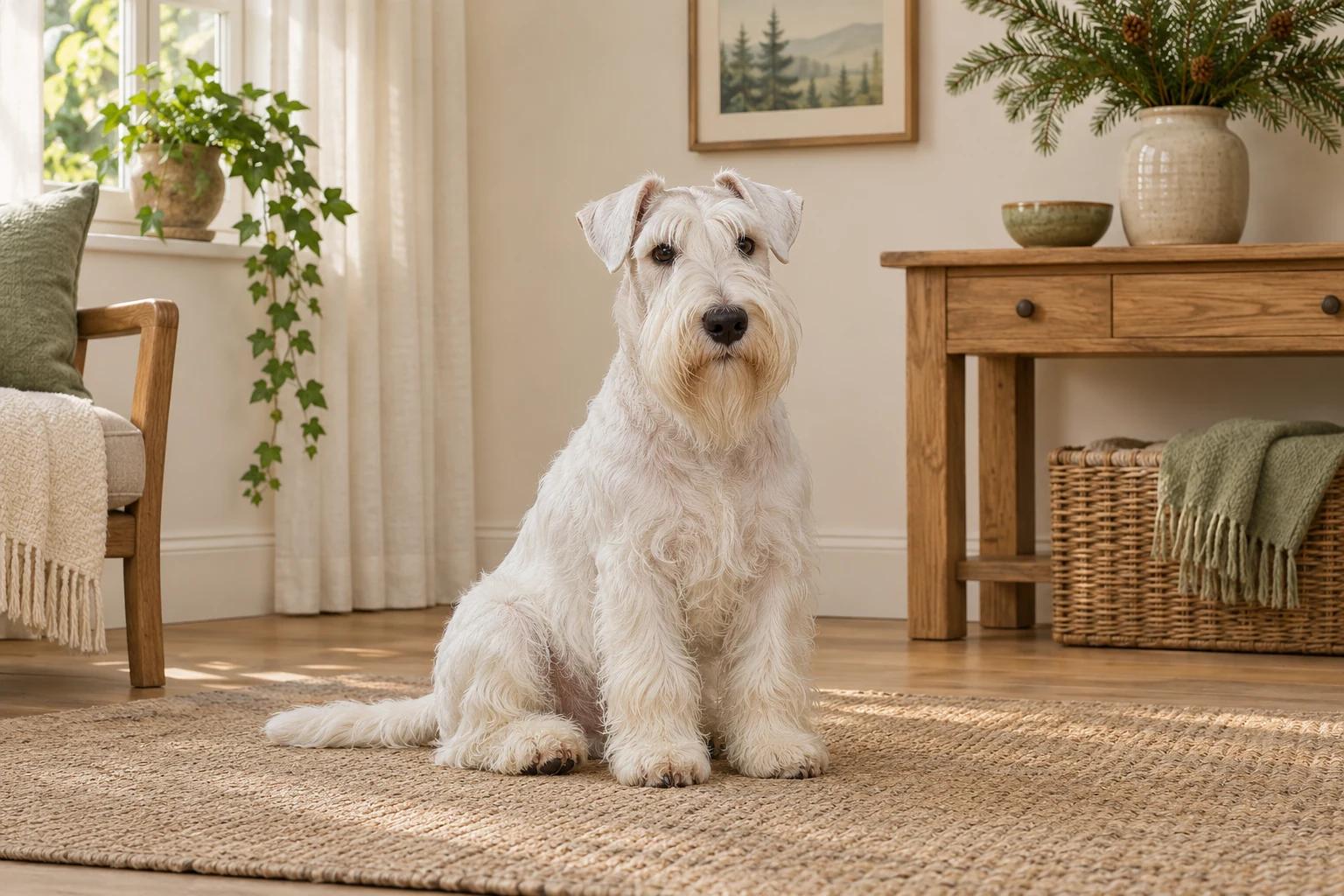
Sealyham Terrier temperament is most useful to understand through ordinary interactions: how the dog joins you, responds to a familiar lesson and handles something interesting nearby. A personality label can introduce the breed, but it cannot tell you exactly what this dog wants from every encounter.
Start with the Sealyham Terrier profile, then look at the individual in context. This guide concerns behaviour rather than the appearance details covered in the white coat and head markings article.
Sealyham Terrier temperament: company with character
The Sealyham Terrier Breeders Association describes a lively, intelligent companion that can be attached to a family or especially to one person. Consider what that relationship looks like in practice instead of assuming there is one compulsory form of affection.
Ask whether the dog joins a game, rests nearby or approaches briefly before returning elsewhere. Each is a concrete observation. A person who wants continuous cuddling should discuss that preference honestly rather than expecting the dog to demonstrate attachment by remaining in their arms.
Independence changes how you teach
VCA's Sealyham profile describes an independent learner whose working background involved persistence rather than constantly checking for human direction. It recommends worthwhile rewards and short, enjoyable lessons, noting that distractions can interrupt attention. That is a reason to teach clearly, not a reason to argue with the dog.
Choose one visible action for a lesson. If the dog already knows how to approach a hand target, for example, make the familiar task easy to recognise before introducing another demand. Ask the current caregiver which food or game the individual actually values and how they end a session that has lost its purpose.
Avoid repeating an instruction while changing your gestures and position at the same time. You may believe you have asked the same question several times while presenting a different picture on each attempt. A useful response to difficulty is to simplify the exchange, not decide that the dog is deliberately challenging your authority.
Read more than the first greeting
Battersea's body-language guidance distinguishes signals inviting contact from those requesting distance. Soft features and loose movement differ from tension, a tucked tail or withdrawal. It also recommends pausing during interaction so the dog can indicate whether more contact is welcome.
For a Sealyham meeting, avoid letting the appealing face distract you from the rest of the body. Observe movement, posture and the surrounding situation. A dog approaching once does not agree to be handled continuously by everyone in the room.
After a brief interaction, move your hands away and see what happens. The dog may return, remain comfortably nearby or leave. Do not turn the pause into another demand by calling repeatedly. If you are uncertain, give space rather than testing how much handling the dog will tolerate. An initially friendly encounter can change, and you can respond to that change without treating it as a failure of the dog's personality.
Make attention possible around distractions
Battersea's attention guide explains that distance from a distraction affects whether a dog can remain responsive. It recommends practising familiar attention skills in easier surroundings before moving into busier ones, and increasing distance again when the task becomes too difficult.
Imagine your Sealyham noticing activity across a path. A lesson learned in a quiet room is not automatically ready for close-range practice beside that event. Move to a setting where the dog can engage rather than trying to prove the cue by repeating it more insistently.
You can distinguish the environment from the skill: is the dog unsure what you asked, or is the surrounding event overwhelming the lesson? Start with a familiar action in a less demanding place. An easier successful exchange provides more information than a prolonged struggle at the busiest point of a walk. If difficulties persist or involve fear or aggression, seek qualified help rather than improvising a confrontation.
Describe the event before assigning a motive
Sealyham Terrier personality is sometimes reduced to “stubborn,” but the word often conceals the practical question. Did the dog fail to hear, not understand, become interested in something else or find the situation uncomfortable? You do not need to choose an explanation immediately. Describe what happened first.
For example, “stopped at the entrance when a trolley passed” is more useful than “refused to cooperate.” It identifies a place and event that can be discussed with a trainer or veterinarian. Likewise, a longstanding preference and a sudden change are different matters. Bring a concerning new change to your veterinarian rather than assuming it is simply terrier character.
This way of thinking also helps family members communicate. One person may describe a dog as demanding while another describes the same action as sociable. Ask each to explain the actual behaviour. You may discover they are responding to different situations, or using the same word for very different experiences.
Ask about actual encounters with other dogs
Sealyham Terrier behavior around another animal should be discussed through experience, not a single compatibility score. Ask which dogs the individual knows, where they meet and what the interaction normally involves. A familiar walking partner and a crowded unfamiliar gathering do not present the same situation.
If you already have a dog, explain its habits and seek an introduction plan suited to both animals. Do not arrange a forced close encounter simply to obtain an immediate yes-or-no answer. Nor should an outgoing greeting towards a person be used as evidence about every other relationship.
Among sealyham terrier characteristics, focus on the ones you can support in daily life. Would you enjoy teaching a small skill carefully? Can you accept contact that the dog ends? Are you willing to change an overly difficult situation rather than insisting the dog endure it?
Use the dog matching quiz to clarify those preferences before choosing. A satisfying match comes from an honest picture of the relationship, including the ordinary moments that never appear in a breed portrait.
FAQ
What does a useful temperament description include?
Include actual situations and actions: what happened before the behaviour, what the dog did and what followed. Concrete examples help another person understand the dog without relying entirely on broad labels such as friendly or stubborn.
Does one greeting establish compatibility with another dog?
No. Ask about the individuals and their experience, and arrange appropriate guidance for introductions. One encounter should not be treated as a universal prediction about future relationships or every possible setting.
Should a sudden behavioural change be dismissed as character?
No. Discuss concerning changes with your veterinarian. Describe what differs from the dog's normal pattern rather than assuming a breed label explains a new difficulty or removes the need for assessment.
Sources behind this article
- Sealyham Terrier Breeders Association: About ↗
- VCA: Sealyham Terrier ↗
- Battersea: Understanding dog body language ↗
- Battersea: Attention around distractions ↗
Article source checked: November 16, 2026. Source checked 2026-11-16
Keep reading

Airedale Terrier Temperament: What Everyday Life Can Feel Like
Read article →