Scottish Deerhound vs Greyhound: Build and Daily Life
Compare Scottish Deerhound and Greyhound build, coat and everyday behaviour, with practical ways to assess the individual dogs you meet.
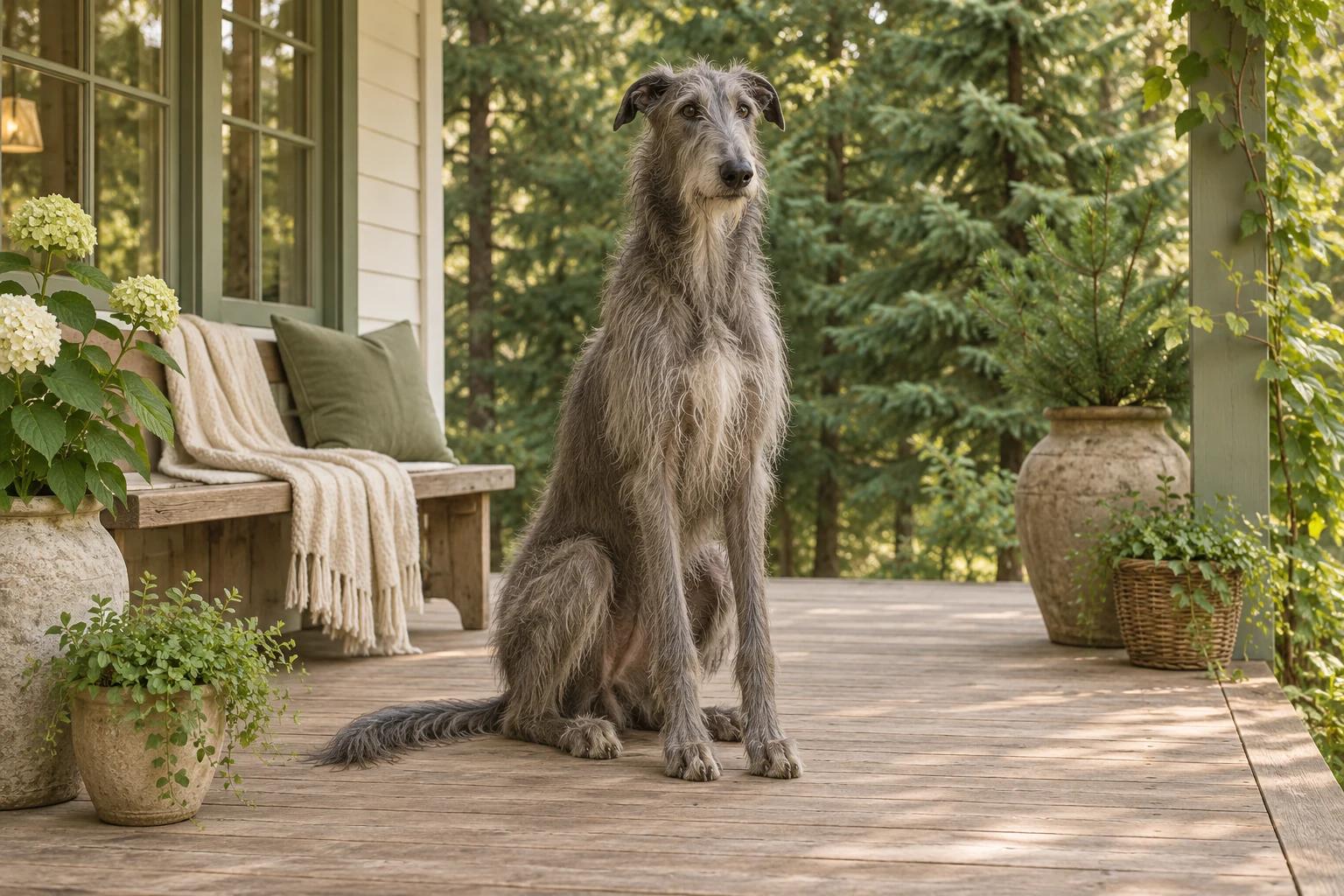
A Scottish Deerhound vs Greyhound comparison works best when you look beyond the dramatic outline. Seeing either dog across a field can leave you thinking mainly about elegance and movement. Living together involves the less photogenic details too: the space beside your chair, an ordinary outing and the way you communicate at home.
Start by deciding what you want the comparison to answer. Recognizing the breeds is one task; choosing a companion is another. This guide connects physical differences with everyday observations without assuming that a breed description supplies the complete personality of the dog you will meet.
Scottish Deerhound vs Greyhound: the Deerhound frame
The Scottish Deerhound standard describes a larger, more substantial version of the Greyhound outline. It specifies a deep chest, a well-arched loin, broad powerful hindquarters and a long body. Its weight references are 85–110 pounds for males and 75–95 pounds for females, describing the standard rather than a target for every dog.
These are substantial proportions to accommodate. When meeting an adult, notice the space needed for an ordinary turn and for lying fully stretched out. A bed that fits the dog curled up may not represent the amount of room occupied at rest.
Think about access as well as floor area. Can the dog move past your usual furniture without forcing everyone into a narrow gap? Can you reach an exit without stepping over the resting place? Work with the actual adult's dimensions rather than buying equipment from a photograph. The larger outline is not simply a visual flourish; it changes how people and dog share the same room.
The difference between Scottish Deerhound and Greyhound outlines
The Greyhound standard describes a long, narrow head, deep chest, muscular back and an arched loin with a clearly drawn-up flank. The coat is short, smooth and firm. Its weight references are 65–70 pounds for males and 60–65 pounds for females.
Look at the whole body rather than comparing heads alone. A short coat makes the lines of the trunk and limbs immediately visible, while a photograph taken from above can distort the apparent length of the legs. Ask to see the dog standing naturally from the side and moving at an ordinary pace.
For practical equipment, use the individual's measurements instead of assuming that anything sold for a tall dog will suit. Shoulder height, chest shape and body length answer different fit questions. A nominal size on a package is only a starting point. If you are comparing two adults, the useful question is which dimensions each actually needs, not whether both fit a broad category such as “large.”
Greyhound vs Scottish Deerhound: learning and outdoor management
VCA's Greyhound account describes an independent companion that can learn quickly but lose interest in repetitive lessons. It recommends reward-based teaching and warns that pursuit of moving animals can make recall unreliable. Secure fencing matters for off-lead activity.
Ask about the particular Greyhound's history and current experience. What has it learned in a home? Which rewards engage it? How does it respond when something moves beyond the boundary? A calm first meeting indoors does not answer those outdoor questions.
Look at how the caregiver sets up an outing rather than asking for an off-lead demonstration in an unsuitable place. A secure environment is not a reward that a dog earns by appearing sensible; it is part of managing the activity. Likewise, do not turn a comparison visit into a test involving another animal. The purpose is to understand the dog's routine and the precautions already used, not manufacture a dramatic situation to see what happens.
The Deerhound's quieter domestic side
VCA's Scottish Deerhound profile describes a dog inclined to stretch out and relax at home, with a very different level of energy when running. It recommends patient, enjoyable training rather than expecting rapid, automatic responses. Fetch is not necessarily the activity that interests this breed most.
That combination is worth exploring in person. If you picture endless ball retrieving, ask whether the adult you meet actually enjoys returning an object. If you imagine a dog that follows every instruction instantly, watch a normal lesson and discuss how the caregiver makes it worthwhile.
Do not confuse quiet company with a decorative presence. Ask where the dog chooses to rest while people are occupied and how it joins activities when invited. An owner can often describe the small interactions that a short visit misses. You are looking for a style of companionship you enjoy, not treating a relaxed posture as proof that the dog has no requirements beyond a comfortable place to lie.
Scottish Deerhound or Greyhound: compare an ordinary journey
Choose one journey you would make regularly and consider it from beginning to end. Leaving your front door, crossing a shared entrance, getting into the car and arriving somewhere are separate practical stages. Where would you stand? Where would the dog wait while you open the next door? Where could you set down your belongings without blocking the route?
These questions are not a demand to redesign your life around a hypothetical problem. They reveal whether your preferred arrangement is actually workable. It is better to discover that an entryway needs a different furniture layout before bringing a dog home than while carrying bags through a crowded doorway.
If you are choosing between specific adults, describe that journey to each caregiver. Ask for relevant experience rather than a general assurance that the breed adapts. Someone who has watched the dog use a car or negotiate a busy entrance can explain what is familiar and what would need teaching.
Keep your own preferences in the conversation. Do you enjoy quiet shared time, organized activities, long discussions about training or a simpler routine? There is no prize for choosing the more impressive-looking dog if the daily relationship does not suit you.
Explore the Scottish Deerhound profile, Greyhound profile and dog match quiz. The separate Deerhound coat-and-ear article examines a finer appearance detail rather than repeating this household comparison.
FAQ
Can a beautiful moving photograph tell me which dog to choose?
It can show what attracts you, but not the full ownership experience. Ask about ordinary journeys, familiar activities and the individual dog's home routine.
What should I explain before meeting an adult?
Describe the parts of your home and routine that cannot easily change. Specific constraints invite more useful answers than asking whether the breed is generally adaptable.
Must I decide at the first visit?
No. A first meeting can identify questions for another conversation. Choosing more deliberately is reasonable when you are considering a long-term companion.
Sources behind this article
- AKC: Scottish Deerhound standard ↗
- AKC: Greyhound standard ↗
- VCA: Greyhound ↗
- VCA: Scottish Deerhound ↗
Article source checked: November 16, 2026. Source checked 2026-11-16
Keep reading

Affenpinscher vs Brussels Griffon: Everyday Differences
Read article →