Scottish Deerhound Exercise Needs: A Practical Plan
Plan Scottish Deerhound activity around secure movement, suitable life-stage exercise, optional coursing and weather rather than a fixed quota.
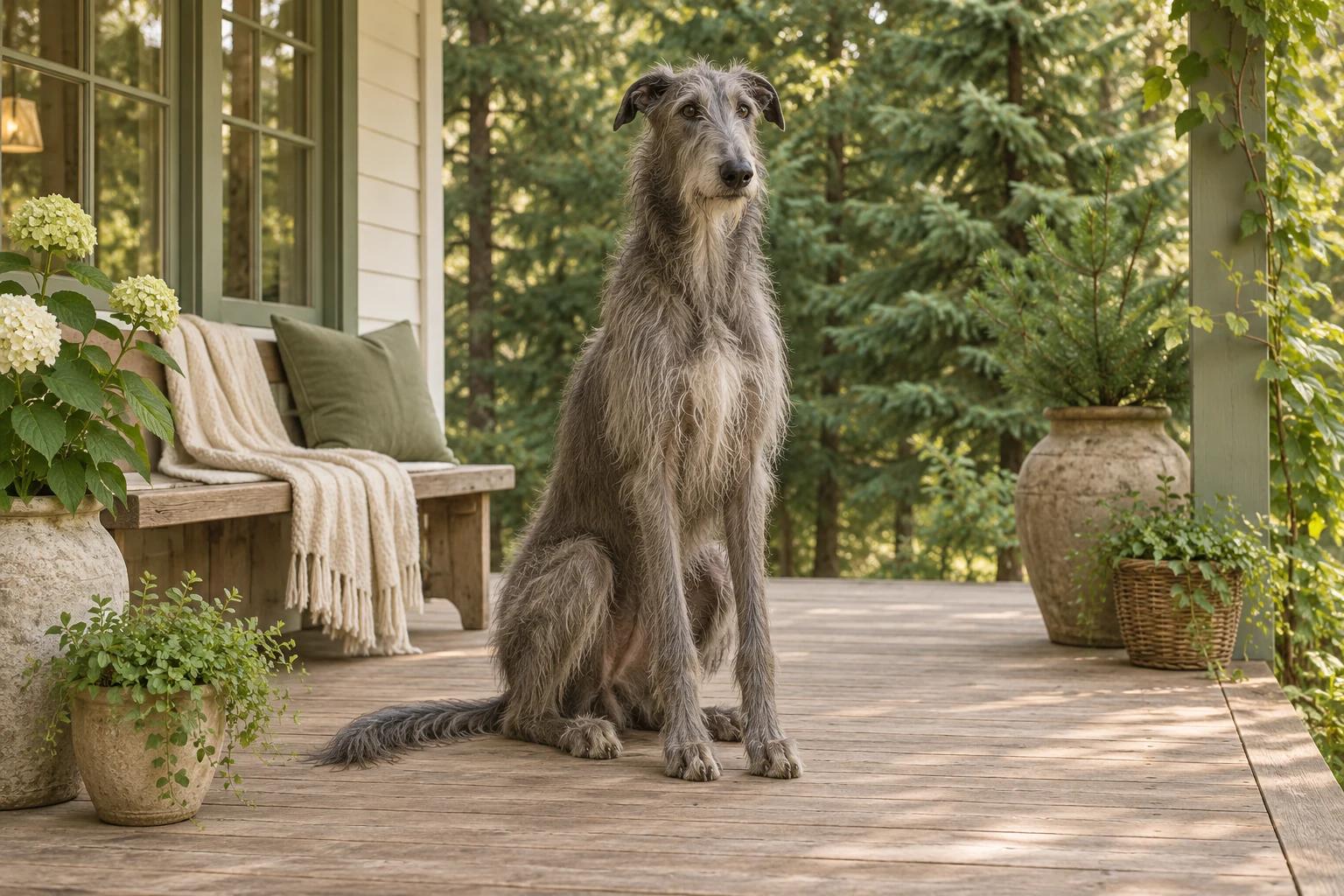
Scottish Deerhound exercise needs deserve a plan that works on an ordinary day, not just on the weekend when you have time to travel. Before choosing activities, consider what is genuinely available near home and what you can repeat consistently. A favourite photograph of a dog crossing open country is not an exercise arrangement.
The useful question is not simply how far you would like to go. It is how you and this dog can share activity in the places you have access to. Separate everyday outings from optional sports, and separate your ambitions from the dog's current stage of life.
Scottish Deerhound exercise needs: combine outings and secure movement
The Scottish Deerhound Club of America describes a breed that benefits from daily activity combining walking, trotting and running, with off-lead play in a securely fenced area. Its domestic resting habits should not be mistaken for a lack of interest in movement.
For a Scottish Deerhound daily walk, distinguish the lead-walking portion from any opportunity to move freely. An attractive open field is not equivalent to an enclosure. Check the actual boundary and gates before treating a location as suitable for release, and keep control when moving between the car and the secure area.
Do not assume that owning a garden completes the plan. Ask how you will participate and what the dog actually enjoys there. A toy may interest one individual; another may prefer a different shared activity. The aim is a varied, workable routine rather than leaving the dog outside and assuming it has exercised itself. Build the plan around the space and supervision you can reliably provide.
Lure coursing is an option, not a requirement
The club's lure-coursing guide describes a sport in which an artificial lure travels through a field on a line and pulleys. Dogs are assessed on qualities including following the lure and enthusiasm, as well as speed and agility. It also makes clear that not every Deerhound wants to participate.
If this appeals to you, contact an established club about observing an event and learning how beginners are introduced. Do not improvise a high-speed setup because your dog once chased a moving toy. Organized activity involves preparation and knowledgeable supervision, not simply releasing the dog after something fast.
Your Scottish Deerhound activity level should not be judged by enthusiasm for this one sport. A dog that declines the lure has not failed to be a proper Deerhound. Ask about suitable introductory opportunities and the individual requirements before considering participation. You can enjoy learning about the activity without making competition the centre of your ownership plan or expecting a particular performance from a young dog.
A growing Deerhound needs a different exercise conversation
VCA's puppy-exercise guidance distinguishes ordinary play and walking from strenuous, imposed exercise while a puppy is developing. It advises postponing long jogs, hikes and demanding jumping until maturity, allowing puppies to regulate their activity rather than pushing them through an adult routine.
For a young Deerhound, ask your veterinary team what is appropriate now instead of working backward from the adult outings you hope to share. A puppy accompanying an enthusiastic runner is not choosing the pace in the same way as a puppy exploring a suitable space.
Keep your sporting ambitions separate from the current lesson. Learning about a lead, investigating a setting and becoming familiar with an outing can be useful without covering a long distance. If movement changes or the puppy limps, seek veterinary advice rather than interpreting it as reluctance to exercise. There is no need to prove endurance while the dog is still growing, and no universal birthday in this guide that automatically authorizes strenuous activity.
Change the plan when conditions change
Cornell's summer-safety guidance recommends cooler times for outings, shade, water breaks and avoiding strenuous activity in hot or humid conditions. Hot ground can also be a problem, and extreme conditions may call for staying indoors rather than completing a planned walk.
Apply that to the whole Deerhound outing, including the route from parking to the activity area. A field booking does not make the weather suitable, and a distant patch of shade is not helpful if the approach is exposed. Bring water rather than assuming a tap will be available.
Do not treat a missed strenuous session as a debt that must be repaid later that day. Change the arrangement to suit the conditions. If the dog shows signs of overheating or appears unwell, stop and obtain veterinary help. Planning around the weather is part of providing activity, not a failure to be consistent. The schedule should serve the dog rather than require the dog to complete it regardless.
How much exercise does a Scottish Deerhound need in your life?
Before adding up time, inspect the practical shape of an outing. Is the nearest usable entrance reached through a narrow passage? Does the car park require crossing a busy access road? Can you open the gate while keeping your belongings and the dog under control? These details determine whether a promising location is convenient enough to use repeatedly.
Visit a prospective venue without the dog when possible. You can examine signage, find the entrance and understand the booking system without simultaneously managing an excited arrival. Ask who controls access and whether another booking overlaps. Establish what happens if the venue is unexpectedly unavailable so that your whole day does not depend on one gate being open.
Think about your own equipment too. Carrying keys, a phone, a bowl and a bag can occupy both hands before you have even attached the lead. Arrange what you need so that arriving and leaving are straightforward. This is not a shopping list; a simpler arrangement is often more usable than carrying every accessory you own.
The Scottish Deerhound profile provides broader context. Read the coat-and-ear guide for the separate appearance topic and use the dog match quiz to consider which everyday commitments you genuinely enjoy. A good exercise plan is one you can carry out, adapt and discuss honestly with people who know your dog.
FAQ
Should I select a venue from photographs alone?
No. Check the actual access arrangements and ask how the space is managed. A photograph may omit the entrance, shared access or practical restrictions.
What if my preferred location is unavailable?
Have an alternative arrangement before setting out. That avoids making an improvised decision at a closed gate with the dog already beside you.
Is the most elaborate routine always the best?
No. A usable plan has clear access, manageable equipment and activities you can actually provide. Complexity is not an achievement by itself.
Sources behind this article
- SDCA: Welcome to the world of Deerhounds ↗
- SDCA: Lure coursing ↗
- VCA: Puppy growth plates and exercise ↗
- Cornell: Summer heat safety ↗
Article source checked: November 16, 2026. Source checked 2026-11-16
Keep reading

Afghan Hound Exercise Needs: Build a Workable Active Day
Read article →