Schapendoes Grooming: Layers, Tangles and Cooperation
Learn a practical Schapendoes grooming approach, including layered combing, coat changes, gentle handling and when to seek professional help.
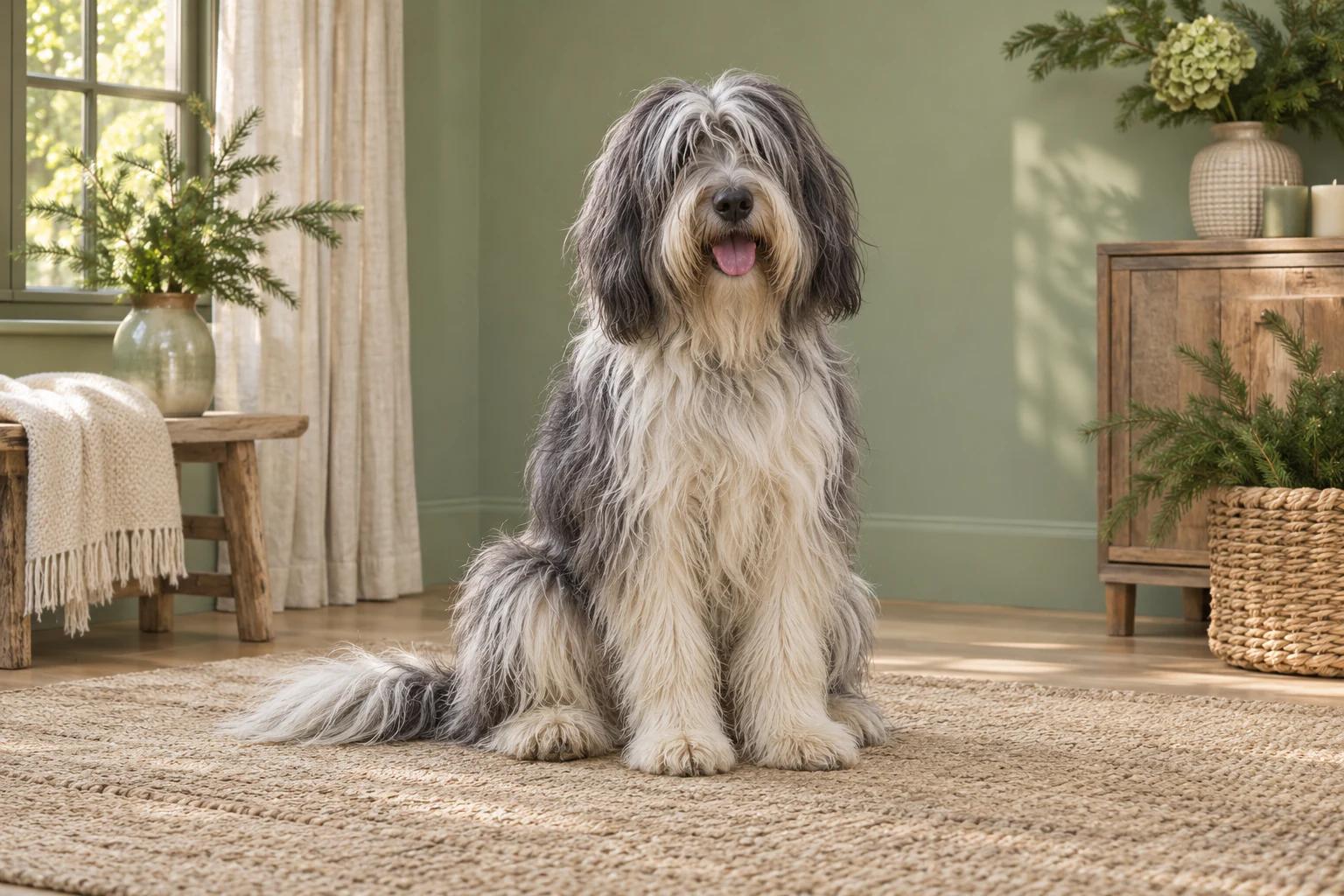
Schapendoes grooming should leave you able to understand the coat you are caring for, not merely make the surface look tidy. The useful questions are your progress, the dog’s comfort and areas needing help.
Approach the task as care rather than a race to complete the whole dog. If you are new to the breed, obtain a demonstration on the individual coat rather than buying a large collection of tools and hoping one will solve every problem.
Schapendoes grooming: work through the coat in layers
The Schapendoes Club of Canada's care guide describes a soft undercoat beneath the outer coat. It recommends a wide-toothed comb and working in layers, rather than stripping out all the undercoat. It identifies the beard, beneath the ears, collar area, armpits and hind-leg areas as places needing attention.
With professional guidance, hold unworked hair aside and gently comb each exposed layer in its growth direction. Release another small layer rather than repeatedly smoothing the surface.
A comb catching is a reason to pause, not pull harder. Ask for help when you cannot proceed comfortably. Before releasing more hair, check that you can identify the finished layer and reproduce the demonstrated movement gently.
Schapendoes coat care changes as the coat develops
LICG's breed-care guidance notes that the change from puppy to adult coat can require increased attention. It also recommends checking longer-haired areas for tangles and plant debris, and obtaining a practical demonstration when needed.
For Schapendoes shedding, focus on what is happening within the coat as well as what lands on the floor. Ask a groomer to assess any new difficulty combing through it. Do not assume that a low amount of visible loose hair means there is nothing to check.
LICG also advises veterinary guidance for excessive ear hair or signs such as odour, shaking and scratching. Do not improvise by plucking hair or pushing tools into the ear canal. Keep an observation separate from a diagnosis: noticing an uncomfortable ear is a reason to seek help, not to begin a treatment you saw in a grooming video.
Teach the handling before extending the session
Woodgreen's grooming guidance recommends introducing equipment gradually and rewarding participation. A starting lesson can be as small as showing the brush, rewarding investigation and later adding one gentle stroke. End while the dog remains comfortable rather than waiting for a struggle.
Practise that introduction on an easy, untangled area. It is unfair to make the first lesson a difficult knot behind an ear. Keep the equipment visible and your movements predictable; do not conceal a tool and suddenly begin working when the dog approaches.
If the dog moves away, pause and reconsider the task. Handling practice and urgent coat maintenance may need separate plans. Ask a qualified groomer or veterinary team how to address existing problems while you build cooperation for future care. A dog that has had an unpleasant experience may need a different starting point from a puppy calmly investigating a brush.
How to groom a Schapendoes when dirt or tangles intervene
VCA's coat-care safety article warns against using scissors on burrs, tangles and mats because of the risk of cutting skin. It also recommends dog-specific shampoo, nonslip footing and gentle water flow. These are safety considerations, not instructions to tackle every coat problem yourself.
For a compacted area you cannot comfortably separate, stop and arrange professional assessment. Show where the problem is and explain what you have already tried. Do not keep cutting toward skin that you cannot clearly distinguish from the tangled hair.
If a bath is appropriate, prepare the space before bringing the dog in: secure footing, reachable supplies and water delivery you can control. Follow the product instructions and veterinary advice where skin concerns exist. Avoid turning a routine bath into an improvised treatment with household detergent or a product intended for people.
Turn a demonstration into a method you understand
Try a section under supervision so the instructor can correct your hand position and the amount of hair you separate.
Use ordinary anatomical landmarks when discussing progress. “The left shoulder is done; I have not reached the chest” is clearer than “I brushed most of it.” Use the dog’s left and right, not the side nearest the person standing opposite you. Specify the surface too: the outside of a leg is not its inner side, and the shoulder is not the armpit. Ask the instructor to point to the area if either label is unclear. This is not about producing a complicated record. It is about avoiding uncertainty when a session is interrupted or another person helps.
A photograph may locate a problem without showing its depth. Arrange an assessment rather than guessing what lies beneath it.
The Schapendoes profile and dog match quiz help prospective owners consider the wider commitment. The rebuilding and recognition article covers history; it does not replace learning a practical coat-care technique.
FAQ
Should I keep pulling when the comb catches?
No. Pause and identify the problem. Obtain help if you cannot work comfortably rather than forcing the comb through resistance.
Can scissors solve a tight mat close to the skin?
Do not attempt that shortcut. Skin can be difficult to distinguish from compacted hair; arrange professional assessment instead.
What should I ask during a grooming demonstration?
Try a section under supervision and ask for corrections, rather than judging your method from the finished appearance.
Sources behind this article
- Schapendoes Club of Canada: Health and care ↗
- LICG: Nederlandse Schapendoes ↗
- Woodgreen: Grooming your dog ↗
- VCA: Grooming and coat care safety ↗
Article source checked: November 16, 2026. Source checked 2026-11-16
Keep reading

Affenpinscher Grooming: A Practical Coat-Care Routine
Read article →