Savannah Cat Training: A Clear Invitation to a Resting Place
Plan Savannah cat training with voluntary steps, suitable rewards and a clear resting-place invitation while preserving independent safety arrangements.
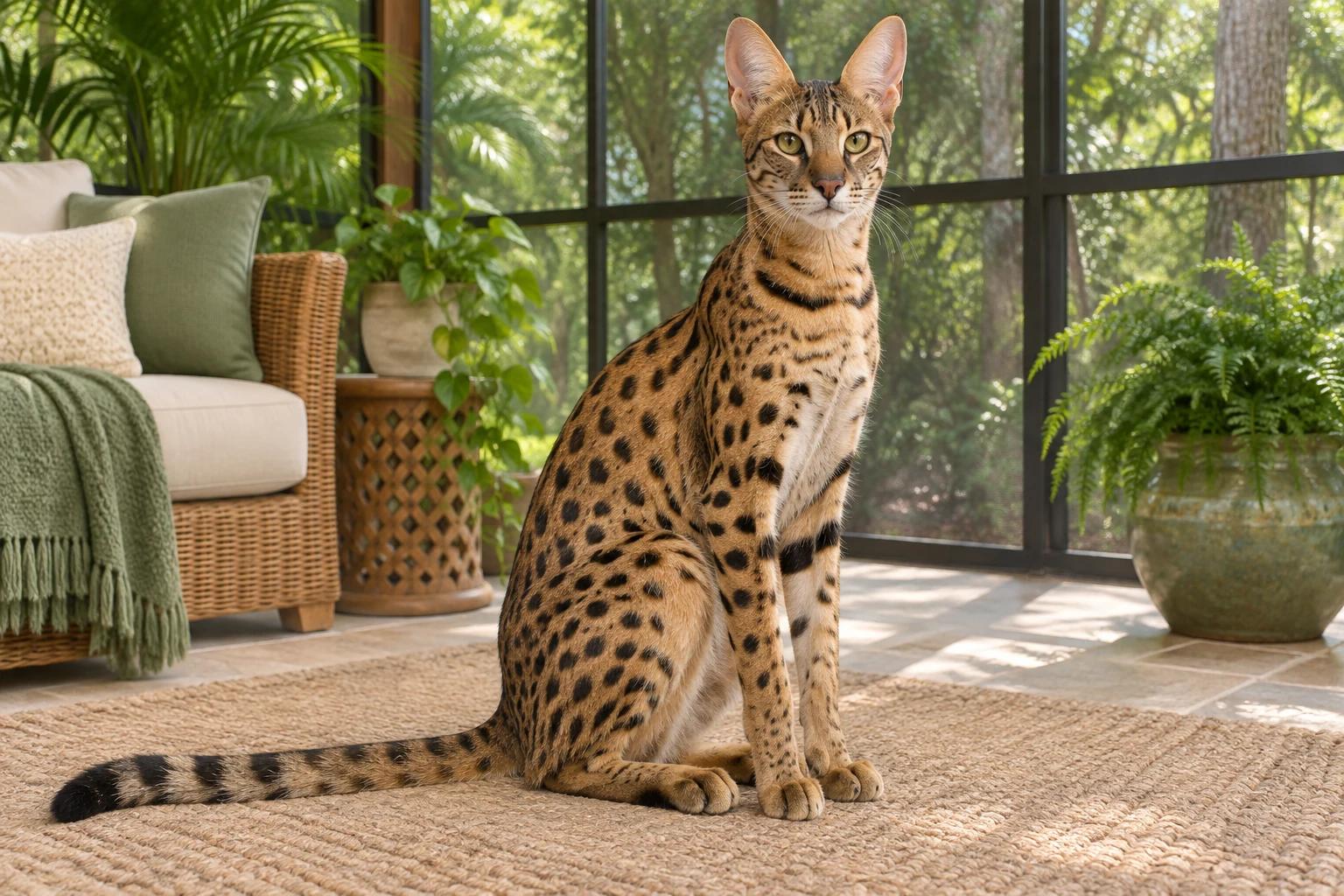
Savannah cat training should begin with an understandable task in a suitable setting. An active, curious cat may enjoy learning, but a breed reputation does not make every exercise appropriate or establish a timetable. A useful starting project is a voluntary invitation toward a comfortable resting place while nothing hazardous is happening. The aim is communication, not control over every movement.
This guide considers how to train a savannah cat through manageable steps. It keeps safety and housing arrangements separate from obedience and does not teach confinement, restraint or a method for overriding the animal's wish to leave.
Savannah cat training: choose the place before the signal
Select a stable, accessible resting option the cat can approach and leave comfortably. It should not be beside an exterior exit, hot surface or other hazard. A difficult jump should not be part of learning a simple invitation, and necessary resources should remain available elsewhere.
The Savannah profile includes patient training among the activities to consider for an inquisitive cat. FelineVMA's training guidance explains positive reinforcement and breaking tasks into smaller parts. Those methods depend on the actual learner and setup, not on making an animal perform because it is expected to be intelligent.
Define the purpose in plain language. You might want a clearer invitation to a comfortable nearby spot while organizing a quiet room. Do not start by using the place to remove the cat from an exciting or difficult situation it has never practiced.
Prepare an outcome the cat values
Choose an appropriate reward by observing the individual. A familiar toy or suitable food may be useful, but preference depends on the animal and situation. Ask your veterinary team how rewards fit any feeding restrictions rather than improvising a new diet for training.
Have the reward ready before beginning so that your response can follow the intended action promptly. Searching for supplies after the cat has participated can make the connection harder to understand. Keep essential food, water and other resources available; they should not be withheld to make the exercise compelling.
A marker can help identify a moment when established appropriately. It may be a quiet word rather than a clicker if that is easier and more comfortable. Additional equipment is useful only when it improves clarity instead of distracting you from the cat's response.
Start with interest in the place
Notice an appropriate voluntary orientation or approach. Reward a small action the cat can offer rather than waiting for a finished settling behavior. Do not repeatedly pick it up and put it down on the place, then call its presence a learned choice.
FelineVMA describes shaping through manageable steps. For your project, approaching, stepping onto a surface and choosing to remain briefly are different parts. An early success does not mean the animal understands every later expectation or is ready for a distracting setting.
If the invitation is unsuccessful, review the location, reward and difficulty. Make one adjustment at a time rather than adding louder signals and several new props. The goal is to explain the task, not to make the cat remain until you obtain a result.
Add a consistent cue to an understood action
Agree on one invitation with anyone who will help. Introduce it thoughtfully once the action is becoming recognizable, and avoid several people using different signals at the same time. A consistent routine makes it easier to understand what earns the reward.
Keep a short record of the current learning step. A person who sees the cat visit the place once should not assume it can remain there through a busy household task. Distinguish what has actually been practiced from what you hope will eventually be possible.
Allow the cat to leave and end before the interaction becomes frustrating. There is no fixed number of repetitions to complete. A brief, clear exchange can be useful without producing a long stay or a demonstration for a guest.
Keep Savannah cat obedience in proportion
A resting-place cue does not replace a secure door, an appropriate barrier or supervision around hazards. Do not test the invitation beside an unsecured exit to see whether the cat chooses you over an interesting distraction. Safety arrangements should remain reliable even when a learned response does not occur.
The existing Savannah housing-rules guide addresses another separate responsibility. Training does not resolve permission, ancestry documentation or housing terms, and a cooperative behavior is not evidence that a particular location is suitable.
Likewise, the task is not permission to continue uncomfortable handling. If a care procedure is difficult, ask the veterinary team for appropriate help. A cat approaching a mat voluntarily has not agreed to every event a person might later associate with it.
Distractions and social exposure need their own pace
Savannah cat socialization is not proved by inviting a group to watch a new skill. An unfamiliar person, another animal or a changed room can alter the task substantially. Consider those factors individually rather than increasing all of them because one easy attempt worked.
Adults should manage children's participation and explain that the animal can decline. Do not restart the exercise repeatedly so everybody gets a turn. A resting place should remain comfortable when no training is happening, not become a location where people continually request performance.
FelineVMA advises against training a frightened, sick or painful cat. Contact your veterinarian about a sudden change in willingness or comfort. Do not assume the next solution is a stronger reward or a more insistent cue when the animal may need assessment.
Evaluate the exchange before raising expectations
Afterward, describe what the cat chose and whether your timing was clear. If the answer is uncertain, simplify the next opportunity or seek qualified guidance. Progress is not measured by how closely the animal resembles a training video.
Use the cat quiz to consider whether you enjoy an interactive companion, then plan learning as one part of a wider care routine. Rest, play, resources and ordinary company remain important even when a particular skill is unfinished. A worthwhile exercise makes communication easier while preserving the animal's ability to participate voluntarily.
Frequently asked questions
Does intelligence guarantee quick training?
No. Learning depends on the individual, task, reward and setting. A breed description does not establish a deadline or justify increasing pressure.
Should I place the cat on the resting spot repeatedly?
This guide focuses on voluntary actions and understandable rewards. Physical placement does not demonstrate that the cat has learned the invitation.
Can the cue prevent escape by itself?
No. Keep secure physical arrangements independent of training. Do not test a cue for the first time where failure could expose the animal to danger.
What if the cat stops participating?
Allow the pause and review the setup. Seek veterinary advice about a sudden change or discomfort rather than treating it as disobedience.
Sources behind this article
Article source checked: November 20, 2026. Source checked 2026-11-20
Keep reading

Abyssinian Cat Training: Useful Skills for an Active Cat
Read article →