Russell Terrier Temperament: Curious, Busy and Engaged
Understand Russell Terrier temperament through curiosity, digging, barking and everyday companionship, with practical ways to work with the individual.
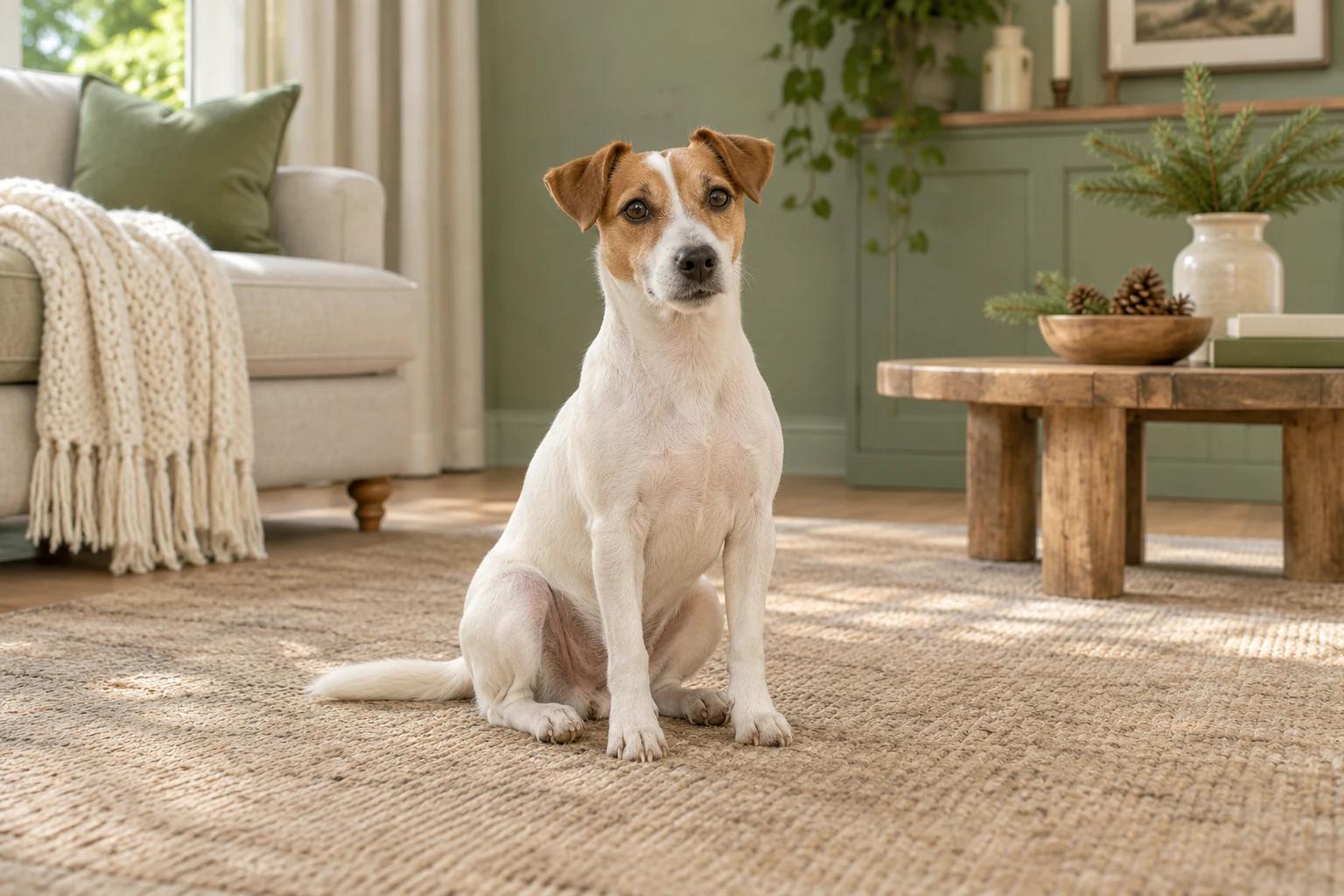
Russell Terrier temperament is curious and active. Consider whether that appeals on ordinary weekdays, not just at a first meeting.
The important question is not whether you admire enthusiasm. It is whether you enjoy responding to it constructively: offering an activity, teaching an alternative and noticing when the environment is making a familiar situation harder.
Russell Terrier temperament: Interest is part of the appeal
The Russell Terrier standard describes a lively hunting terrier that is playful, curious and affectionate. These are breed tendencies, not an individual assessment.
Beside a scented garden border, your terrier may have a different priority from yours. Describe the distraction before calling the dog stubborn.
This is why temperament descriptions should lead to practical questions. What occupies this dog's attention? Which activities does it return to? How does it respond when a familiar game ends? Answers from someone who knows the individual are more useful than a string of energetic adjectives.
Russell Terrier personality at home
A small body can disappear under a chair while the dog's attention remains firmly on everything happening nearby. Think about what is available at that height: dropped objects, low shelves, an open garden door and the gap behind a sofa.
Rather than expecting the dog to understand which discoveries are welcome, make the environment clearer. Put treasured or dangerous objects out of reach and provide activities you are happy to share. This is not a substitute for teaching; it stops your home from repeatedly presenting the same avoidable temptation.
A useful household question is whether everyone enjoys participating. If one person expects lively games while another expects a quiet lap companion all day, the mismatch is between human expectations as much as between dog and home. Resolve that honestly before deciding the breed is an obvious fit because it is small.
Notice the end of an activity
It is easy to focus on the entertaining beginning of a game and miss what happens afterward. Does the dog move to another object, follow the person, or rest? What did the person do immediately before that transition?
These observations help distinguish a dog that needs clearer endings from one whose day has little meaningful activity. They also prevent every lively moment from becoming an excuse to add more speed or excitement.
Digging deserves an outlet, not a character judgment
Battersea's digging guidance notes that terriers may be especially inclined to dig and that the behavior can have several causes. It recommends protecting areas you do not want disturbed and offering an appropriate alternative, such as a designated digging area with suitable buried toys or treats.
For a practical first version, choose a location away from the valuable flowerbed, with enough room for your dog to stand and turn. Introduce an appropriate toy near the surface rather than creating a difficult excavation immediately. Supervise and remove anything the dog starts chewing or swallowing. The aim is an understandable place for the activity, not an uncontrolled hole beside a boundary.
A digging outlet does not make every garden safe. Check the actual fence line and any newly disturbed ground. Do not assume that because the terrier has a preferred activity, it will ignore every other interesting patch of soil.
Barking: Look for the event behind the sound
Dogs Trust's barking guide recommends identifying triggers and changing the situation so the dog is not repeatedly practicing the same response. For a dog reacting to passersby, reducing the window view may help. Reward calm alternatives and seek veterinary advice for a sudden change rather than assuming noise is simply personality.
At terrier height, a glass door may provide a clear view of every movement outside. Move yourself down to that level briefly and check what the dog sees. A room that seems quiet from your chair may offer a continuous stream of visual activity from the floor.
Describe the pattern precisely: barking at the gate is different from barking when a toy is put away. The distinction matters when seeking help, because the same sound can occur in very different situations. “My terrier is noisy” is a starting complaint, not a complete explanation.
Russell Terrier characteristics are not compatibility guarantees
An affectionate or sociable reputation cannot decide whether this dog will enjoy every child, animal or visitor. Ask about the individual's actual experience and the context of any meeting. A brief greeting is not a test that certifies future compatibility.
Avoid arranging chaotic introductions simply to see what happens. You can learn more from a manageable encounter with enough space to observe than from crowding several animals into the same small area. Where there are concerns, obtain qualified help rather than making the dog demonstrate that it can cope.
The same principle applies to independence. A dog choosing to investigate something is not proof that it can comfortably spend long periods without company. Different questions need different evidence.
Is this the sort of companion you enjoy?
Consider whether this Russell Terrier behavior suits you on an ordinary wet weekday.
Use the Russell Terrier profile and dog match quiz to consider that daily fit. The separate Russell and Parson Russell naming guide addresses breed names and measurements; a shorter outline does not answer the temperament question discussed here.
FAQ
Does curiosity mean my dog is ignoring me deliberately?
Not necessarily. Describe the distraction before assigning a motive; that gives training a concrete starting point.
Is a Russell Terrier only suitable for a large house?
Room size alone does not describe the life available there. Consider usable space, daily activities, neighbors and the individual dog's behavior rather than relying on floor area.
Should I dismiss a new behavior as typical terrier attitude?
No. A change from the dog's normal behavior deserves attention. Seek appropriate professional advice rather than using a breed label to explain it away.
Sources behind this article
Article source checked: November 16, 2026. Source checked 2026-11-16
Keep reading

Airedale Terrier Temperament: What Everyday Life Can Feel Like
Read article →