Romanian Mioritic Shepherd Dog temperament: home life
Understand Romanian Mioritic Shepherd Dog temperament through companionship, introductions and settling, without relying on guardian stereotypes.
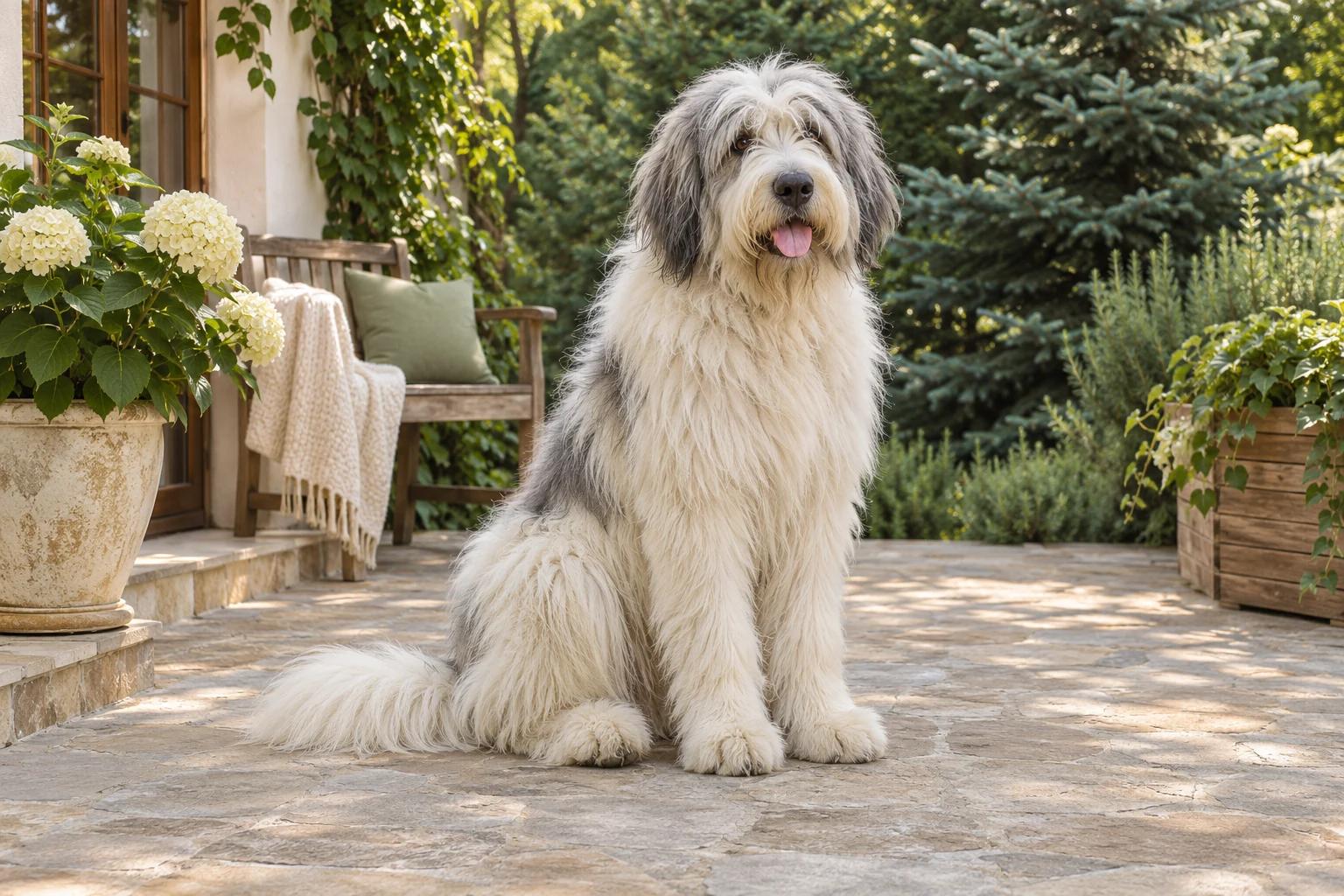
Explore the
Romanian Mioritic Shepherd Dog
Background, care, and everyday considerations.
View breed profile →Romanian Mioritic Shepherd Dog temperament deserves more careful consideration than its impressive appearance sometimes receives. Before imagining a companion at your feet, think about the ordinary events around those feet: someone entering the room, furniture being moved, a visitor arriving or you stepping away. A good match depends on how the individual handles life with you, not simply on a reassuring breed adjective.
The Mioritic profile covers the broader commitment. This guide focuses on interpreting companionship and building a home in which the dog's actual behavior is easier to understand.
Romanian Mioritic Shepherd Dog temperament: a measured picture
The FCI standard describes a calm, stable guardian that is wary of strangers. Those are intended breed qualities, not a guarantee about any particular encounter. Do not turn wariness into an expectation that the dog should confront people, or assume that calmness means no teaching or management will be necessary.
When meeting an adult, ask what its caregiver considers a normal greeting. A dog that watches from beside a familiar person is not necessarily offering the same response as one standing rigidly across an exit. You need the surrounding circumstances and the caregiver's experience, not an interpretation drawn from a still photograph.
A useful conversation also separates familiar people from new people. Ask what happens when a regular visitor returns and how that differs from a first meeting. The answer can help you picture everyday life more accurately than a statement that the dog is either friendly or unfriendly.
A new home is not a personality test
Battersea's settling-in guidance recommends keeping pressure low during the initial adjustment, limiting early visitors and providing a quiet retreat. The retreat should not be a punishment area, and people should leave the dog undisturbed there. Dogs adjust at different speeds; a wish for space at first need not be taken as personal rejection.
For a Mioritic, choose that area with the household's movement in mind. An inviting bed behind the only chair that everyone uses may not remain quiet for long. Check where bags are dropped, where doors swing and where people gather to talk. A resting place works best when its location does not require repeated negotiation.
Avoid inviting several people to assess the new arrival at once. Instead, let the first days tell you how the dog uses the space during ordinary activities. Notice its preferred routes and whether an apparently convenient furniture arrangement creates an obstacle. You can improve a practical layout without making claims about the dog's entire personality.
Relaxation can be taught in small steps
Battersea's calm-settling exercise begins by rewarding interest in a mat, then paws on it, followed by a comfortable down. Duration and distance are added gradually once the dog understands the place. Practice when the dog is already ready for quiet time rather than using the mat as an emergency demand during peak excitement.
Choose a surface that remains flat and provides enough room for the dog to lie naturally. In an early session, your own chair should be close enough that you do not have to lean over the dog to place a reward. Keep the destination distinct from the walkway between rooms.
The practical goal is not to freeze the dog in a decorative pose. You want a place it understands and can use comfortably. If the dog struggles with the physical position, discuss that with your veterinarian rather than increasing pressure to complete the exercise.
Company and time apart are separate skills
Dogs Trust's time-alone guidance recommends introducing short periods apart gradually, beginning while you are still at home. Watch the response and shorten the interval if anxiety appears. Comfortable separation is something to prepare before a necessary absence, not something to test by suddenly leaving for a full workday.
This distinction matters when discussing Romanian Mioritic Shepherd Dog personality. A dog can enjoy resting beside you without having learned what happens when you leave. Ask a previous caregiver about actual absences: where the dog stayed and what behavior was observed. Do not infer coping ability from how quietly it behaves while someone is present.
If the dog already becomes distressed, seek qualified support and arrange care that avoids repeatedly overwhelming it. A new bed, another pet or an exhausting outing should not be treated as a guaranteed solution. The useful question is what arrangement this individual can currently manage.
Evaluate ordinary compatibility
Among Romanian Mioritic Shepherd Dog characteristics, those most relevant to your household are demonstrated in ordinary life. What happens while someone cooks? Can the dog move around the dining area without blocking the entrance? Does it have experience of the kinds of activity that occur regularly in your home?
Consider the difference between watching a household task and being involved in it. A dog standing nearby while you unpack shopping may simply be present, while a dog repeatedly reaching into bags creates a different practical problem. Describe the action rather than deciding immediately that the dog is helpful, dominant or mischievous.
The same approach helps with Romanian Mioritic Shepherd Dog behavior outdoors. Ask which settings the dog knows well and which are unfamiliar. A quiet rural route and a narrow busy pavement are different environments; experience in one should not be presented as proof of ease in the other.
When you seek advice, give a concrete account of what happened before and after a difficult moment. Avoid staging another encounter to obtain a better demonstration. If safety is uncertain, a veterinarian and appropriately qualified behavior professional can help assess the situation without making it worse.
The dog match quiz helps you examine your expectations. For a separate coat-care background topic, read the Mioritic's abundant outline; appearance is not a temperament assessment.
FAQ
Should I expect the same behavior at home and in public?
No. Familiarity, space and surrounding activity differ between settings. Ask where a behavior has actually been observed and avoid treating success in one place as evidence for every other situation. Useful expectations are specific to the individual and the circumstances.
Is an impressive greeting the best sign of a good match?
Not necessarily. Think about the relationship you want during an ordinary day, not only the first few minutes of a visit. Ask about routine household activities, established habits and situations that still need support before making a decision.
What information is most useful from a previous caregiver?
Concrete examples are best: what the dog does, where it happens and what precedes it. Ask which patterns are well established and which have changed recently. That gives you a more usable starting point than a collection of flattering adjectives.
Sources behind this article
- FCI: Romanian Mioritic Shepherd Dog ↗
- Battersea: Calm and Relaxed ↗
- Dogs Trust: Time Alone ↗
- Battersea: Settling a New Dog ↗
Article source checked: November 16, 2026. Source checked 2026-11-16
Keep reading
Romanian Mioritic Shepherd Dog size: practical fit
Read article →