Redbone Coonhound vs Bloodhound: Everyday Differences
Compare Redbone Coonhound vs Bloodhound appearance, handling and home routines to choose a hound whose individual needs fit your life.
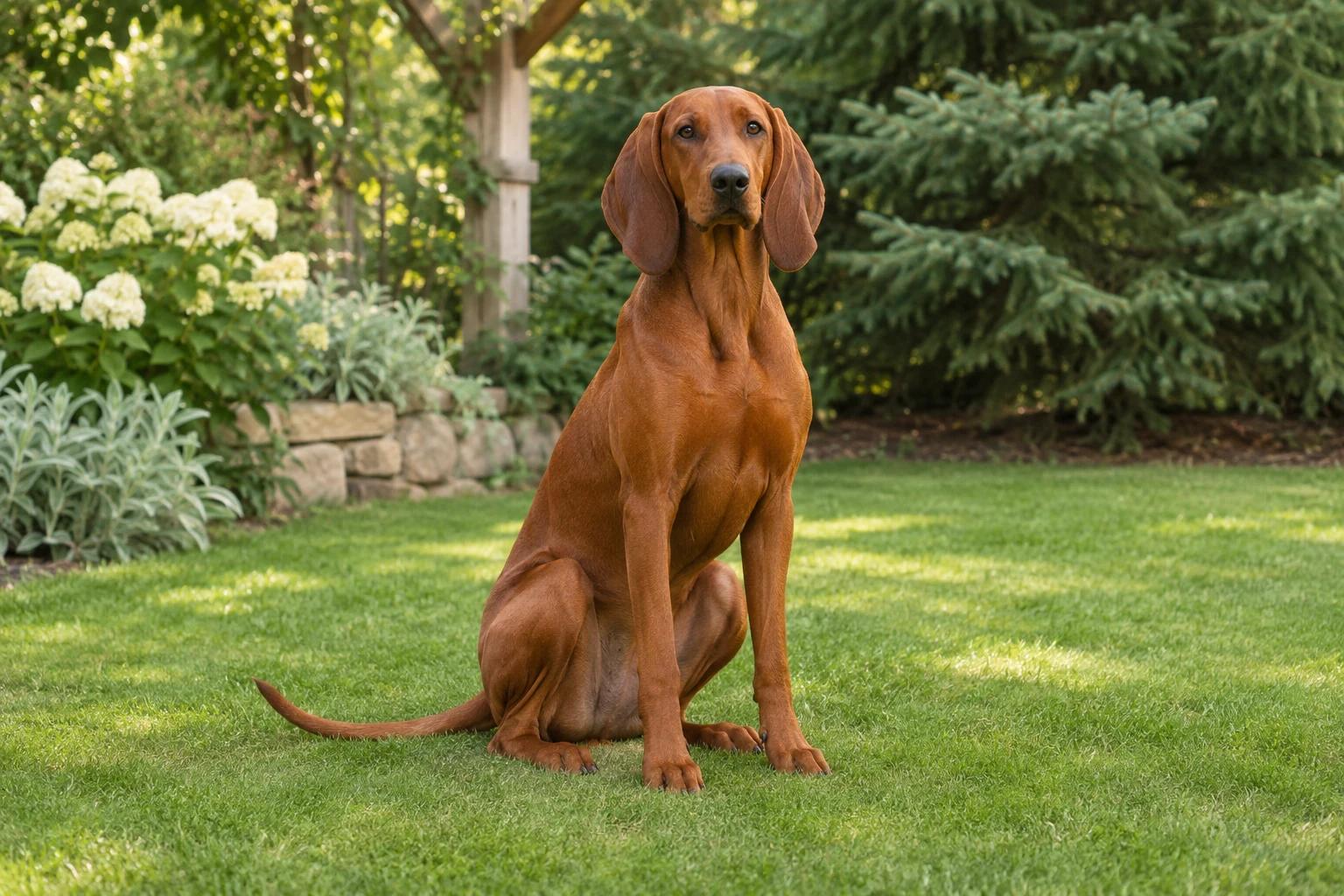
Redbone Coonhound vs Bloodhound is not a contest to find the better nose or the more appealing face. For a companion home, the useful comparison is what happens when the dog walks through your doorway, travels in your car and joins your daily routine. Both deserve more consideration than a photograph of a hound resting on a porch.
Start with the Redbone Coonhound profile and Bloodhound profile, then meet adults with caregivers who can describe ordinary life. A puppy's size and an adult's quiet moment can both give an incomplete impression.
Redbone Coonhound vs Bloodhound: shape and handling
The Redbone standard describes a balanced, powerful hound with a short, smooth coat. Heights are 22–27 inches for males and 21–26 inches for females. AKC Redbone standard.
The Bloodhound standard gives heights of 25–27 inches for males and 23–25 inches for females, alongside a powerful build, very long low-set ears and notably loose skin around the head and neck. Similar shoulder heights do not mean identical bodies. AKC Bloodhound standard.
For either dog, measure the space needed to turn around in a carrier or vehicle compartment. Shoulder height alone will not tell you whether the dog can reposition comfortably. Check the access opening too: a generous resting area is of little use if getting into it is impractical.
Ask to see the adult dog walk with its regular handler. Notice the mechanics of attaching the lead, turning a corner and passing through a narrow gate. You are assessing whether you can manage the individual dog, not asking the caregiver to demonstrate a breed stereotype.
What the face means for everyday care
A Bloodhound's folded skin and hanging ears create a different handling experience from the Redbone's less folded outline. Ask the caregiver to demonstrate the established care routine, and have a veterinarian explain anything that needs individual attention. Do not invent a cleaning treatment from the appearance of a wrinkle. Bloodhound physical description.
Try to see the practical setup rather than only hearing that grooming is easy. Where does the dog stand? Can the person inspect its head without reaching over a crowded chair? Does the dog willingly approach the care area? Those details matter when you will be doing the work repeatedly.
A short coat does not make the rest of a dog's care disappear. Think about the bedding, car surfaces and equipment you will clean, as well as the dog itself. Ask what the current household actually uses after an ordinary outing, not what a show photograph suggests.
Different working traditions, not a better nose
Redbones belong to the treeing coonhounds. AKC's coonhound account describes dogs following quarry until it climbs, then vocalizing at the tree so the hunter can locate them. The Redbone section emphasizes agility across lowlands and rocky hills. That explains a job involving pursuit and sustained interest, not simply walking politely beside a person. AKC coonhound guide.
The American Bloodhound Club highlights a different set of outlets, including tracking and the club's mantrailing activities. It also rejects the sleepy-porch-dog stereotype. A solemn face should not persuade you that a Bloodhound wants an inactive life. American Bloodhound Club FAQ.
Neither description means that a pet must hunt or work operationally. It does mean that choosing either breed for its appearance while disliking outdoor exploration is a poor starting point. There is no useful winner in a contest over which breed has the superior nose; you need an activity you enjoy doing with the dog you actually own.
Treeing voice and household communication
Baying is part of the coonhound working account, where sound helps connect a distant dog with its handler. For a companion Redbone, distinguish appreciation of that heritage from permission to rehearse disruptive noise in your garden. The historical purpose does not predict how often your particular dog will vocalize. Coonhound working behavior.
Ask a caregiver to distinguish a sound made during active work from one made when a dog is waiting at a door. Calling both “hound noise” may conceal two very different situations. A photograph cannot answer that question, and a recording without its circumstances is only a sound sample.
Do not select a Bloodhound on the assumption that its expression promises silence, or a Redbone because you hope training will remove every audible part of dog ownership. If noise is a decisive housing constraint, discuss the actual dog and the actual building before making a commitment.
Drool is a concrete difference to consider
The Bloodhound club explicitly warns prospective owners about drool and notes the practical habit of carrying a towel. This is more useful than calling either breed low maintenance. If saliva on clothing or furnishings would seriously bother you, spend time around an adult Bloodhound before deciding. Bloodhound ownership FAQ.
The Redbone profile also includes drooling in its care picture; do not turn the comparison into a promise of a spotless alternative. Test your expectations against ordinary feeding, drinking and greeting, not only the moments when someone has prepared a dog for a photograph.
Boundaries still matter after training
The Bloodhound club says even owners of obedience-titled dogs use a lead outside fenced areas. A learned response and an interesting scent can coexist. That is a practical warning against treating a training achievement as permission to disregard the surroundings. Club guidance.
For the Redbone Coonhound or Bloodhound owner, plan control before starting. A road beside the path leaves little room to discover whether an interesting scent will outweigh a familiar request.
When comparing Bloodhound vs Redbone Coonhound companionship, include the whole household. Neither working history establishes compatibility with a cat or a particular dog. Introductions, supervision and separate resting space remain individual matters. Do not use a pleasant breed reputation as a child-safety guarantee.
Choose the relationship, not the outline
The difference between Redbone Coonhound and Bloodhound ownership includes head and skin care, saliva management and the activities you want to share. Choose the actual dog whose needs fit those priorities rather than awarding a general prize for being easier. A good match can still involve work you deliberately enjoy doing.
The Redbone coat-history article explores a separate part of the breed's story. Appearance can be interesting without being the deciding factor. Use the dog match quiz to organize your priorities, then let real observations carry more weight than an attractive label.
FAQ
Can these breeds be compared from height alone?
No. Look at the actual dog's build, movement and space requirements. Test the relevant equipment and vehicle arrangement rather than assuming similar measurements mean the same handling experience.
Should I meet a puppy or an adult first?
Meeting adults can clarify the daily commitment before you choose a puppy. A caregiver who can show ordinary routines provides useful context for what the puppy may grow into.
What is the most useful question for a caregiver?
Ask which everyday situation requires the most planning with this particular dog. The answer often reveals more about suitability than a broad description such as friendly or relaxed.
Sources behind this article
- AKC: Redbone Coonhound Standard ↗
- AKC: Bloodhound Standard ↗
- American Bloodhound Club: FAQ ↗
- AKC: Meet the Coonhound Breeds ↗
Article source checked: November 16, 2026. Source checked 2026-11-16
Keep reading

Affenpinscher vs Brussels Griffon: Everyday Differences
Read article →