Pumi vs Bedlington Terrier: choosing your companion
Compare Pumi vs Bedlington Terrier through activity, learning, grooming and household fit, with practical questions for meeting individual dogs.
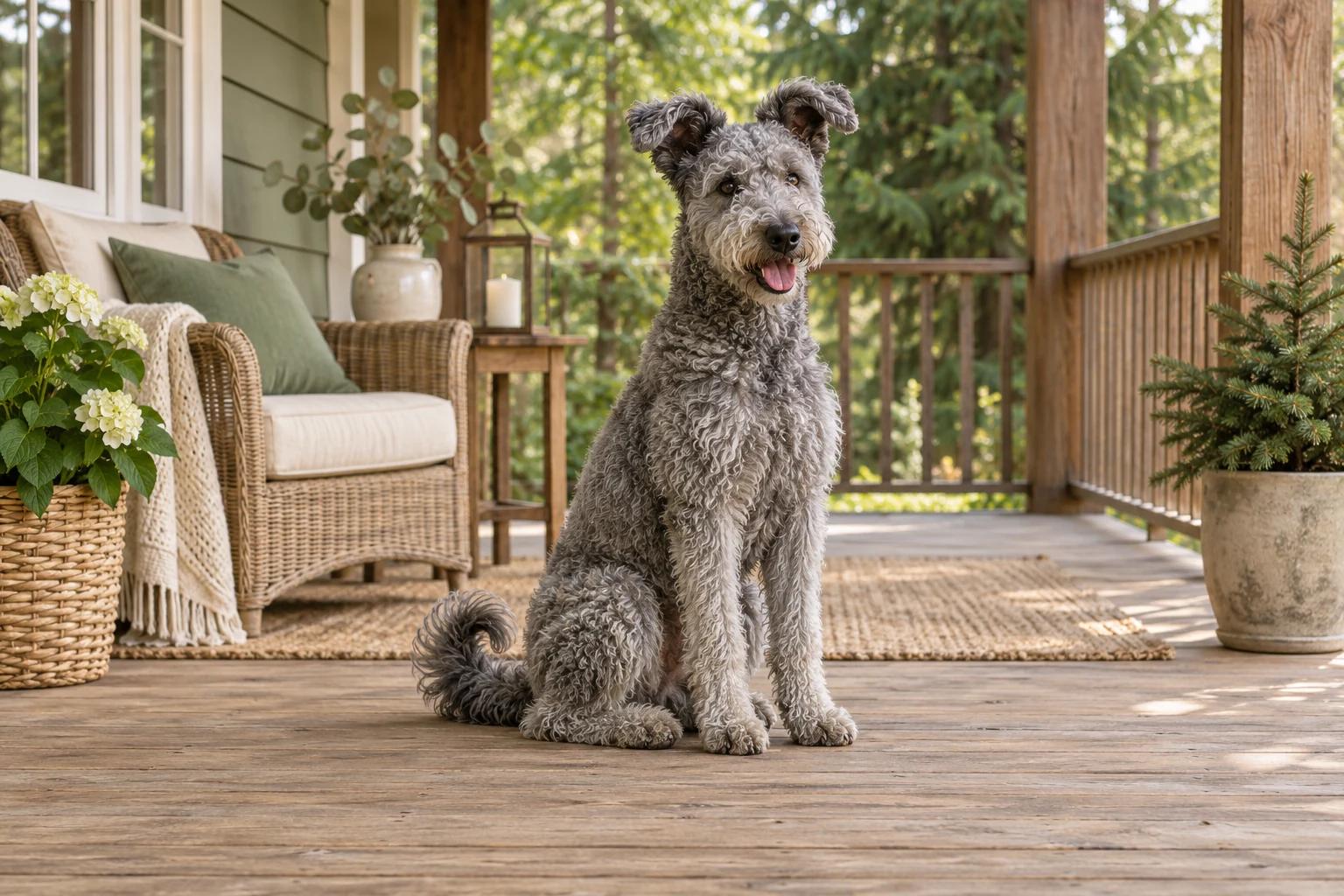
Pumi vs Bedlington Terrier is a comparison between two distinctive dogs, not two versions of the same curly companion. One belongs to the Hungarian herding tradition; the other is an English terrier. Their appearance can make both appealing, but the decision should rest on the activity, teaching and care you can sustain. Start by imagining the dog living through your ordinary week, not simply joining your favourite outing.
Pumi vs Bedlington Terrier: look beyond the silhouette
The Hungarian Pumi Club of America describes a quick-learning, energetic dog that needs physical and mental engagement. The AKC Bedlington Terrier standard describes an athletic terrier whose mild resting expression can give way to considerable energy. Neither should be selected as a decorative presence that asks little of its owner.
Read the Pumi profile and Bedlington Terrier profile together. Both call for activity and teaching, while the Pumi profile places particular emphasis on mental engagement and a high activity commitment. Use those differences to investigate fit rather than rank one breed as better.
If you are comparing individual dogs, ask what a typical day already involves. An established adult routine offers information that an appealing puppy description cannot provide. Make room for both the known needs and the uncertainty that remains.
Compare your interest in teaching
A Bedlington Terrier vs Pumi decision may become clearer when you consider what you enjoy doing with a dog. Do you look forward to regular lessons and learning games? Or are you mainly seeking company for walks and quiet evenings?
Be honest about the time available between organised classes. A weekly appointment does not organise the rest of the dog's life. Look at departures, handling, visitors and necessary absences as well as any activity you hope to pursue.
The Pumi's learning emphasis may appeal to someone who enjoys that ongoing involvement. It should not be interpreted as a guarantee of instant obedience. The Bedlington also needs understandable expectations and practice, rather than being left to work out household rules from your reactions.
Ask prospective trainers about suitable instruction for each individual. Explain your goals and the home setup. The most useful answer will address your situation, not declare that one breed is always easy and the other always difficult.
Activity needs a dependable arrangement
For either dog, outline a weekday before planning weekend adventures. Who provides outdoor access during working hours? Which routes are practical? Who takes over if you become unavailable? These questions reveal whether your enthusiasm has a workable structure.
The difference between Pumi and Bedlington Terrier activity expectations is not a reason to assume the Bedlington needs minimal involvement. Its profile still describes a substantial place for activity. Compare the actual routines rather than choosing whichever description sounds less demanding.
If a sport interests you, investigate suitable preparation, facilities and veterinary guidance. Consider waiting time, travel and recovery arrangements as part of the outing. A breed's athletic description does not establish that an individual is ready for every physical challenge.
Keep a backup plan for disrupted days. An inaccessible park or a late meeting should not leave the dog without care because the only arrangement depended on everything going perfectly.
Curly appearance does not mean interchangeable care
The Pumi club's introduction describes a coat combining harsh and soft hair in curls rather than cords. The Bedlington standard also describes a hard-and-soft mixture with a tendency to curl. Similar words do not mean you should use the same grooming routine without professional guidance.
Meet groomers familiar with the breed you are considering. Ask what you will maintain at home, what appointments include and how the individual dog responds to handling. A memorable show outline tells you little about the practical work between visits.
Think about the space and equipment you can provide. Where will you groom? Who can help if needed? How will you maintain the routine during travel or a busy work period? Price the actual local services rather than assuming one coat must be cheaper.
The article on Pumi puppy and adult coat photographs addresses colour history separately. For a household decision, concentrate on the care arrangement instead of choosing by a preferred photograph or shade.
Companionship and visitors
The Pumi profile describes a strong interest in family interaction; the Bedlington profile allows more room for independence alongside company. Ask about the particular dog instead of treating those summaries as promises about affection.
Describe the social rhythm of your home. Do friends arrive often? Are there shared entrances, visiting children or regular carers? A dog that fits a quiet household may need different arrangements in a busier one.
Plan a place away from activity and explain your introduction rules to guests. Supervise child interactions. If another animal lives with you, discuss that specific pairing and its history rather than using a breed description as a compatibility test.
Both profiles note that barking can be part of daily life. If close neighbours or housing rules make noise especially important, ask about real situations and previous experience. Do not infer quietness from size, coat or a gentle-looking expression.
A side-by-side meeting checklist
When deciding between a Pumi or Bedlington Terrier, ask the same practical questions of each caregiver. What does the dog do during the day? Which skills are established? What handling is familiar? What should a new owner learn first?
Include questions about time apart and changes of caregiver. A warm meeting does not answer them. Ask what has actually been observed and what remains unknown, especially if your working arrangement differs from the current home.
Review the available veterinary and screening records with your veterinarian. Keep that discussion separate from appearance and temperament preferences. Neither a breed comparison nor an attractive pedigree removes the need for individual assessment.
Use the dog match quiz to organise your priorities, then compare them with the information collected. Your best choice may be the dog whose needs you can meet most reliably, even if another initially caught your eye.
FAQ
Is a Bedlington Terrier automatically calmer than a Pumi?
No. Compare the individuals and their established routines. Both profiles describe meaningful activity needs, and a mild appearance should not be treated as a prediction of a quiet daily schedule.
Can the same grooming plan suit both breeds?
Do not assume so. Ask a groomer familiar with the relevant breed to assess the coat, demonstrate home care and explain the professional appointments the individual needs.
Which is the better choice for a first-time owner?
There is no universal winner. Consider your time, willingness to learn, available professional support and the particular dog's history. Choose a care commitment you understand and can maintain.
Sources behind this article
- Hungarian Pumi Club of America: Living with a Pumi ↗
- Hungarian Pumi Club of America: An Introduction to the Pumi ↗
- American Kennel Club: Bedlington Terrier standard ↗
Article source checked: November 15, 2026. Source checked 2026-11-15
Keep reading

Affenpinscher vs Brussels Griffon: Everyday Differences
Read article →