A Puli puppy does not start with a finished adult corded coat
The Puli’s FCI standard describes a wavy or curly puppy coat before tufts develop into cords. Plan care around the current stage, not an adult photograph.
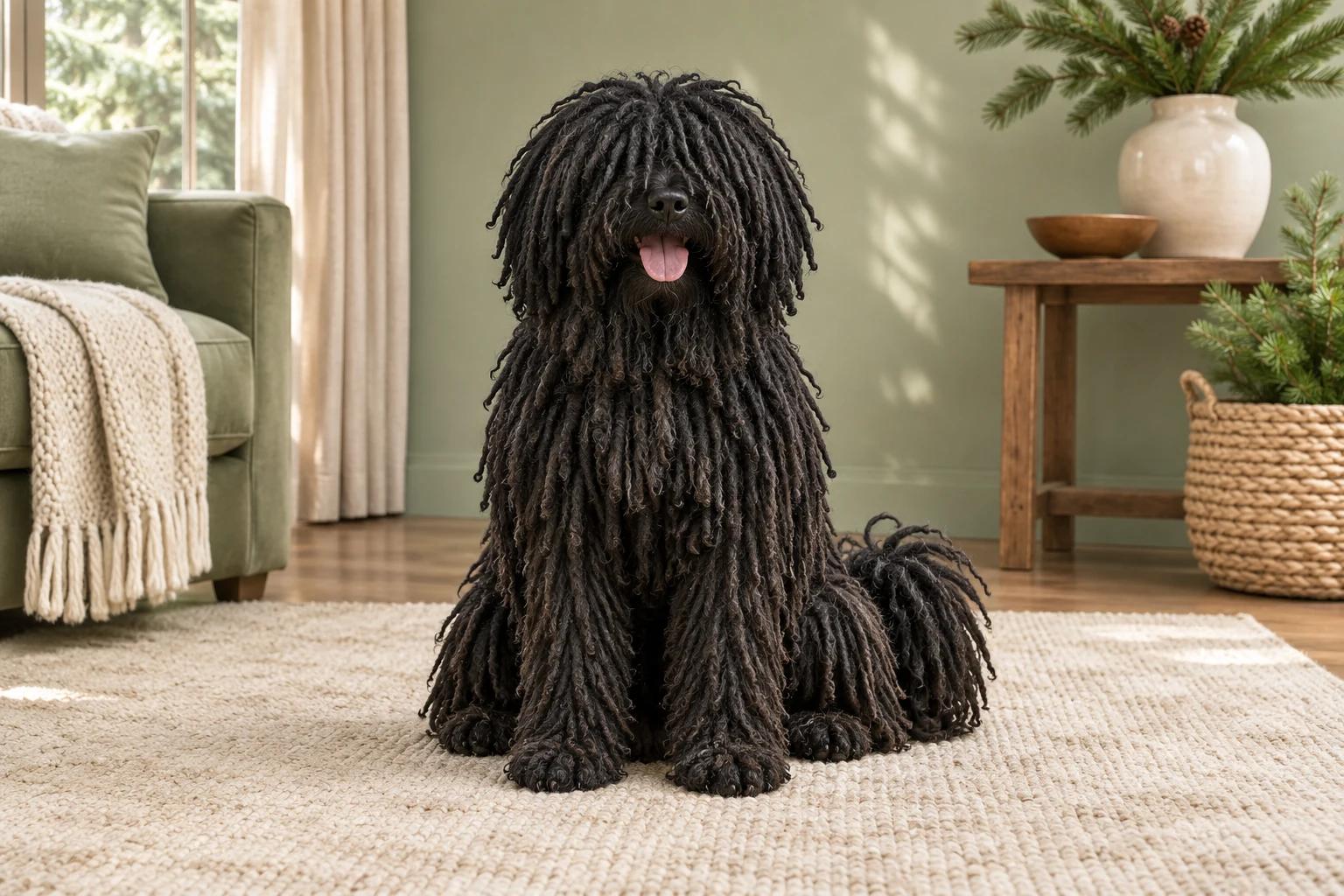
Compare stages rather than silhouettes
A young Puli can look very different from the long-corded adult that introduced you to the breed. The FCI standard describes a dense, wavy or curly puppy coat, followed by tufts that develop into tassels and cords. It identifies a coarser outer coat and a finer undercoat as parts of that structure.
Ask what is happening now
During a handover, ask the keeper to show the current coat stage and explain what they are monitoring. Request a demonstration of the care they already use and arrange whom to contact as the coat changes. An experienced Puli keeper or groomer can discuss the individual rather than supplying a deadline from a photograph.
Keep dated pictures for your own reference. Their value is in showing the same dog over time, not in measuring progress against the most dramatic adult coat you can find.
Do not confuse waiting with leaving the coat unattended
The standard describes a neglected, tousled coat as undesirable. The fact that cords develop over time is not an instruction to abandon maintenance until the dog looks mature.
Ask for an achievable routine and an explanation of when hands-on help is needed. The source does not set one age at which every Puli must have finished cords, and this developmental outline is not a cord-forming tutorial.
Sources behind this article
Article source checked: October 20, 2026. Source checked 2026-10-20
Keep reading
Puli vs Pumi: compare the everyday commitment
Read article →