Portuguese Pointer temperament in daily life
Explore Portuguese Pointer temperament through company, outdoor interests, visitors and practical questions to ask before bringing one home.
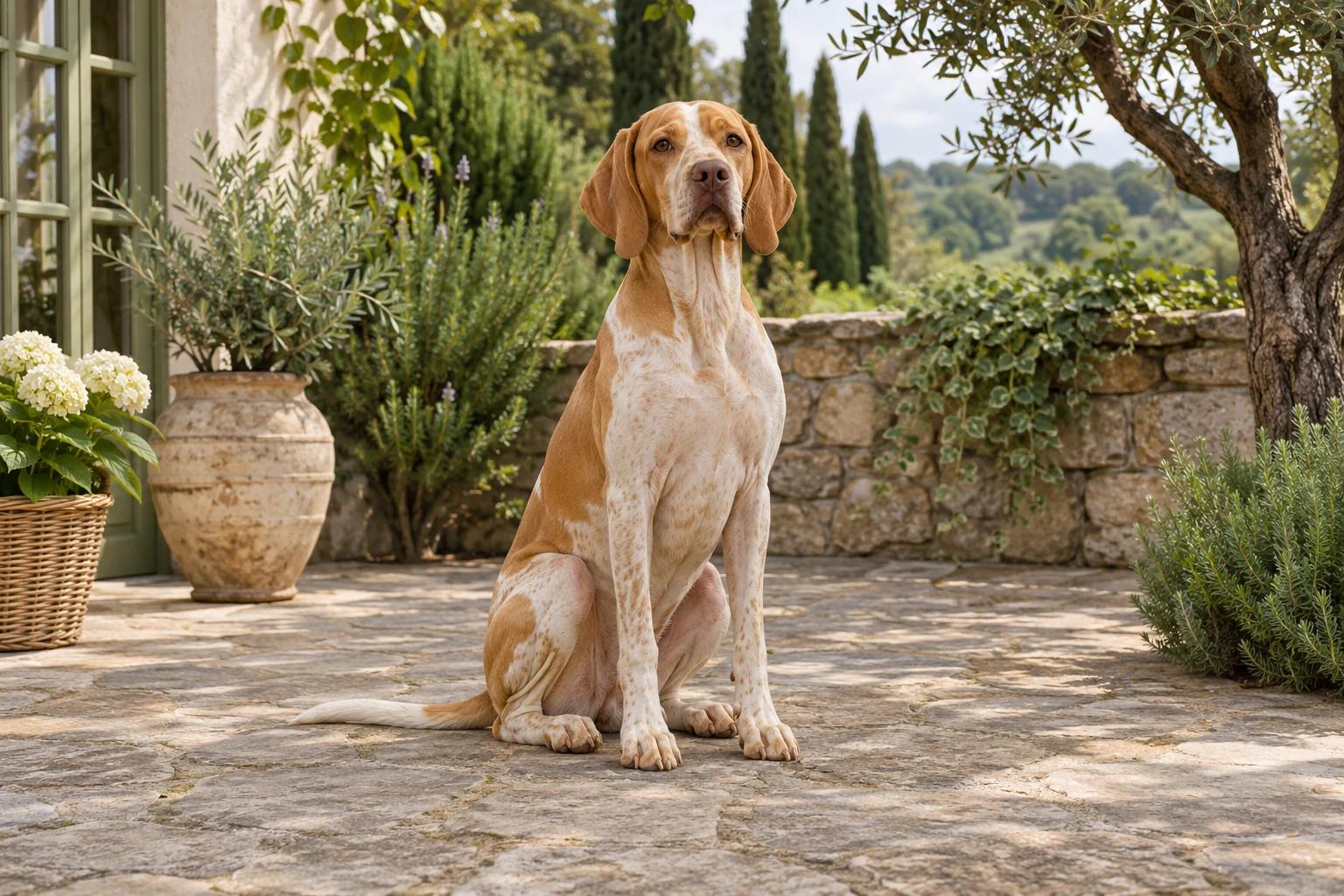
Portuguese Pointer temperament brings together an affectionate companion and a purposeful sporting dog. Those are not competing descriptions: a dog can enjoy being close to you while still needing an interesting life beyond the sofa. The decision is less about whether the breed sounds pleasant and more about whether you want to share its daily activities. Look at ordinary mornings, working hours and evenings before imagining the occasional perfect weekend outing.
Portuguese Pointer temperament: warmth with a working side
The Royal Kennel Club standard describes an affectionate, sociable temperament alongside persistent, enthusiastic hunting work. Read both parts together. A calm moment indoors should not lead you to plan a sedentary lifestyle, and enthusiasm outside does not tell you exactly how the dog behaves at home.
The Portuguese Pointer profile presents high activity and mental engagement as important parts of the routine. Put those needs into your actual calendar. Who takes the first outing? What happens if meetings run late? Where can you do something engaging when the usual route is unavailable?
Choose a plan that does not depend on one unusually energetic person being free every day. A partner, walker or other caregiver needs clear instructions and suitable experience, not simply a spare key. Discuss the dog’s equipment, cues and management arrangements before handing over responsibility.
Company means more than being in the same building
Portuguese Pointer personality is often what attracts people who want an involved companion. Make room for interaction you genuinely enjoy: a shared walk, a simple search game, quiet handling practice or an unhurried evening together. A dog can be physically near you while receiving little useful attention.
At the same time, plan for ordinary separation. Begin with manageable practice and learn how the particular dog responds rather than assuming an affectionate breed will either cope perfectly or struggle inevitably. Ask the current caregiver what happens during absences and what support has already helped.
If you work at home, consider the day you must attend an office or leave for an appointment. Build a care arrangement before that exception becomes urgent. Keep the resting area and basic routine familiar when another person takes over.
Persistent distress during time apart deserves qualified help. Describe what you observe and seek guidance from your veterinarian or a suitably qualified behaviour professional. Avoid treating distress as a test of obedience or responding with punishment.
Outdoor interest needs a practical outlet
The FCI standard describes curiosity and a keen worker that maintains contact with the hunter. For a companion home, take that as background for planning purposeful outings, not a promise of automatic recall around wildlife.
Choose routes where you can manage distance and attention. If the dog becomes absorbed by an interesting area, use the lead and the environment to keep the situation manageable. Do not wait until the dog is already far away to discover that a familiar cue has not been practised under those conditions.
Make engagement worthwhile without turning every walk into a test. Invite a brief check-in, reward it and then allow appropriate exploration. A useful outing can include movement, pauses and small moments of cooperation rather than continuous marching at your pace.
Access to open space also brings responsibility. Follow local rules and keep the dog away from wildlife or livestock where required. A sporting background is not permission to let a companion dog interfere with other animals.
Greeting people without making arrival chaotic
A sociable tendency does not supply door manners. Decide what you want the dog to do when a visitor arrives and arrange the space to make that option possible. A familiar mat, a barrier or a lead may help you manage the first moments while the person enters.
Ask guests to follow your plan rather than improvising their own welcome. Some people encourage jumping and then object when the dog repeats it. Clear household instructions are kinder than changing the rule according to who happens to be standing in the doorway.
Observe the individual’s response once the excitement of arrival has passed. Does it choose to remain nearby, move away or seek further interaction? Let that information guide the length and intensity of the visit. Do not force contact to demonstrate that the breed is friendly.
Children and dogs need adult supervision and a usable retreat for the dog. Keep that arrangement practical: adults should know who is watching, and the quiet space should not become another play area. No temperament label substitutes for managing the actual interaction.
Teach the everyday skills you will use
Portuguese Pointer characteristics such as responsiveness are useful only when the household communicates clearly. Choose a few shared cues and agree on what each means. A cue that sometimes means sit, sometimes wait and sometimes stop moving is difficult to learn consistently.
Build useful skills around your routine: pausing while a lead is attached, settling while you prepare food, moving away from an open doorway and returning attention during an outing. Reward the behaviour you want and keep initial sessions easy enough for success.
When something goes wrong, examine the situation before blaming Portuguese Pointer behavior. Was the environment much busier than usual? Did another person use a different cue? Was the dog being asked to remain still for longer than it had practised? Those questions produce a clearer next step than calling the dog stubborn.
Avoid trying to solve every difficulty by adding more physical exertion. Rest, clarity and appropriate management belong in the plan too. For persistent problems, obtain help suited to the individual rather than repeatedly escalating the same unsuccessful approach.
Ask for examples, not adjectives
Before choosing a dog, request a description of yesterday. What did it do before breakfast? How did it react when someone arrived? Where did it rest? What was the most difficult moment? These questions reveal a routine more clearly than a list of flattering labels.
Meet the dog in an appropriate setting and discuss the limits of what you can learn from one visit. An adult’s established history can be particularly useful; a puppy’s future still involves development and teaching. Make your decision with that distinction in mind.
The separate article about the Portuguese Pointer’s historical name explores its heritage. For choosing a companion, the dog match quiz can help you compare your available time and preferred activities with the everyday commitment described here.
FAQ
Is the Portuguese Pointer only suited to hunters?
A companion home should provide meaningful activity, learning and company rather than rely on a job title. Discuss the individual dog’s background and routine with its caregiver, and consider whether you can offer suitable outlets consistently.
Does affection mean a Portuguese Pointer can never be alone?
No single outcome follows from an affectionate temperament. Ask about the dog’s experience, practise manageable periods apart and arrange support for your workday. Seek qualified advice if you observe persistent distress.
Will a Portuguese Pointer naturally come back off lead?
Do not assume that breed descriptions of working contact guarantee recall. Returning around distractions is a skill that needs practice and suitable management. Use secure areas or a lead where necessary and follow local access rules.
Sources behind this article
- Royal Kennel Club: Portuguese Pointer breed standard ↗
- FCI: Portuguese Pointing Dog standard No. 187 ↗
Article source checked: November 15, 2026. Source checked 2026-11-15
Keep reading
Portuguese Pointer size: planning for an adult dog
Read article →