Portuguese Podengo vs Basenji: everyday differences
Compare the Portuguese Podengo and Basenji through space, voice, coat care and daily engagement, then ask useful questions about the individual dog.
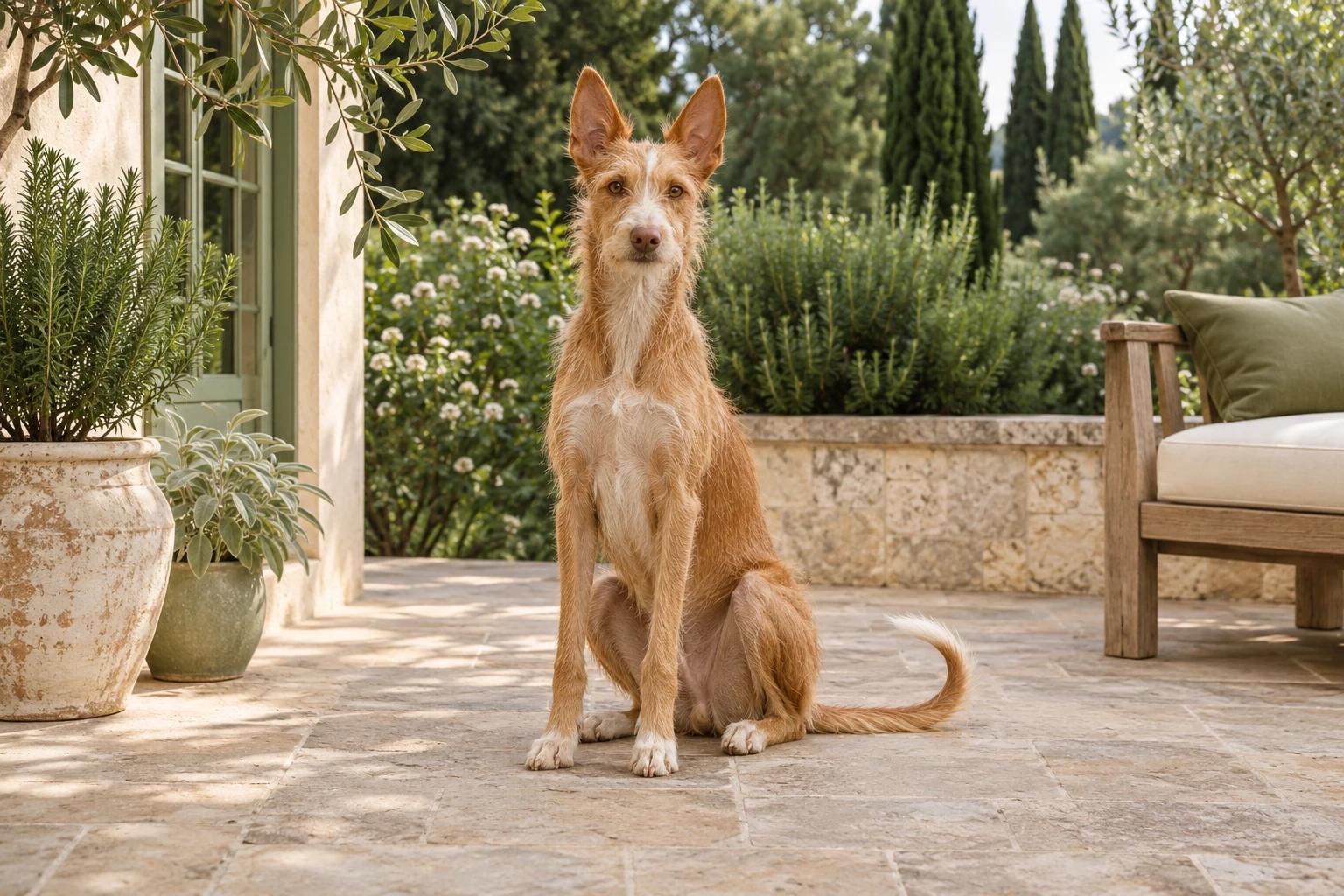
Portuguese Podengo vs Basenji is a comparison of two engaging hunting breeds, not a choice between an energetic dog and an effortless one. The most useful differences show up in your car, your household’s tolerance for sound, and the way you enjoy spending time with a dog. Here, Portuguese Podengo means the medium and large varieties covered by the Portuguese Podengo profile, not the separately listed Pequeno. Start by meeting adults, then compare the ordinary routines behind their attractive outlines.
Portuguese Podengo vs Basenji at home
The clearest physical distinction is scale. The AKC Podengo standard gives 35–44 pounds for the medium variety and 44–66 pounds for the large. The Basenji Club of America standard gives approximate adult weights of 24 pounds for males and 22 for females. Those figures help explain why the same household equipment may not work for both.
Before choosing, mark the footprint of the bed or travel setup you would need. Look at the door opening and aisle space, not just whether a product can fit in a room. If a dog must travel with you regularly, check your actual vehicle and the transport provider’s rules. A smaller body can change these logistics without making the dog’s behavior simpler.
For either breed, reserve a resting place away from the busiest route through the house. Think about how a visitor enters while the dog remains contained. If your entire plan depends on someone holding a collar while a door stands open, improve the arrangement before deciding which breed to bring home.
Sound is a meaningful difference, not a guarantee
The Basenji’s barkless reputation is easy to overread. The breed club explains that Basenjis are not mute and can produce other sounds. The Basenji profile is a starting point for understanding daily life, but you still need to ask how a particular dog communicates when excited, unsettled or left apart.
The Podengo profile, by contrast, describes some barking through the day as typical. If noise is the main reason you are weighing Basenji vs Portuguese Podengo, arrange to hear and observe adults in realistic situations. A brief, quiet meeting tells you little about what happens when a delivery arrives or the household leaves.
For apartment living, include the building in your comparison. Shared corridors, street-facing windows and thin walls can magnify a manageable sound into a daily difficulty. Do not make a breed nickname do the work of checking those conditions. Ask for specific examples and discuss a transition plan from the dog’s present environment to yours.
Compare the coat you will actually care for
Podengos have smooth and wire varieties, whereas the Basenji has a short coat. The Podengo’s AKC standard distinguishes a dense smooth coat with undercoat from a harsher wire coat without undercoat. Decide whether you enjoy the practical care of the actual variety you are considering, rather than choosing from a single representative photograph.
Ask an owner to show the brush used, the amount of loose hair collected and the cleanup after a muddy outing. Compare what you see with your furniture, laundry setup and willingness to keep a routine. Neither an appealingly natural wire coat nor a sleek outline means care can be forgotten.
The live profiles describe regular Podengo shedding and lighter Basenji shedding. That is a housekeeping consideration, not an allergy promise. If allergies are central to the decision, discuss them with an appropriate clinician rather than treating either breed’s coat as a guaranteed solution.
The shared challenge is an interesting outside world
The UKC Podengo standard describes a hunter using smell, sight and hearing. The Basenji club identifies both sight and scent in that breed’s hunting. A sensible comparison therefore includes secure outings and attention around distractions, not just a tally of exercise minutes.
Ask to join a normal walk with each dog. What happens near movement in a hedge? Can the handler regain attention at a reasonable distance? How does the dog leave an interesting spot? You are not setting a competitive test; you are finding out what you would need to learn and manage.
Consider whether you would enjoy that kind of partnership. Someone who likes observing a dog, adjusting the route and rewarding small moments of cooperation may find the work absorbing. Someone expecting effortless off-lead companionship from the first week should revise that expectation before choosing either breed.
Affection and independence can coexist
There is no need to decide that one breed is loving and the other aloof. Ask how the specific dog seeks contact, how it responds to familiar people, and what happens when visitors arrive. A dog that rests nearby without wanting constant touch may still be an enjoyable companion.
During a meeting, give the dog room to approach rather than competing for its attention. Notice what it does after the novelty passes. Can it settle while people talk? Does it want a game, a walk or distance? These observations reveal more about a potential household match than counting how quickly it accepts a pat.
With resident animals, replace broad compatibility claims with a practical discussion. Ask about relevant experience and how introductions would be managed. Maintain separation where needed; neither hunting history nor a sociable greeting tells you that two particular animals can share unsupervised space.
Make the decision with your real constraints
The useful difference between Portuguese Podengo and Basenji is the one that changes your daily plan. If carrying equipment, fitting a travel space or meeting a housing weight limit is decisive, size deserves priority. If household sound is decisive, investigate the individual’s vocal behavior rather than choosing solely by breed reputation.
If you are drawn to the Podengo, read which size a Podengo profile describes before following up on a listing. Then use the dog match quiz to record your schedule and priorities. Decide whether Portuguese Podengo or Basenji fits only after comparing those answers with the dogs you can actually meet.
FAQ
Which is smaller, a Basenji or Portuguese Podengo?
The Basenji is generally smaller than the medium and large Podengos discussed here. Confirm individual measurements for equipment or travel. The Portuguese Podengo Pequeno belongs in a separate comparison, so check which variety a listing describes.
Is a Basenji silent compared with a Podengo?
No. The Basenji’s barkless description does not mean it makes no sound. Ask about the individual dog’s vocal behavior and your building’s noise conditions. A quiet introductory visit cannot establish what an ordinary workday will sound like.
Which breed is easier for a first-time owner?
There is no reliable winner from the name alone. Compare the dog’s existing training, your access to support and the routine you can provide. A well-understood individual with a realistic transition plan is a better starting point than a flattering breed label.
Sources behind this article
- American Kennel Club: Portuguese Podengo standard ↗
- Basenji Club of America: Illustrated standard ↗
- United Kennel Club: Portuguese Podengo standard ↗
Article source checked: November 15, 2026. Source checked 2026-11-15
Keep reading

Affenpinscher vs Brussels Griffon: Everyday Differences
Read article →