Portuguese Podengo Pequeno grooming made practical
Plan Portuguese Podengo Pequeno grooming for smooth or wire coats, with gentle brushing, post-walk cleanup and realistic shedding expectations.
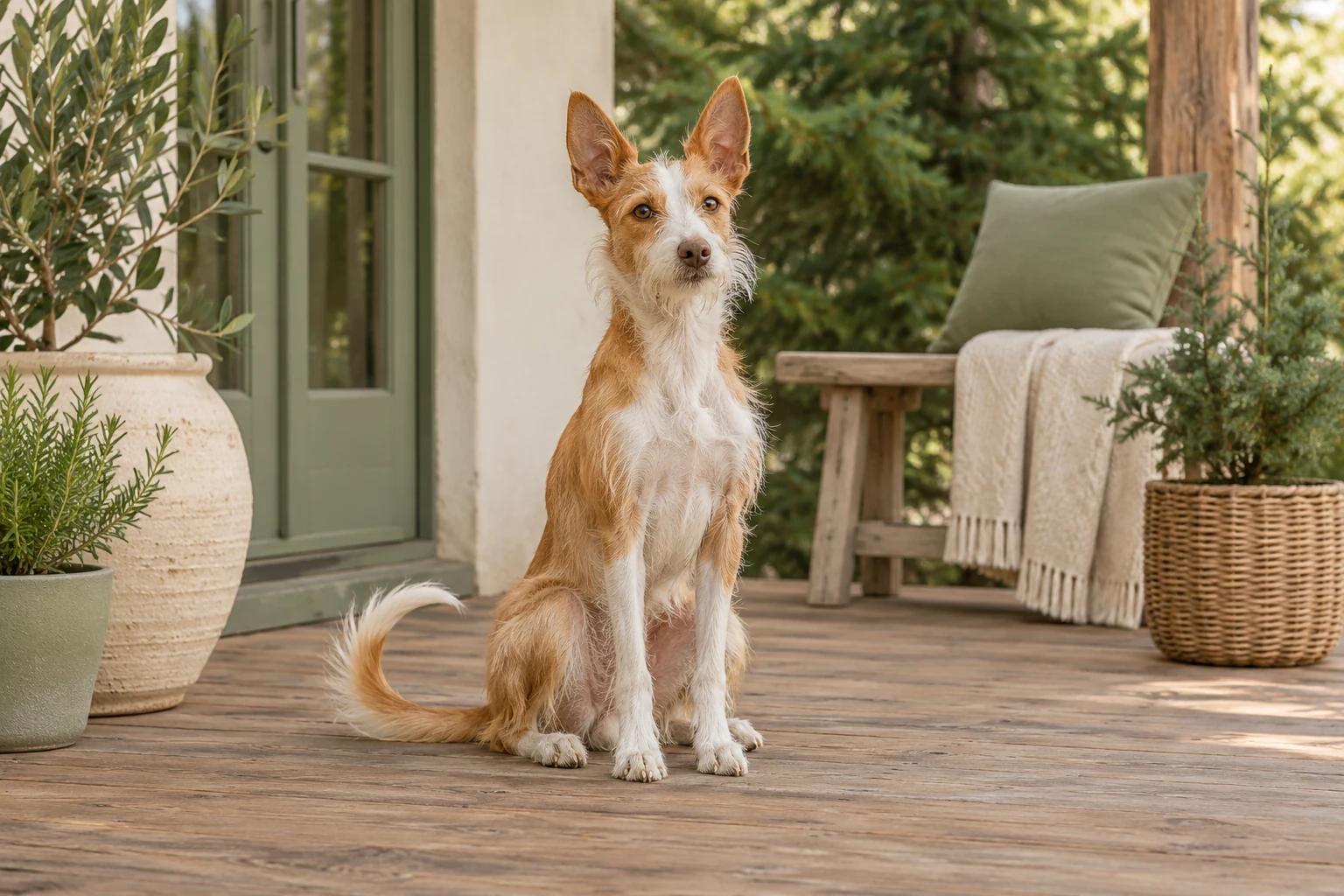
Explore the
Portuguese Podengo Pequeno
Background, care, and everyday considerations.
View breed profile →Portuguese Podengo Pequeno grooming can fit into ordinary home life without becoming a haircut project. The important work is checking the actual coat, removing loose hair and dirt gently, and helping the dog feel comfortable with handling. Start by identifying whether your dog has a smooth or wire coat, then choose tools with that coat and the dog’s response in mind. A simple routine you repeat calmly is more useful than an elaborate kit that only comes out when a problem has become difficult.
Portuguese Podengo Pequeno grooming for two coat textures
The AKC standard describes a short, dense smooth coat and a longer, harsh wire coat, with no undercoat in either variety. That distinction matters when someone offers you a generic tool or a routine intended for a different breed. Ask the groomer to look at your dog instead of choosing solely from a product’s label.
For a smooth coat, a gentle brush or suitable mitt may be a useful starting tool. For a wire coat, ask how to use an appropriate brush and comb without pulling. You should be able to explain what each tool is for. If you cannot, leave it out until a professional demonstrates the technique.
The two varieties do not need to be made to look alike. Everyday Portuguese Podengo Pequeno coat care should solve dirt, loose hair and comfortable handling, rather than trying to flatten a rough outline or manufacture extra texture in a smooth coat.
Build a session around cooperation
Set up on a secure, nonslip surface with the tools within reach. Floor-level work may be simplest if it is comfortable for you. Do not balance a small dog on furniture or an improvised platform because it appears light enough to manage there.
Begin with an easy area such as the shoulder and make a few gentle passes. Pause before the dog feels the need to struggle away. Reward relaxed participation and resume only if the dog remains comfortable. A short session can be successful even if it covers only part of the body.
Watch the dog rather than concentrating entirely on the brush. Moving away, becoming tense or repeatedly turning toward the tool tells you to reassess. Check pressure, tool choice and the area being handled. A sudden change in tolerance is a reason for a veterinary conversation, not a reason to hold the dog more firmly.
If you are learning how to groom a Portuguese Podengo Pequeno, ask for a practical demonstration rather than a long shopping list. Seeing the angle of a comb and the amount of pressure used can answer questions that packaging does not.
Collect loose hair without chasing a perfect finish
VCA’s breed account describes regular shedding and straightforward brushing or combing, with bathing as needed. Portuguese Podengo Pequeno shedding should therefore be included in your household plan even though the coat routine is relatively modest.
Choose a convenient place to collect the hair. A washable mat or towel under the grooming area keeps cleanup contained. Empty the brush after use and put it away clean and dry. This makes the next session easier to start and lets you notice the dog’s usual pattern over time.
For furniture, focus on the surfaces the dog actually uses. A washable cover on its favored resting place may be more useful than constantly brushing in an attempt to eliminate every loose hair. Short hair and rough hair can create different cleanup tasks, but neither should be treated as a guarantee of an allergy-free home.
If you notice an abrupt change in shedding, bald areas, irritation or discomfort, contact your veterinarian. Avoid treating a new problem with repeated bathing or a stronger tool simply because the breed is generally described as easy to groom.
The after-walk check is its own small job
Keep a towel near the entrance and make the return-home sequence predictable. Pause, check the feet and lower body, remove ordinary surface dirt if needed and let the dog move on. Practise this routine on dry days too, so the handling is familiar before you face a muddy evening.
With a wire coat, look for material caught in the longer hair, including around the beard. Examine it before pulling or combing. For a small amount of ordinary food residue or dirt, gentle cleaning may be enough. If material is tightly attached, painful or difficult to identify, ask for help rather than using scissors close to the skin.
With either coat, check where the harness sat after an outing. Notice wetness, trapped debris or signs that equipment is rubbing. Record a recurring problem and have the fit assessed. More grooming will not fix a harness that is inappropriate for the dog.
This is also a useful moment to separate damp walking gear from clean bedding. Give equipment a place to dry so the next outing does not begin with a wet harness taken from a closed cupboard.
Bathe for a reason, and prepare the exit
When the dog needs a bath, assemble dog-appropriate shampoo, towels and a nonslip surface first. Follow the product instructions and ask your groomer about appropriate technique if you are unsure. Keep water away from the eyes and avoid directing it into the ears.
Rinsing deserves as much attention as washing. Work calmly and make sure you can reach every area without awkwardly stretching the dog. If you cannot manage the setup comfortably, a professional bath may be the more practical choice.
Have somewhere dry ready before lifting or guiding the dog out. Towel gently and allow breaks. Do not improvise with hot drying equipment because the dog is small or the room is cold; ask a professional what is suitable. Any prescribed product or medical bathing routine should follow your veterinarian’s directions.
Keep other care visible
Coat brushing is a good reminder to notice the ears, feet and nails, but it is not permission to perform every procedure yourself. Ask your veterinarian or groomer to demonstrate nail care and explain when professional help is appropriate. Dental care needs its own veterinarian-guided routine as well.
Write down anything that changes rather than trying to interpret it from memory at a later appointment. A brief note such as “resisted left front foot handling today” is useful context. Do not label the dog difficult when a new sensitivity may be involved.
For the separate topic of show presentation, see the article on the Pequeno’s natural wire coat. This everyday routine is about practical care, not recreating a ring finish. The breed profile places grooming alongside activity and company, while the dog match quiz can help you consider whether the whole routine suits your household.
FAQ
How often should I groom my Pequeno?
Use a regular brushing routine, with brief checks after dirty outings, and adjust to the dog’s actual coat. The breed profile suggests brushing once or twice weekly as an ordinary plan. Ask a groomer for a demonstration if you are unsure about the tools.
Does a wire coat mean my Pequeno will not shed?
No. Plan for loose hair and ordinary household cleanup. Choose care based on the individual coat rather than assuming a rough texture eliminates shedding. A change accompanied by discomfort or skin problems belongs in a veterinary discussion.
Should I finish grooming if my dog keeps pulling away?
Pause and reassess the tool, pressure and setting rather than insisting on completion. Use shorter sessions and seek a practical demonstration if needed. New or persistent sensitivity should be discussed with your veterinarian before you continue working on that area.
Sources behind this article
- American Kennel Club: Portuguese Podengo Pequeno standard ↗
- VCA Animal Hospitals: Portuguese Podengo Pequeno ↗
Article source checked: November 15, 2026. Source checked 2026-11-15
Keep reading

Affenpinscher Grooming: A Practical Coat-Care Routine
Read article →