Poodle standard grooming: a workable whole-coat approach
Plan Standard Poodle grooming around coat coverage, comfortable handling and practical tools, with clear limits for home care.
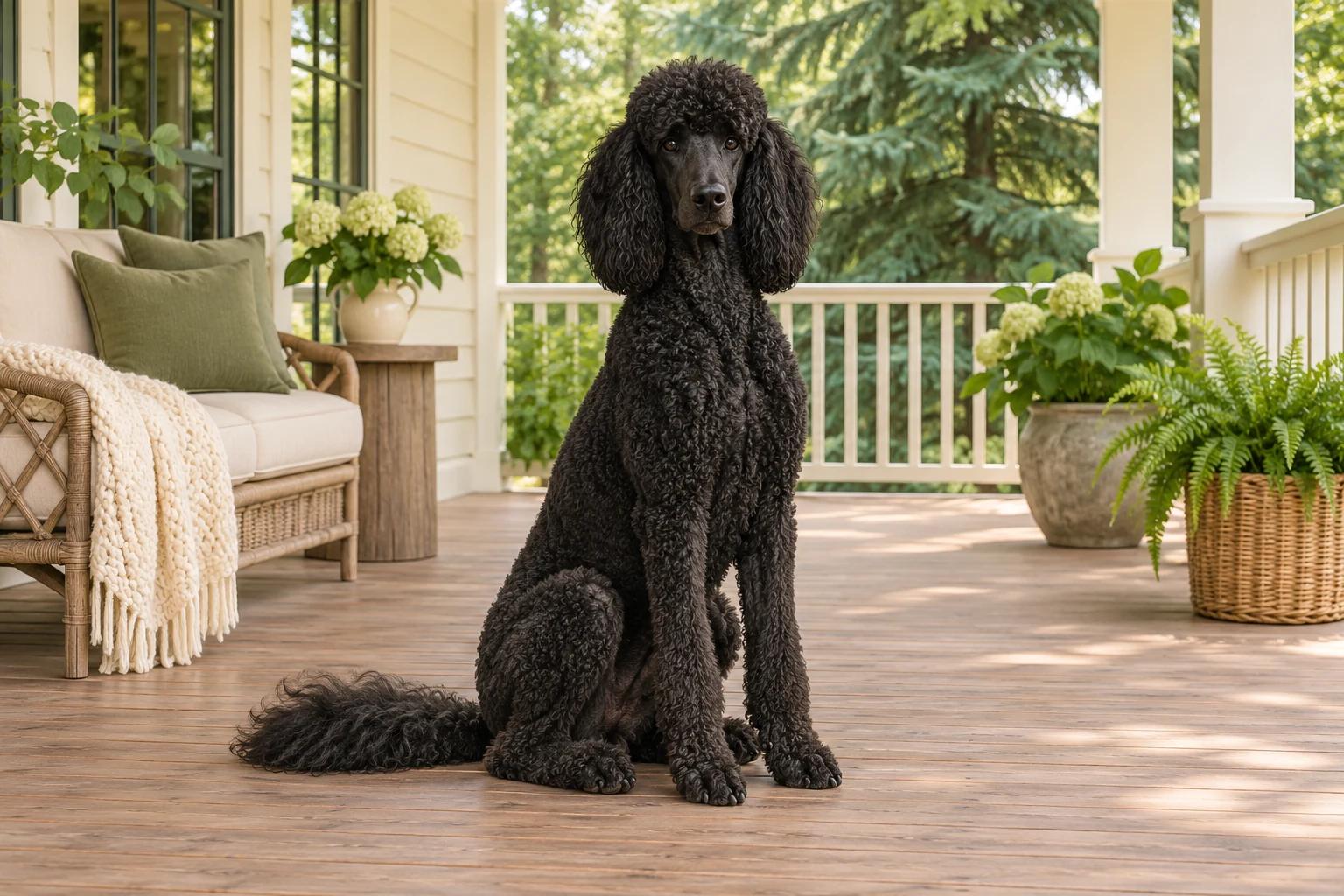
Poodle standard grooming involves a practical challenge that a close-up photograph can hide: there is a whole, tall dog beneath the curls. A careful owner needs a way to reach the coat, work comfortably, and recognize unfinished areas without exhausting either member of the partnership.
Think less about producing a dramatic before-and-after picture and more about making ordinary maintenance understandable. The Standard Poodle breed profile gives daily brushing a place in the ownership routine. How you organize that work matters as much as remembering it.
Poodle standard grooming: coverage before appearance
VCA's Standard Poodle guide describes a dense, curly coat and below-average shedding. Poodle standard shedding is therefore not a useful shortcut for estimating maintenance. A relatively clean sofa does not show whether you have checked the coat properly.
Ask an experienced Poodle groomer to help you understand the dog's current coat and demonstrate suitable tools. Make the first lesson about recognizing a comfortably maintained section, not about copying a show silhouette. You need to know what you are feeling as well as what you are seeing.
The AKC's Poodle overview notes that keeping a long coat requires daily brushing. Consider that before choosing a look with substantial length. The finished style and the home work supporting it should be discussed together.
Divide a large task without losing your place
For poodle standard coat care, a simple body-area checklist can prevent you from repeatedly brushing the easiest section while overlooking another. Ask your groomer which areas to include and how to inspect them. Use plain names you will remember, rather than technical terms you cannot confidently locate.
Your checklist is an organizational aid, not permission to rush through every box. If the dog needs a break, note where you stopped. Returning with a clear starting point is better than continuing because you are afraid you will forget.
Keep a distinction between examined, maintained, and needs help. Those three labels answer different questions. An area can be inspected without being suitable for further work at home. Marking a problem for professional attention is more useful than declaring the whole coat finished because it looks tidy from across the room.
If two people share care, use the same list. Otherwise one may assume the other handled the underside or the far side of the dog. A brief handover avoids duplicate work and missed sections without turning grooming into an elaborate record-keeping project.
Arrange the room around both bodies
A Standard Poodle's height changes the handler's working position. Notice whether you are bending, reaching across the dog, or twisting your wrist. Ask the groomer to show you an arrangement that you can maintain comfortably. A technique demonstrated on professional equipment may need adapting to your home.
Choose a stable, nonslip area and good lighting. Do not improvise an elevated platform or leave a dog unattended on grooming furniture. Put tools where you can reach them without repeatedly changing the dog's position.
Keep the route in and out clear. The session should not begin with negotiating a pile of boxes or end with the dog squeezing past a trailing cable. If another person is helping, agree on their job before starting. Calm assistance is different from adding another pair of hands that move unpredictably.
For an owner with limited reach or stamina, professional support may need to carry more of the work. That is a practical planning choice. Tell the groomer what you can actually manage instead of agreeing to a home routine that depends on uncomfortable positions.
Separate learning to handle from finishing the coat
An answer to “how to groom a poodle standard” should not assume that the dog already understands standing, turning, or being touched in every area. Ask what handling is familiar and introduce unfamiliar parts with professional guidance.
Make one change at a time. If a new brush is unfamiliar, that may not be the moment to attempt a difficult position as well. If the dog repeatedly moves away or becomes tense, pause and ask for help rather than simply holding more firmly.
You can prepare for appointments outside a full grooming session. Discuss useful cooperative-care skills with a reward-based trainer or groomer, such as moving onto a designated mat or calmly changing position. The purpose is clearer communication, not training the dog to tolerate discomfort without showing it.
Watch your own pace. An owner trying to finish before a meeting may overlook signs that the setup is awkward. Choose a time when stopping is possible. A routine that only works when everything goes perfectly is too brittle for everyday care.
Keep risky jobs out of the home experiment
Do not force a comb through resistance or cut close mats away with scissors. A groomer can assess the coat and choose an appropriate approach. Working faster or using a sharper tool is not a substitute for knowing where the skin is.
Skin changes, apparent pain, unusual odor, or sudden sensitivity warrant a veterinary conversation. Describe what you observed rather than trying to diagnose it through grooming. Leave delicate work around eyes, ears, and other sensitive areas to appropriately trained professionals.
Bathing and drying also deserve a demonstration suited to your facilities and this dog. Ask what preparation is needed and which parts are better left to the salon. Do not buy powerful equipment merely because a video makes the process appear quick.
Decide what a successful routine looks like
A useful review asks whether the coat was checked, whether the dog remained comfortable, and whether you know what needs attention next. It does not require a flawless photograph. Keep questions for the groomer specific: show the area you struggle to reach or describe the point where the tool meets resistance.
Leave space in the dog's day for activities unrelated to appearance. Our Standard Poodle retrieving article explores one interest, while the dog match quiz helps prospective owners weigh the whole routine. Grooming is an important commitment, not the dog's entire identity.
FAQ
Does a Standard Poodle's low shedding reduce coat-care needs?
Low shedding does not tell you whether the coat is maintained. Inspect the coat itself using techniques demonstrated for your dog. Household hair cleanup and hands-on coat care are separate jobs, so a clean floor should not replace a proper check.
How can two people share Standard Poodle grooming?
Agree on the same body-area checklist and use clear notes about what was completed, what was only inspected, and what needs professional help. A short handover prevents both people from repeating the easy sections while assuming someone else handled the difficult ones.
What if I cannot comfortably reach the whole dog?
Ask the groomer to adapt the setup or take on the tasks you cannot manage comfortably. Explain limitations honestly before agreeing to a maintenance plan. Do not improvise unstable equipment or force awkward positions merely to keep every part of care at home.
Sources behind this article
Article source checked: November 15, 2026. Source checked 2026-11-15
Keep reading

Affenpinscher Grooming: A Practical Coat-Care Routine
Read article →