Poodle miniature grooming: care beneath the curls
Make Miniature Poodle coat care easier to understand: gentle checks, brush and comb roles, handling practice and limits for home grooming.
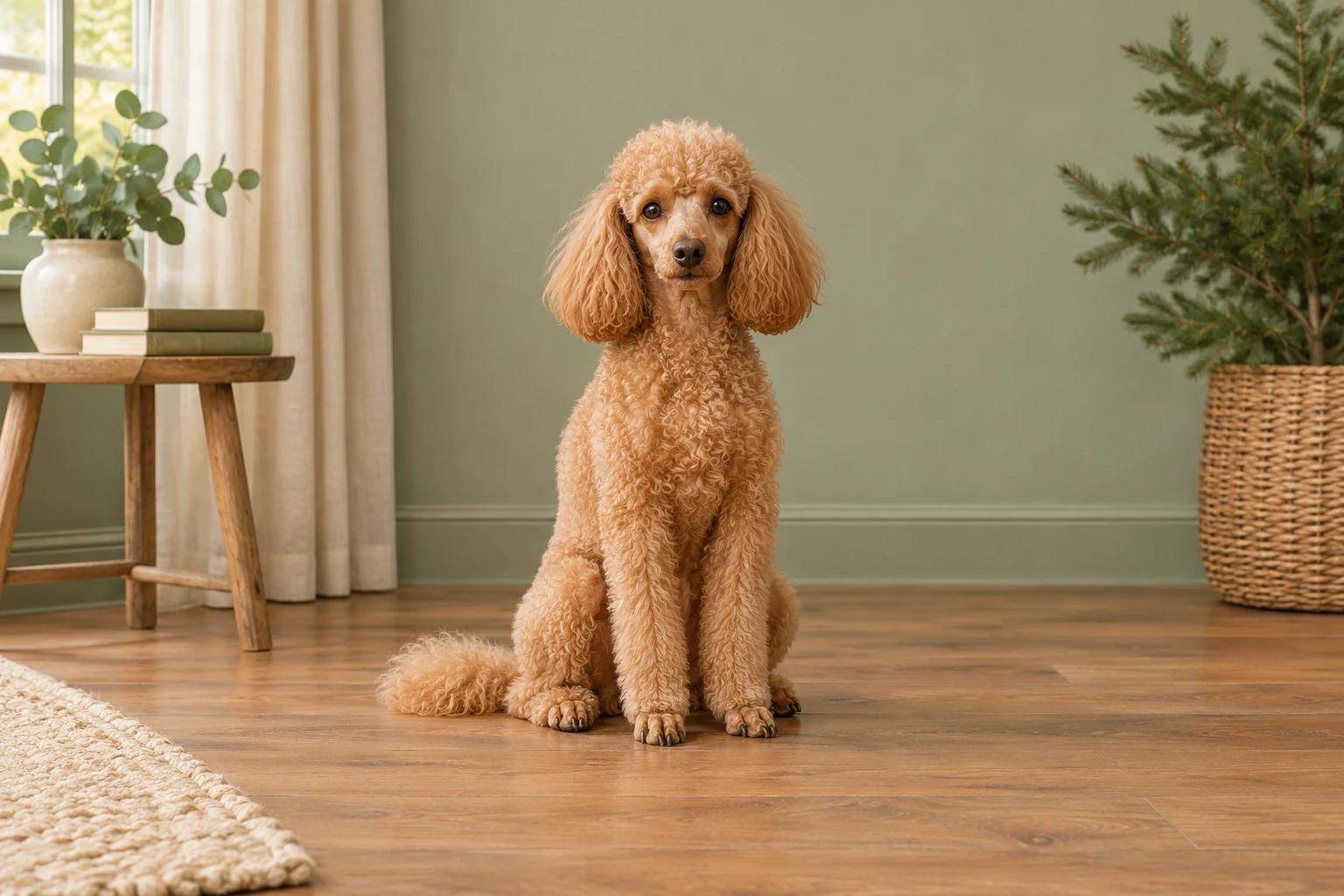
Poodle miniature grooming is not finished when the visible curls look tidy. The useful question is whether you understand the coat underneath and can care for it without turning every session into a struggle. This guide focuses on that hands-on relationship, rather than another appointment calendar or haircut budget.
Start with the Miniature Poodle profile for the wider ownership picture. A small dog still needs a thoughtful handling setup, appropriate tools, and someone who knows when home care should stop and professional help should begin.
Poodle miniature grooming starts beneath the surface
VCA describes the Miniature Poodle's coat as dense and curly, with below-average shedding and a need for regular brushing and combing. Poodle miniature shedding therefore tells you little about how much work the coat needs. A floor with few loose hairs is not a coat inspection.
Think of the finished appearance and the maintenance result as separate things. A broad brush pass may make the outer hair look orderly, while you still need to understand whether the groomer's recommended check can be completed comfortably through the relevant section. Ask to see the difference on your own dog rather than copying a technique from a photograph.
At your next demonstration, ask the groomer to show a small, manageable area first. Watch how the hair is supported, where the tool starts, and how little pressure is needed. Then try under their supervision. Being shown a movement and actually feeling it are different kinds of learning.
Give the dog a stable, predictable place
Choose good lighting and a nonslip surface at a height that does not force you to lean awkwardly. Do not improvise an elevated table or leave a small dog unattended on one. If a floor-level arrangement works better for both of you, ask the groomer how to adapt the technique to it.
Keep tools within reach before inviting the dog over. Searching for a comb while holding a leg or shifting the dog repeatedly makes the session harder than it needs to be. Put away unrelated equipment so you can concentrate on one task.
A predictable beginning helps you observe what the dog is comfortable with. You might place the mat, show the brush, and start with a familiar area. This is not a demand to tolerate everything once the mat appears. Watch the dog's response and take a break rather than using restraint to finish at any cost.
Learn the tool, not just its name
A shopping list cannot teach poodle miniature coat care. Ask which brush and comb suit the coat's current length and condition, then request a demonstration of how to use each. Similar-looking tools can feel different in your hand and against the coat.
Keep the first home goal modest. It might be understanding one section well enough to recognize smooth progress versus resistance. Do not assume that a tool catching means you should pull harder or repeat the same stroke faster. Stop and check what you are doing.
Ask your groomer what a completed section should feel like and how to recognize that you have missed an area. Make the question concrete: “Can you watch me check this part and tell me what I am overlooking?” That is more useful than asking whether you are generally doing a good job.
The AKC's Poodle care overview emphasizes daily brushing for a long coat. The practical choice is to match the coat you keep with the technique you can reliably perform. A style should not depend on home skills you have not yet learned.
Break handling into understandable pieces
“How to groom a poodle miniature” often combines several different questions: how to hold a brush, how to reach a section, and how to help the dog remain comfortable. Separate them. You can practice a calm invitation to the grooming area without completing a full coat session every time.
If touching a paw is difficult, do not add a new tool and a long session simultaneously. Ask a reward-based trainer or groomer experienced in cooperative handling to help you establish a suitable starting point. Progress should be judged by what the dog can manage, not by whether you finished a planned checklist.
Household consistency matters here. Agree that everyone will respect a break rather than one person stopping while another insists on carrying on. Keep a short note about which handling positions are familiar and which need help. That information is useful when a different family member or professional takes over.
Know where home maintenance ends
Do not cut close mats out with scissors or force a comb through a resistant area. Let a groomer assess it. Avoid turning an unfamiliar problem into a trial of whatever tool happens to be in a drawer.
If you notice discomfort, redness, an unusual smell, or a change in the skin, contact your veterinarian. Those observations need assessment rather than a new grooming product chosen by guesswork. Likewise, leave procedures around the eyes, inside the ears, and other delicate areas to appropriately trained professionals.
Bring clear observations to the appointment: where the difficulty occurs, when you noticed it, and what happened during your usual gentle check. A simple description helps more than a confident diagnosis. You can say the comb stopped at a particular section without deciding why it happened.
Judge the routine by comfort and understanding
After a session, ask what you learned. Was the lighting adequate? Could you use the tool without twisting your wrist? Did you attempt too much at once? Small adjustments to the setup can make the next session more manageable without buying another collection of products.
For the scheduling and cost side, see Miniature Poodle grooming planning. Keep that separate from the hands-on skills discussed here: an appointment date cannot substitute for knowing what to do between visits. The dog match quiz can help prospective owners consider this commitment alongside the rest of daily care.
FAQ
Does low shedding mean a Miniature Poodle needs little grooming?
No. The amount of hair you find on the floor is not a reliable measure of coat condition. Learn the checks appropriate to your dog's coat from an experienced groomer, and assess the coat itself rather than using household cleanup as your guide.
What should I do if the comb gets stuck?
Stop instead of pulling through resistance. Ask a groomer to assess the area and demonstrate a suitable approach for the dog's coat. Do not use scissors to remove close mats yourself, especially when you cannot clearly distinguish the skin beneath the hair.
Can I learn home grooming in one demonstration?
A demonstration is a useful beginning, but supervised practice is more informative. Ask the groomer to watch you work on a small section and correct your technique. Build familiarity gradually and leave unfamiliar, uncomfortable, or delicate tasks to an appropriate professional.
Sources behind this article
Article source checked: November 15, 2026. Source checked 2026-11-15
Keep reading

Affenpinscher Grooming: A Practical Coat-Care Routine
Read article →