Pomsky vs Alaskan Klee Kai: beyond the similar look
Compare Pomsky and Alaskan Klee Kai backgrounds, coat commitments and everyday fit without relying on a small-Husky appearance.
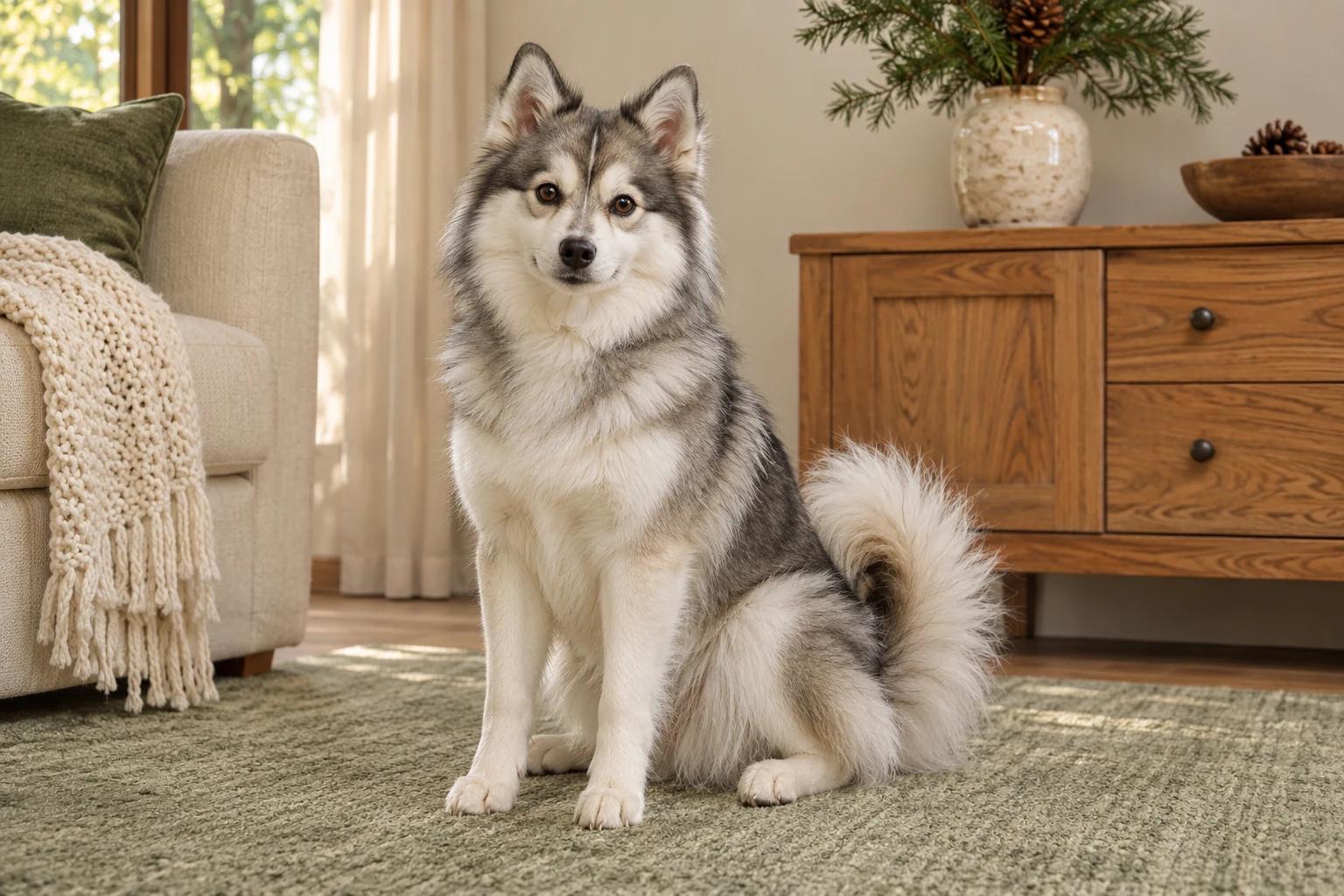
Pomsky vs Alaskan Klee Kai comparisons often begin with a photograph: upright ears, a curled tail and a face that reminds someone of a Husky. That resemblance does not make the names interchangeable. Understanding the difference helps you ask for the right background information and compare the dogs' actual needs rather than their markings.
Start with the Pomsky profile and the Alaskan Klee Kai profile. Then build a shortlist around your schedule, home and access to care. A striking appearance may explain your interest, but it should not do the work of choosing a companion.
Pomsky vs Alaskan Klee Kai: different backgrounds
Pomsky describes dogs with Pomeranian and Siberian Husky ancestry. The American Pomsky Kennel Club's standard also discusses the addition of American Eskimo ancestry in some developing lines. That makes asking about the actual lineage more useful than assuming every Pomsky has the same parentage proportions. APKC standard.
The Alaskan Klee Kai has its own development history and registry standard. UKC describes its development in Alaska by Linda Spurlin and her family as a companion-sized northern spitz-type dog, and records recognition in 1997. It is not simply another label for a Pomeranian–Husky cross. UKC Alaskan Klee Kai standard.
For an owner, the practical difference is the information you request. With a Pomsky, ask which dogs and generations are in the pedigree and what documentation accompanies that account. With an Alaskan Klee Kai, ask which registry holds the records and check that the identifying information matches the dog. Paperwork provides context; it does not guarantee behavior, health or an easy homecoming.
Do not identify either dog by eye color
When looking through listings, separate appearance details from identity evidence. A photograph can show what a dog looked like when photographed. It cannot verify parentage or prove which registration record belongs to that dog. Ask for the background rather than attempting to reverse-engineer it from a face mask.
This is especially useful when someone uses informal labels such as “mini Husky.” Ask what they mean, then return to the named parents, records and the individual dog. If the answer remains unclear, leave it as an unanswered question instead of filling the gap yourself.
Compare measurements, not size labels
A Pomsky's future size deserves a careful conversation. Ask for the current measurements, age and adult measurements of available relatives. For an adult candidate, obtain the actual height and weight rather than relying on a photograph taken beside an unknown object.
Use the same approach for an Alaskan Klee Kai. If a listing gives a size category, ask which standard or definition the seller is using. Write the measurements beside the label so that you can compare practical requirements consistently.
Then check your constraints. A carrier, travel arrangement or housing restriction may depend on dimensions or weight, not what the dog is called. If a hard limit is essential to your plans, do not treat a puppy estimate as a promise. An adult whose measurements are known may make that particular decision clearer.
Ask about company and unfamiliar situations
UKC describes the Alaskan Klee Kai as curious, alert and active, while noting that it may be reserved with strangers. This is a reason to ask how introductions are handled, not a reason to demand that a dog prove friendliness during your first meeting. UKC standard.
With either candidate, ask how the dog spends a normal weekday. Does it rest in the same room as people or seek contact frequently? What experience does it have of visitors, commuting sounds and periods apart? Request ordinary examples from the current caregiver.
An Alaskan Klee Kai vs Pomsky visit should leave room for observation. Let the caregiver explain the routine and allow the dog to approach without pressure. Notice what happens after the first excitement passes. A short meeting is only one piece of information, so ask what support is available after placement and how concerns would be handled.
Coat care is a shared commitment, not a tie-breaker by photo
Both profiles describe double coats. The practical comparison is how much work the particular coat requires and whether you can repeat that work consistently. A recently groomed photograph does not show the home maintenance between appointments.
Ask to see the usual tools and learn what the caregiver does during heavier shedding periods. If you expect professional grooming to cover everything, find out what work will still be yours. Include cleanup and handling practice in your plan, not only brushing.
When comparing quotes, describe the actual dog and its coat condition. Avoid assuming that two similar-looking dogs will need identical appointment lengths or services. Record what the groomer proposes so that you can compare like with like rather than choosing only by the headline price.
Work through a real week before choosing
For Pomsky or Alaskan Klee Kai ownership, draw your week with fixed commitments first. Add outdoor access, learning activities, grooming and quiet companionship around them. Identify who covers each gap when you cannot be there. Do not make the entire plan depend on a weekend activity that your working week cannot support.
Ask about vocal behavior in the actual home. What sounds prompt a response, and what does the caregiver do? A quiet visit is not evidence that a dog never vocalizes. If you share walls, explain your building layout so the conversation is about a real setting.
If you have a cat, treat that as a separate compatibility question rather than a breed tie-breaker. Our existing Pomsky cat-household article addresses the planning involved. This comparison cannot establish whether any particular pair of animals should live together.
The dog match quiz can help you rank your priorities before visits. The most useful difference between Pomsky and Alaskan Klee Kai candidates may ultimately be one dog's known experience, care needs and available support. Choose from that evidence rather than deciding which photograph looks more like the dog you imagined.
FAQ
Is an Alaskan Klee Kai a Pomsky?
No. The Alaskan Klee Kai has its own development history and registry standard. Pomsky refers to dogs with Pomeranian and Siberian Husky ancestry, with some developing lines including other ancestry. Ask for the actual dog's records rather than relying on appearance.
Which one will stay smaller?
Compare known measurements and family information, not the names alone. Puppy growth estimates are not guarantees. If your housing or travel plans impose a firm limit, check that requirement against an individual dog before committing.
Which is easier for a first-time owner?
There is no dependable winner based only on these labels. Compare the actual dogs' routines with your time, handling experience and access to support. A detailed care handover is more valuable than an assurance that either choice will be easy.
Sources behind this article
Article source checked: November 15, 2026. Source checked 2026-11-15
Keep reading

Affenpinscher vs Brussels Griffon: Everyday Differences
Read article →