Pomsky exercise needs: plan movement and mental work
Create a Pomsky activity routine with purposeful walks, learning, indoor alternatives and dependable workday care.
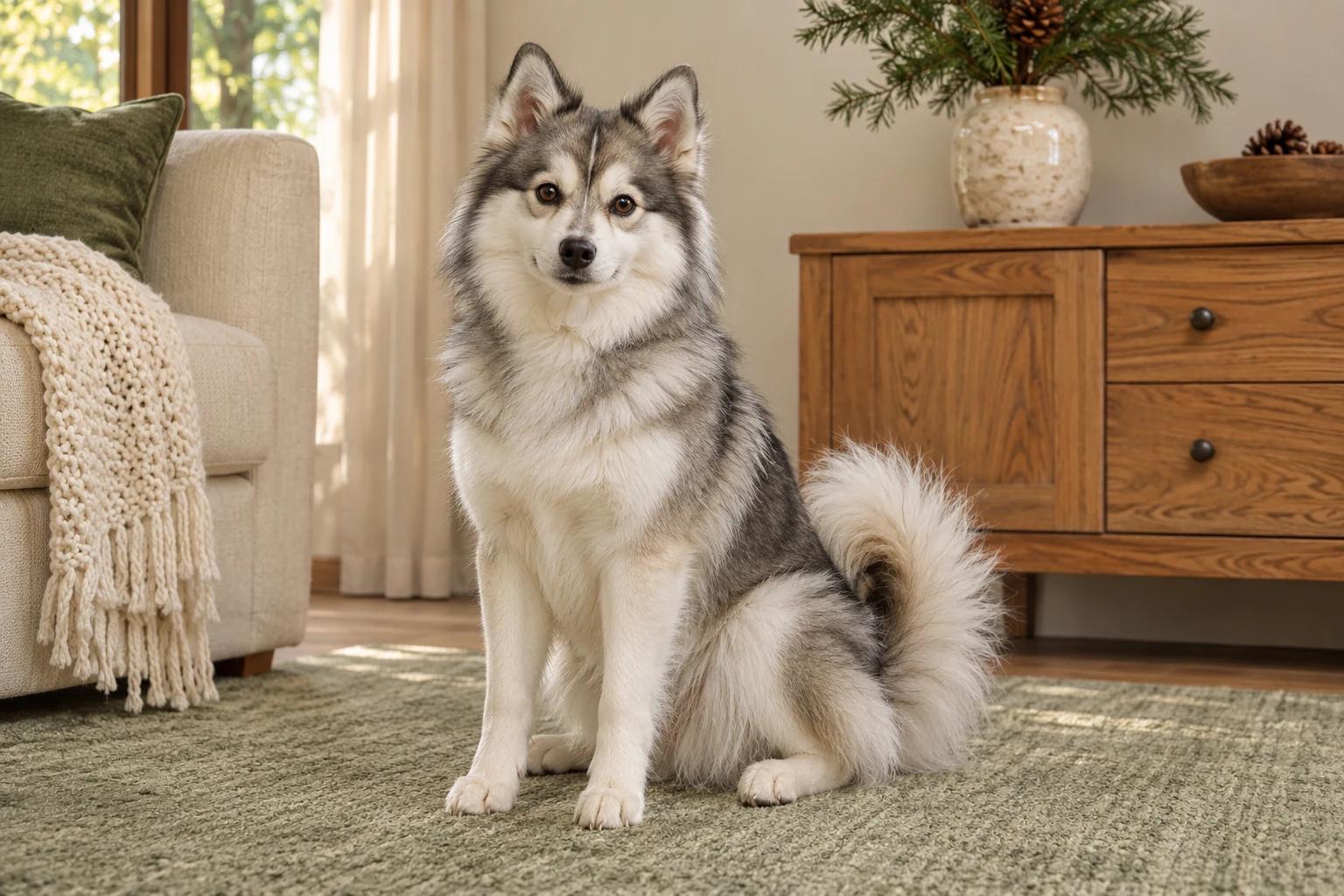
Pomsky exercise needs deserve a place in your schedule before you fall in love with the small-Husky appearance. Plan for an active companion with opportunities to move, investigate and learn, not a decorative dog whose needs disappear indoors. The useful routine is one that works on a busy weekday as well as a free weekend.
The Pomsky profile highlights activity and mental engagement. Start there, then ask about the individual dog's current routine. Age, health, experience and surroundings all matter when deciding what to do next; a veterinarian can help you judge appropriate activity for that dog.
Pomsky exercise needs are more than a walk total
If you are asking “how much exercise does a Pomsky need,” first separate the different parts of the day. Outdoor movement, toilet access, training, shared play and quiet time are not interchangeable. Adding minutes to a walk will not automatically fill every gap in that list.
The American Pomsky Kennel Club includes training and puzzles alongside outings in its owner guidance. APKC owner introduction. The practical takeaway is to plan engagement as well as movement, rather than treating the lead as your only activity tool.
Make two columns: what the dog currently does, and what your household can reliably provide. Include the person responsible and the setting. A plan that depends on an unspecified lunch break is not ready yet. Arrange the missing care before trying to solve it with a much longer evening outing.
Ask for a detailed handover
For a newly adopted or purchased Pomsky, request an ordinary recent day's routine. Which routes are familiar? What equipment is used? Which games does the dog choose? Are there situations the caregiver currently avoids? Those details help you preserve useful continuity while the dog learns your home.
If the caregiver describes an especially active weekend, ask about Monday too. You need a sustainable baseline, not the most impressive day the dog has ever had. Keep the initial plan manageable and discuss substantial changes with your veterinarian where appropriate.
Give the daily walk a clear purpose
A Pomsky daily walk can include exploration without becoming an unstructured rush toward every interesting thing. Decide which portions of the route offer space to pause and which require closer attention. Check exits, narrow paths and likely busy periods before relying on a route for your regular outing.
Try keeping a small route menu. One route might offer a quiet familiar loop; another might have more open space; a third might work when weather limits your plans. Record why each option is useful. This reduces the temptation to repeat a stressful route simply because you cannot think of an alternative at the door.
Do not use a public outing to test whether an unproven recall works. Use appropriate secure equipment and follow local access rules. If you want more freedom of movement, discuss suitable settings and handling with a qualified trainer rather than unclipping the lead because the dog looks attentive for a moment.
At home, put away equipment and check what needs cleaning before moving on. A Pomsky's coat can make a wet outing more of a household project than expected. Reserve time for that practical finish so you do not repeatedly rush the return and leave necessary care until later.
Make mental work something you share
AKC describes indoor scent games as a way to encourage dogs to use their noses and engage their minds, including in small spaces. Its introductory activities use accessible searches rather than requiring a large exercise area. AKC indoor scent games.
You can begin with an easy supervised search in a clear area, using an appropriate familiar reward and a setup the dog can solve. Keep materials out of reach afterward, especially if your dog might chew or swallow them. The goal is an enjoyable shared activity, not a puzzle so difficult that the dog gives up.
For variety, write three activity cards based on games your dog already understands. Put the equipment and a short instruction on each card so another caregiver can use the same approach. This is particularly helpful when one household member usually invents the games and everyone else defaults to throwing a ball.
Choose activities for interest, not because someone promises they equal a certain number of walking minutes. A search and a walk offer different experiences. There is no need to turn the whole day into an accounting exercise where one game must cancel out another task.
Avoid making every evening an endurance test
Pomsky activity level should be considered across the whole day. Ask what happened before you arrived home: a noisy delivery, an unfamiliar walker or a long outing may change what the evening needs to look like. Share notes between caregivers so that each person does not independently decide the dog needs another intense session.
Keep a resting area available and protect it from interruptions. If the dog repeatedly struggles to settle, record the pattern and seek qualified advice rather than automatically increasing exercise. Persistent vocalization or destructive behavior needs investigation, not a casual verdict that the dog is being difficult.
For homes with a resident cat, preserve separate access and routines while you arrange activity. Do not use chasing another pet as entertainment. The Pomsky cat-household preparation guide addresses that distinct management question in more detail.
Review what is working, not just what you completed
After a normal week, look for practical successes: a route with fewer interruptions, an indoor game your dog willingly joins or a workday handover that no longer depends on guesswork. Keep those elements and change one weak point at a time.
Note discomfort, unusual fatigue or a sudden change in willingness to move and bring those observations to your veterinarian. This article is a planning framework, not an exercise prescription or a way to diagnose behavior from a distance.
If you are still deciding whether this cross fits your life, use the dog match quiz and then examine your real calendar. An active dog's needs should be supported by dependable arrangements, not a hope that you will become a different person after bringing it home.
FAQ
Can a Pomsky get all its exercise in a garden?
A garden can provide useful space, but access alone does not organize activity, learning or companionship. Plan supervised opportunities and suitable outings around the individual dog rather than assuming the garden takes care of the whole day.
Are puzzles a substitute for walks?
Puzzles and walks serve different purposes. Include mental engagement alongside appropriate movement and outdoor access. Choose activities your dog can comfortably participate in rather than treating a puzzle as a fixed number of walking minutes.
What should I do when my Pomsky seems restless?
Review the whole day's routine and record when restlessness occurs. Do not assume more vigorous exercise is always the answer. Discuss persistent difficulties with a qualified professional and sudden changes or discomfort with your veterinarian.
Sources behind this article
Article source checked: November 15, 2026. Source checked 2026-11-15
Keep reading

Afghan Hound Exercise Needs: Build a Workable Active Day
Read article →