Polish Lowland Sheepdog vs Tibetan Terrier
Compare size, everyday routines, introductions, and care before choosing a Polish Lowland Sheepdog or Tibetan Terrier.
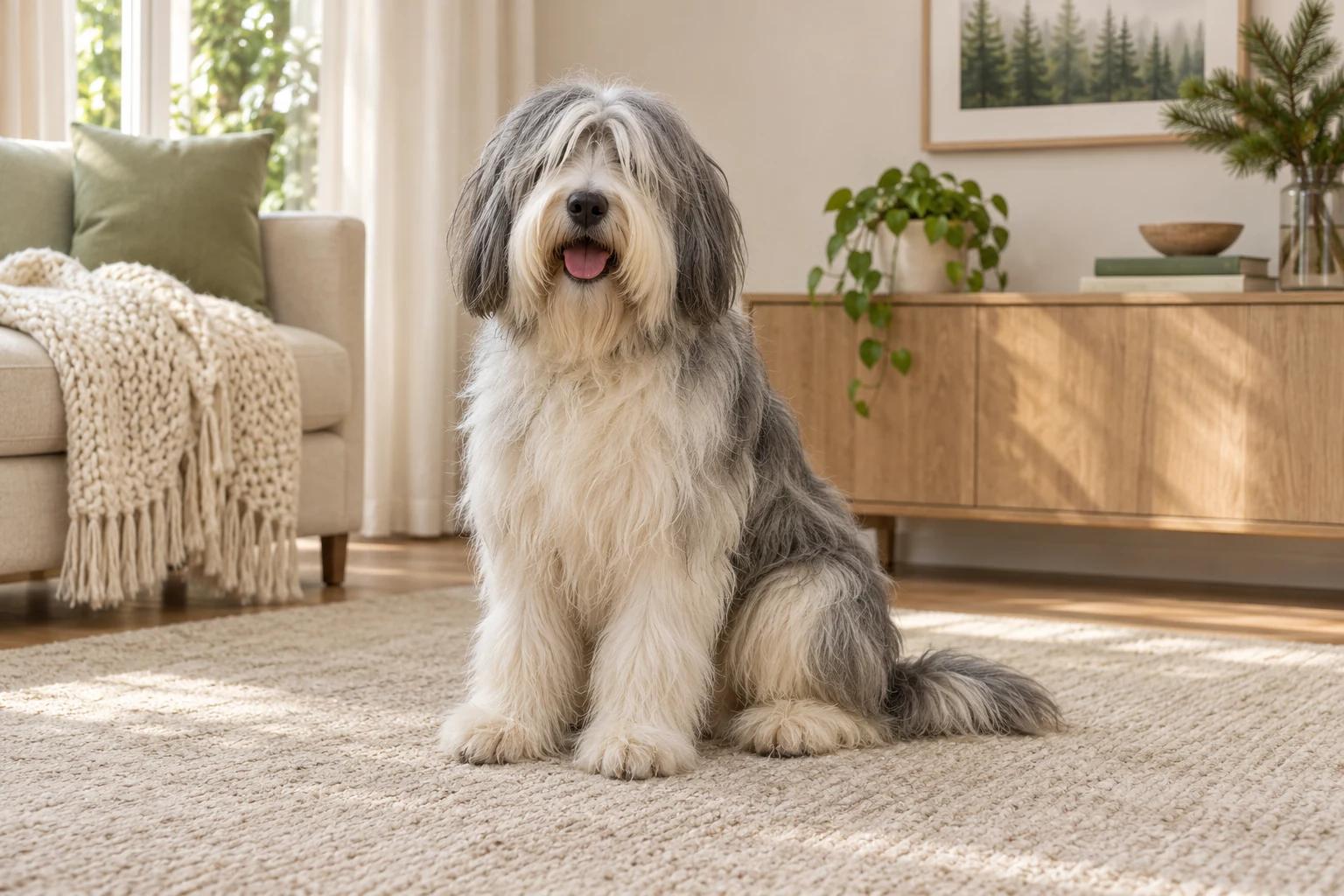
Explore the
Polish Lowland Sheepdog
Background, care, and everyday considerations.
View breed profile →Polish Lowland Sheepdog vs Tibetan Terrier is a choice between two shaggy dogs whose practical differences are easier to spot during an ordinary afternoon than in photographs. Start with the space they occupy, the situations they find exciting, and the work you want to do together. Neither a long coat nor an appealing expression tells you whether a particular dog will fit your household.
Polish Lowland Sheepdog vs Tibetan Terrier: the useful distinctions
The Polish Lowland Sheepdog, often called the PON, has a herding background. VCA describes an independent, family-affectionate dog with a watchful approach to strangers. Its Tibetan Terrier profile describes a devoted companion who can also take time to warm to newcomers. That overlap matters: choosing the Tibetan Terrier is not a shortcut to a dog that welcomes every visitor. (VCA PON, VCA Tibetan Terrier)
For the full starting points, compare the Polish Lowland Sheepdog profile with the Tibetan Terrier profile. Then write down what each difference would change at home. A preference without a practical consequence need not decide the whole choice.
Compare the actual footprint
The site profiles place the PON at 30–50 pounds and the Tibetan Terrier at 18–30 pounds. These are reference ranges, not promises for puppies. They nevertheless make a useful first check against the car space, sleeping area, and equipment you already have.
Picture a wet dog turning around in your hallway while someone carries groceries. Measure the available floor space rather than judging from a head-and-shoulders picture. If you use public transport, find out what your actual route requires before choosing either breed. A compact silhouette is not the same thing as permission to travel in a small carrier.
If an adult dog is available, ask for current measurements and a chance to see ordinary movement. When choosing a puppy, leave room in the plan rather than buying everything around the smallest likely adult.
Test the visitor routine, not the greeting photograph
During a meeting, let the current caregiver decide how introductions happen. Your purpose is to learn what the dog already knows, not to stage a test by crowding it. Ask what a normal delivery or visiting friend looks like from start to finish.
Useful details include where the dog waits, whether a barrier is used, and what happens after the visitor sits down. A dog that does not immediately approach you may still be comfortable sharing the room. Conversely, a brief enthusiastic greeting does not tell you how it handles a longer visit.
For either breed, consider whether your home offers an alternative to the front window or busy entrance. A quiet place is more useful if people can reach the kitchen without passing through it. That is a floor-plan question you can answer before bringing a dog home.
Choose the teaching you would enjoy
The UK PON club emphasizes perceptiveness, memory, and food-motivated reward training. This is a reason to enjoy teaching, not a reason to expect instant obedience. (PON club FAQs)
Make your comparison concrete. Would you enjoy practicing a tidy doorway wait, teaching a dog to find its mat, or learning a hobby together? Choose one task and ask each caregiver to show the dog's current version. Watch what the person does as carefully as what the dog does.
The difference between Polish Lowland Sheepdog and Tibetan Terrier is not a reliable dividing line between a clever dog and an easy dog. Your instructions, surroundings, and expectations will be part of either learning relationship. A dog that understands a cue in its familiar home still needs a fair introduction to your version of the situation.
Ask how the dog handles mistakes during training. You want a practical description: does the caregiver simplify the task, move somewhere quieter, or finish and return later? That answer reveals more about the support available than a claim that the breed learns anything.
Put activity into your real calendar
Avoid choosing one as the automatic low-effort option. Both deserve a routine that includes outings, interaction, and opportunities to learn. Start with your weekday calendar, not a holiday itinerary.
Mark the times when someone can actually leave the house. Then account for collecting equipment, cleaning up, and returning the dog to a settled home environment. A walk that fits on paper may not fit between two calls once those transitions are included.
On a second version of the calendar, remove your favorite long outing because the weather or your schedule has changed. What remains? The answer should include a realistic backup person or a different accessible plan, not merely an intention to compensate at the weekend.
Coat commitment without choosing by hairstyle
Both dogs bring substantial coat considerations. Do not assume that two similarly shaggy adults take identical work, or that a freshly groomed appearance represents the everyday workload. VCA describes the Tibetan Terrier's long outer coat and woolly undercoat; the individual coat and chosen presentation still matter.
Keep coat care in the budget while making the main decision about companionship and routine. Our separate PON coat-care handover article covers the questions to ask when responsibility changes. There is no need to turn this comparison into a second grooming tutorial.
Make a choice you can explain
If your search began with Tibetan Terrier vs Polish Lowland Sheepdog, finish with two short notes: what attracts you, and what you can reliably provide. Include any nonnegotiable housing constraints. A favorite appearance belongs on the first list, not as evidence for the second.
For the final Polish Lowland Sheepdog or Tibetan Terrier decision, meet adults where possible and seek specific recent examples from their caregivers. Use the dog match quiz to organize priorities, then investigate the individual rather than treating its result as a verdict.
FAQ
Which is usually the larger dog?
The Polish Lowland Sheepdog has the larger reference weight range on the breed profiles. Ask for the actual adult's measurements or allow flexibility when planning for a puppy; a reference range cannot settle every individual's final size.
Is either breed automatically better for an apartment?
Neither breed name settles apartment suitability. Consider the entrance, nearby walking routes, household absences, noise expectations, and where the particular dog can rest without watching every person pass. Check the building's rules separately.
How should I compare two dogs at a first meeting?
Ask to see familiar routines in a calm setting. Observe how the caregiver supports introductions and transitions, and ask about an ordinary recent week. Do not provoke a reaction to test temperament or assume one meeting captures the whole dog.
Sources behind this article
- VCA Polish Lowland Sheepdog ↗
- Polish Lowland Sheepdog Club of Wales and the West of England: FAQs ↗
- VCA Tibetan Terrier ↗
Article source checked: November 15, 2026. Source checked 2026-11-15
Keep reading

Affenpinscher vs Brussels Griffon: Everyday Differences
Read article →