Polish Lowland Sheepdog Temperament in Daily Life
Understand Polish Lowland Sheepdog temperament through visitor routines, learning, family life, and practical questions for caregivers.
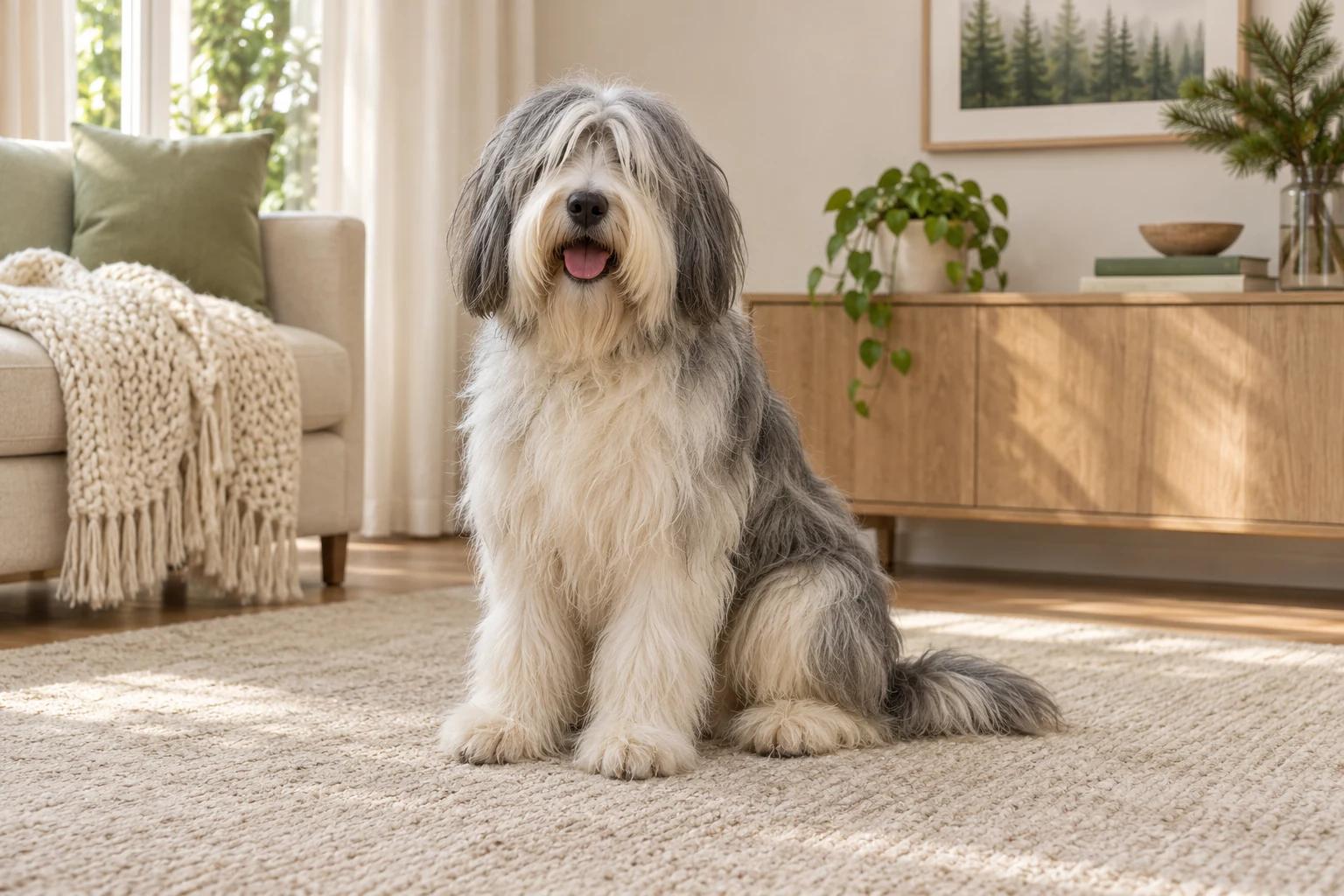
Explore the
Polish Lowland Sheepdog
Background, care, and everyday considerations.
View breed profile →Polish Lowland Sheepdog temperament is best understood through everyday situations: a visitor arriving, a walk changing direction, or a family settling down after dinner. The breed's appealing shaggy appearance can distract from those more important questions. Look beyond whether a dog seems friendly during one meeting and ask how it manages the ordinary changes your household makes each day.
Polish Lowland Sheepdog temperament: clever and watchful
VCA describes the PON as affectionate with family, independent, and wary of unfamiliar people. Those broad tendencies help you choose questions, but they cannot replace a particular dog's history. (VCA breed profile)
Begin with the Polish Lowland Sheepdog profile, then turn adjectives into observations. Instead of asking whether a dog is confident, ask what happened when a maintenance worker last visited. Instead of asking whether it is clever, ask which household task it has learned recently and how the caregiver taught it.
What an ordinary doorway can reveal
A front door brings several events together: noise, someone standing up, movement through a narrow space, and an unfamiliar person. If a caregiver says the dog becomes excited there, ask which part starts the sequence. The doorbell and the visitor may be separate problems with different practical solutions.
In your home, decide where the dog could wait while you answer. Choose somewhere that does not require a guest to squeeze past its bed. Keep the route usable when groceries, school bags, or wet coats accumulate. A plan that depends on an always-empty hallway is fragile if your hallway is rarely empty.
When meeting a prospective dog, follow the caregiver's introduction plan. Do not insist on touching the dog to prove that you have made friends. Notice whether it can share space comfortably and whether the person recognizes when it needs more room.
Questions worth asking the caregiver
Ask for a recent example of a successful visit, then a visit that required more help. What changed between them? Were there more people, a different entrance, or a longer stay? These details are more useful than a single label such as protective.
Also ask who normally handles visitors. A routine that works with one practiced adult may need rebuilding when several family members share responsibility. Agree on one simple sequence before the dog comes home.
Intelligence is an invitation to communicate clearly
The Polish Lowland Sheepdog Club of Wales and the West of England highlights the breed's perceptiveness and memory, and notes its response to reward-based teaching. (Club FAQs)
For an owner, the useful question is not whether a clever dog should already know better. It is whether you have made today's task clear. Write down what a cue means in your household. Does “bed” mean touch the bed, lie on it, or remain there until released? If different people expect different endings, a dog has an unnecessarily complicated lesson.
Pick one small routine to teach consistently. For example, put the walking equipment in the same place and practice a calm pause before setting off. Separate that practice from the morning when everyone is already late. You can judge progress by the task itself rather than by whether the dog seems generally more obedient.
Polish Lowland Sheepdog personality need not be reduced to the word stubborn. When a familiar task falls apart, record the setting and what you asked. You may discover that the dog succeeds in the kitchen but not beside the open front door. That is useful information for the next lesson, not a character flaw to punish.
Give family interaction some structure
Think about what participation in your household actually means. A dog can be included without attending every noisy activity at close range. Set up a resting place away from running feet and make sure everyone knows that resting there is not an invitation to play.
Children need adult supervision around dogs, and adults should manage space rather than asking children to enforce boundaries. If visitors include children, plan that arrangement in advance. No temperament description replaces supervision or the ability to separate calmly.
Discuss other animals with the current caregiver using examples from the dog's history. Ask whether meetings happened indoors or outside, on lead or through a barrier, and with familiar or unfamiliar animals. “Lives with another dog” is helpful background, but it does not establish compatibility with yours.
Look at the whole week before judging a difficult evening
Polish Lowland Sheepdog behavior can look very different depending on what the day involved. Keep a short record if a pattern puzzles you: the event, what happened just before it, what people did, and how the situation ended. Avoid writing only a verdict such as naughty or anxious.
For example, “barked when the evening delivery arrived; waited behind the gate while the parcel came in” gives you something to discuss. It also helps you notice whether the same arrangement worked on a quieter day. You do not need a detailed surveillance project; a few accurate notes are enough to improve a conversation with a qualified trainer.
Sudden changes, distress, or concerns about discomfort belong with your veterinarian. A breed label is not an explanation for a new problem. Seek individualized help rather than trying to diagnose the cause from an online description.
Decide whether the partnership appeals to you
Among Polish Lowland Sheepdog characteristics, the practical issue is your willingness to notice, teach, and manage daily situations. Ask yourself whether you enjoy that kind of involvement even when progress is gradual. A dog need not be a training project every minute, but neither should all teaching wait for a problem.
Reserve time for care as well as interaction. The coat-care handover guide addresses a separate part of ownership that can otherwise disappear behind temperament discussions. Use the dog match quiz to compare your priorities, and bring your unanswered questions to people who know the individual dog well.
FAQ
Does an independent PON need harsh training?
No. Independence is not a reason to use intimidation. Make the task understandable, reward the response you want, and adjust the setting when the dog cannot succeed. A qualified reward-based trainer can help you make a practical plan.
Can I judge temperament from a puppy photograph?
A photograph cannot show how a puppy handles visitors, transitions, frustration, or rest. Ask about daily experiences and observe appropriate interactions. The people caring for the puppy should be able to describe more than its appearance.
What should I record before asking for behavior help?
Note what happened, where it happened, what came immediately before it, and how it ended. Include recent changes to routine. Share health or discomfort concerns with your veterinarian rather than assuming they are normal breed behavior.
Sources behind this article
Article source checked: November 15, 2026. Source checked 2026-11-15
Keep reading

Airedale Terrier Temperament: What Everyday Life Can Feel Like
Read article →