Polish Lowland Sheepdog Exercise: A Useful Daily Plan
Build a practical Polish Lowland Sheepdog exercise routine with walks, shared activities, quiet transitions, and realistic backup plans.
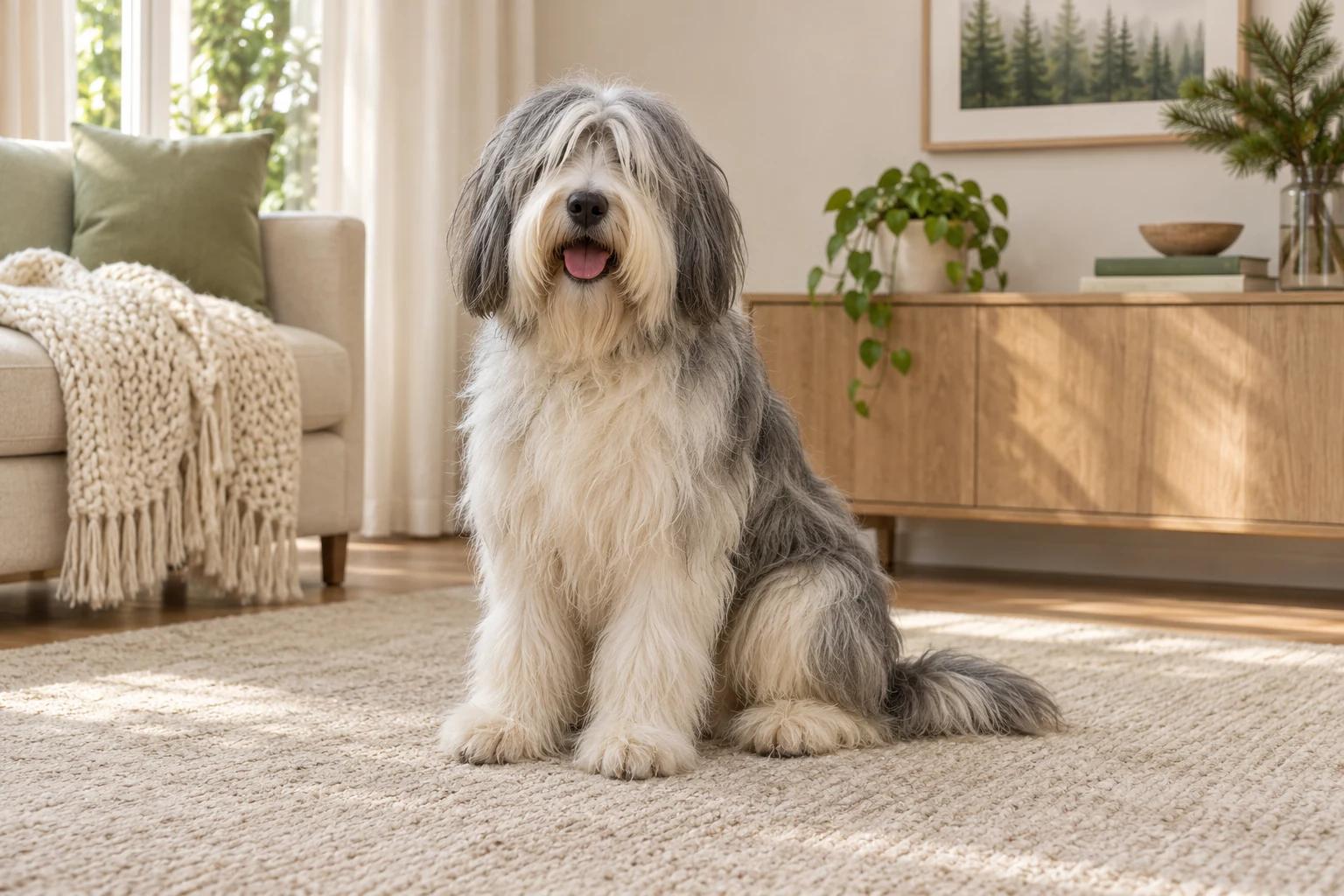
Explore the
Polish Lowland Sheepdog
Background, care, and everyday considerations.
View breed profile →Polish Lowland Sheepdog exercise works best as a workable part of the day, not a contest to cover the greatest distance. Plan opportunities to move, investigate, learn, and then rest. The right arrangement must fit the individual dog's age, experience, and health as well as the routes and time you actually have available.
Polish Lowland Sheepdog exercise needs more than a stopwatch
VCA emphasizes daily mental and physical engagement for this herding breed. That supports a varied plan rather than one repetitive outing used to solve every need. (VCA Polish Lowland Sheepdog)
Start with the breed profile, then look at your own week. If you are asking how much exercise does a Polish Lowland Sheepdog need, begin by identifying the dog you are planning for. A young puppy, an adult already accustomed to long outings, and an older dog returning from a veterinary restriction do not need interchangeable schedules. Ask your veterinarian about appropriate activity where age or health creates uncertainty.
Build a day from three different opportunities
Instead of writing “exercise” in one large calendar block, separate an outing, a shared task, and a chance to decompress. This is a planning example, not a prescribed timetable or a claim that every dog needs exactly three sessions.
An outing might be a familiar walk with time to explore. A shared task might be a simple search game in a clear room. Decompression might mean returning to a quiet home area without immediately starting another game. Giving each part a purpose makes it easier to see what is missing when a day feels rushed.
A Polish Lowland Sheepdog daily walk should have a realistic beginning and ending. Include time to put on equipment, reach the route, return, and deal with wet paws or debris. If you schedule only the minutes spent moving, the rest of the routine becomes an unexpected burden every day.
Give the route a plan B
Choose a familiar turn that allows you to shorten the outing if conditions change. Check where you could move aside for a passing group, and avoid depending on a single crowded path. A flexible route makes it easier to respond to the day without feeling obliged to complete a circuit.
For an unfamiliar location, first visit without ambitious training goals. Find out how busy the entrance is and whether the walking surface suits your dog. Keep the first experience manageable rather than treating arrival as a commitment to finish the longest route.
Use the mind without turning everything into a lesson
The UK PON club describes a perceptive dog that responds to rewards and discusses walking and play as parts of ownership. (Club FAQs)
You can create variety with a small setup. For a beginner search, place a suitable reward in an obvious location while the dog watches, then let it investigate. Use a clear, uncluttered area and supervise. The point is a shared activity the dog understands, not an elaborate puzzle that requires frustration before success.
Another option is to practice returning to a mat between brief activities. Keep the task separate from a busy family gathering until the routine is familiar. A useful home skill can be more valuable than a collection of impressive tricks that never appear in ordinary life.
Change one feature at a time. If you move a familiar game outdoors, keep its other parts easy. If you make the search slightly less obvious, keep the location familiar. This gives you a clearer view of what the dog understands and avoids stacking several new challenges into one attempt.
Distinguish movement from social pressure
A crowded dog park is not simply an empty field with extra exercise. It adds other dogs, entrances, running people, and decisions about space. Do not make it the only option in your plan, especially before you know how the individual handles that setting.
The same applies to a group walk. Ask about the number of dogs, the route, transport arrangements, and what happens if one needs more space. You are choosing a service and an environment, not merely buying a quantity of movement.
For solo outings, consider where you can walk without repeated close approaches. That may be a quieter street at a different time rather than a more distant scenic destination. Practical access matters: the best route is of limited use if you cannot reach it on an ordinary workday.
Watch the transitions as well as the activity
Polish Lowland Sheepdog activity level is easier to plan around when you notice what happens before and after an outing. Does preparing the lead become chaotic? Can everyone enter the house without rushing through the doorway? Does your next scheduled task leave the dog in a busy passage?
Choose one transition to simplify. Put towels and equipment where you need them. Clear a path to the resting area. If several people share walks, agree on the same storage and handover routine so the next person does not start by searching for essentials.
Do not interpret every restless evening as proof that more vigorous exercise is needed. Record what happened that day and consider the surroundings. If the pattern persists, seek qualified guidance; if there is a sudden change or a concern about movement or comfort, speak to your veterinarian.
Plan for rain, work, and ordinary interruptions
Write a backup version of the week that does not depend on perfect weather or unlimited daylight. Identify an accessible outing option, a simple indoor activity, and a person who can help when necessary. Indoor games supplement the day rather than eliminating the need for appropriate outdoor opportunities.
Keep the home setup modest. A few familiar activities that people can run reliably are better than equipment nobody knows how to use. Review the plan after you have lived with the dog and learned its actual routines.
Allow time after muddy outings for care, without making exercise planning another grooming article. The separate coat-care handover guide covers that responsibility. If you are still choosing a breed, the dog match quiz can help you compare the daily commitment with your available time.
FAQ
Is a yard enough exercise for a Polish Lowland Sheepdog?
A yard provides space, but it does not tell you how that space is used. Plan shared activity and suitable outings rather than assuming that opening the door creates a complete day. Check the actual enclosure before relying on it.
Should every walk be a training session?
No. You can practice a useful skill without asking for continuous performance. Leave room for ordinary exploration and keep formal tasks short enough to remain clear. Choose the purpose of the outing before adding more demands.
How should I change the plan for a puppy or older dog?
Ask your veterinarian about activity appropriate to the dog's stage of life and health. Begin from the individual rather than copying an adult breed timetable, and review the arrangement when circumstances or comfort change.
Sources behind this article
Article source checked: November 15, 2026. Source checked 2026-11-15
Keep reading

Afghan Hound Exercise Needs: Build a Workable Active Day
Read article →